C.F. Martin/Southern California Music Company
Steel String Hawaiian Guitars
"M. Nunes & Sons" and "Rolando" Models 1350, 1400 and 1500
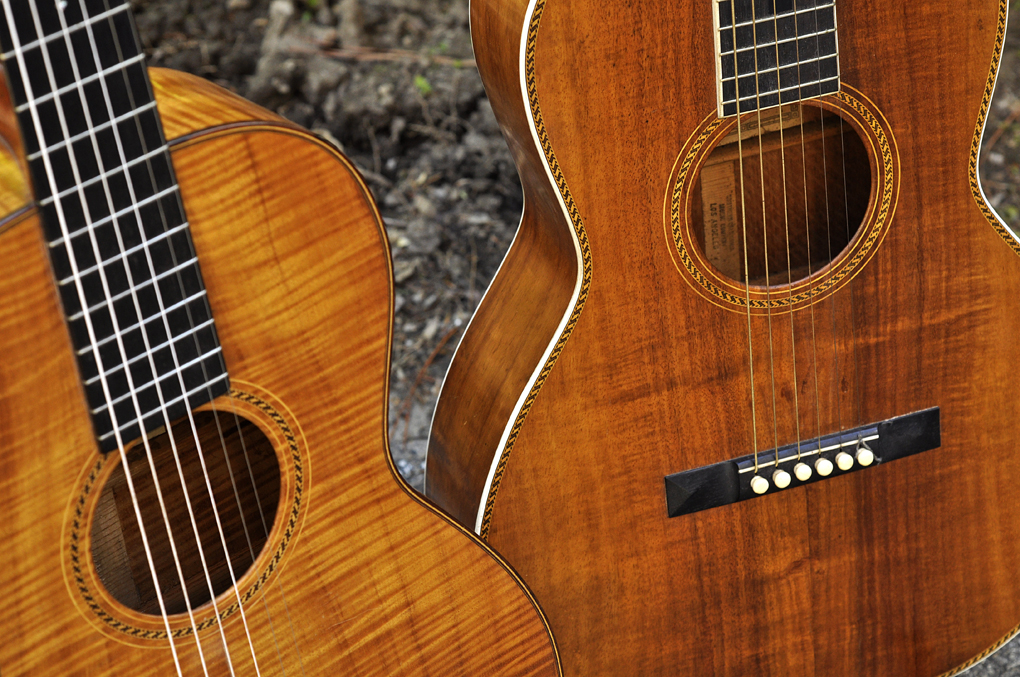
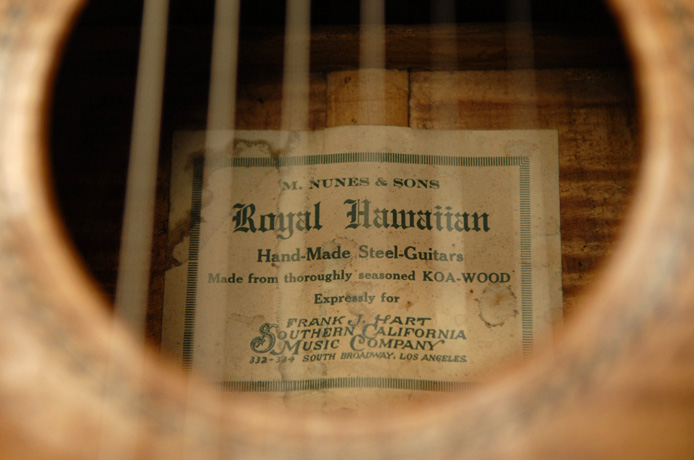
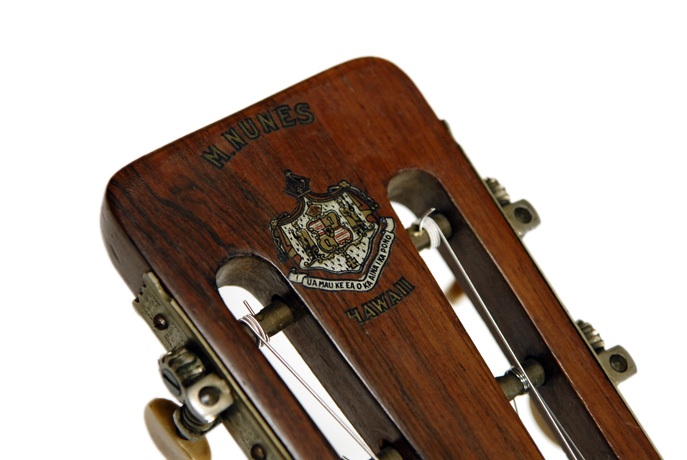
In July of 1916, with Hawaiian music all the rage following it's introduction to a large portion of the American public at the Panama Pacific Exposition in Chicago the previous year, the C. F. Martin Co. shipped six samples each of Hawaiian koa wood guitars, with appointments generally similar to Martin's styles 0-18, 0-21, and 00-28, to the Southern California Music Company of Los Angeles, a chain of Southern California music stores, and one of Martin's largest accounts. SoCal provided Martin with the koa wood from Hawaii, and asked that the trim on these guitars, designed for playing in the Hawaiian style, be as close as possible to those of SoCal's popular ukuleles. To appeal to the Hawaiian market, SoCal asked that the Martin stamp be replaced with the Southern California Music Company stamp, and affixed decals on the headstocks bearing the name "M. Nunes & Sons, Hawaii" and labels inside with either the name "M. Nunes & Sons" or "Rolando". These early samples had koa wood back and sides and tinted spruce tops, but after seeing the samples, SoCal decided to offer all koa guitars, and to market the three models as the 1350, 1400, and 1500. The first of the new SoCal models was shipped in November of 1916.
These guitars, and those Hawaiian guitars designed at about the same time for the Oliver Ditson Company, were the first Martins to be built for steel strings. And while Martin had previously used fan bracing only for their gut string guitars built in the Spanish Style, and had since switched it's production to X-bracing, Martin curiously decided to build these early heavier steel string guitars with braces in the shape of a fan. The Model 1500, however, for reasons we may never know, has X bracing.
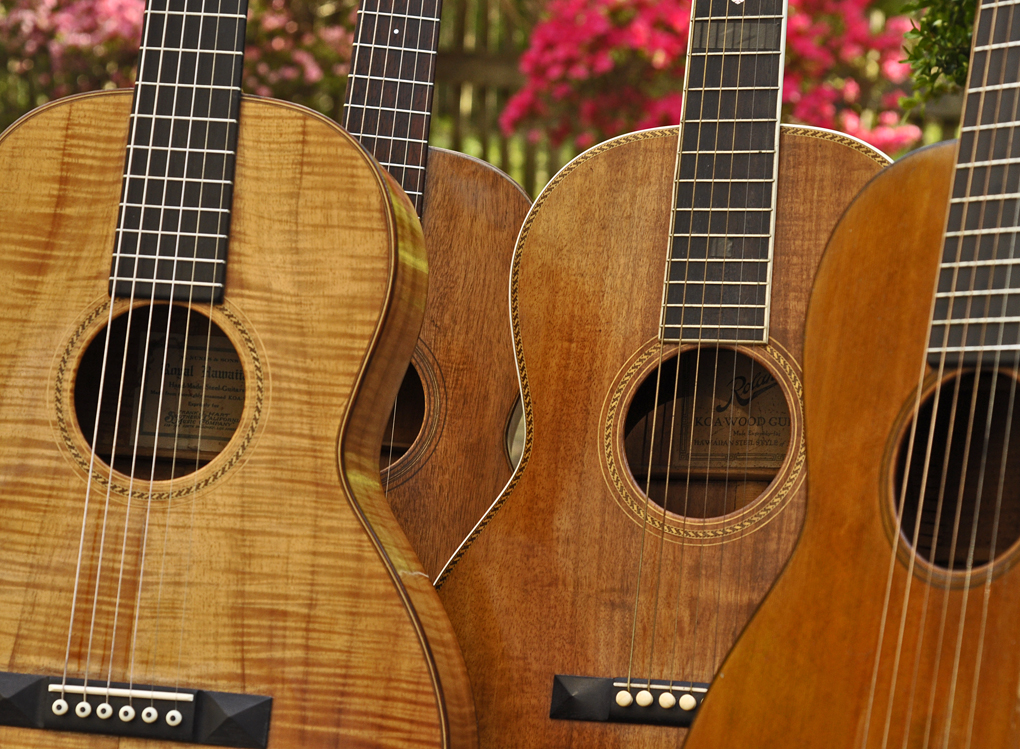
1916 Model 1400 #28, 1919 Model 1350 #14001, 1917 Model 1500 #181, and 1916 Spruce Top Sample with no serial number
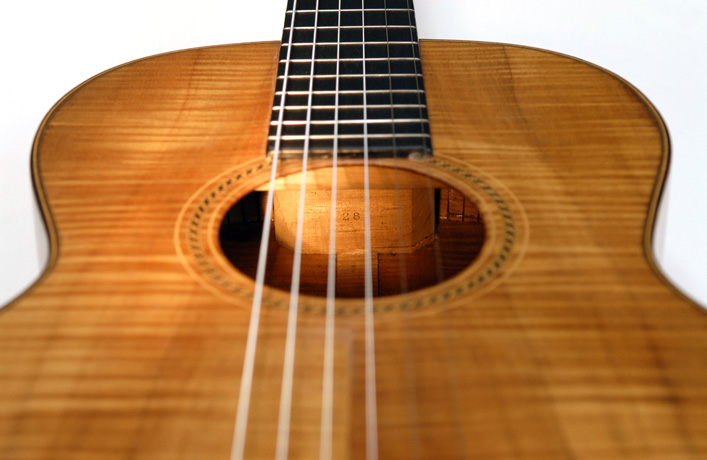
The guitars designed for SoCal had serial numbers of their own. The Model 1400 shown here, from the very first batch, is number 28. The numbered guitars started with number 19, apparently allowing for the eighteen samples which were sent without serial numbers.
A total of 261 guitars were produced with SoCal serial numbers.
By June, 1918, instruments made for Southern California Music had standard Martin serial numbers.
The later Southern California Music Company Hawaiians have trim similar to a regular Martin, and Martin serial numbers. While earlier SoCals generally bear the Southern California Music Company name on the headstock, later examples have either both the SoCal and Martin names or the Martin name only.
The early Model 1350 and 1500 examples I've seen have the "Rolando Koa Wood Guitars" label, while the sample 1350 and early 1400 have the "M. Nunes & Sons, Royal Hawaiians" label inside. The later examples have the Martin stamp inside.
These "Hawaiian" Martins, from the time they were first made in the teens, were catalogued with "steel strings and nut adjuster for Hawaiian playing. Suitable for regular playing with nut adjuster removed." Only beginning in 1925 were these guitars made specifically for Hawaiian playing, with high nuts and flush frets. While the early "K" models, such as the 0-18K and 0-28K, began life with regular frets and nut adjusters, the "H" models, including the 00-18H and 00-40-H, were introduced after the change to flush frets and high strings.
C.F. Martin/Southern California Music Company Sample Model 1350
This guitar is one of the six original samples with spruce tops which were requested of Martin by the Southern California Music Company, in a style similar to the Martin 0-18 but suited for playing in the Hawaiian style, with steel strings and fan bracing, similar to the Hawaiian guitars first shipped 3 1/2 months earlier to the Ditson Company.
The sample Nunes also has the same single ring rosette seen on Ditsons and guitars made by Martin for several other firms, and a tinted spruce top similar to those seen on many Ditsons.
No serial number.
These samples have no serial number, while the regular production appears to begin with serial number 19, accounting for the six samples of each model.
Shipped July 10, 1916
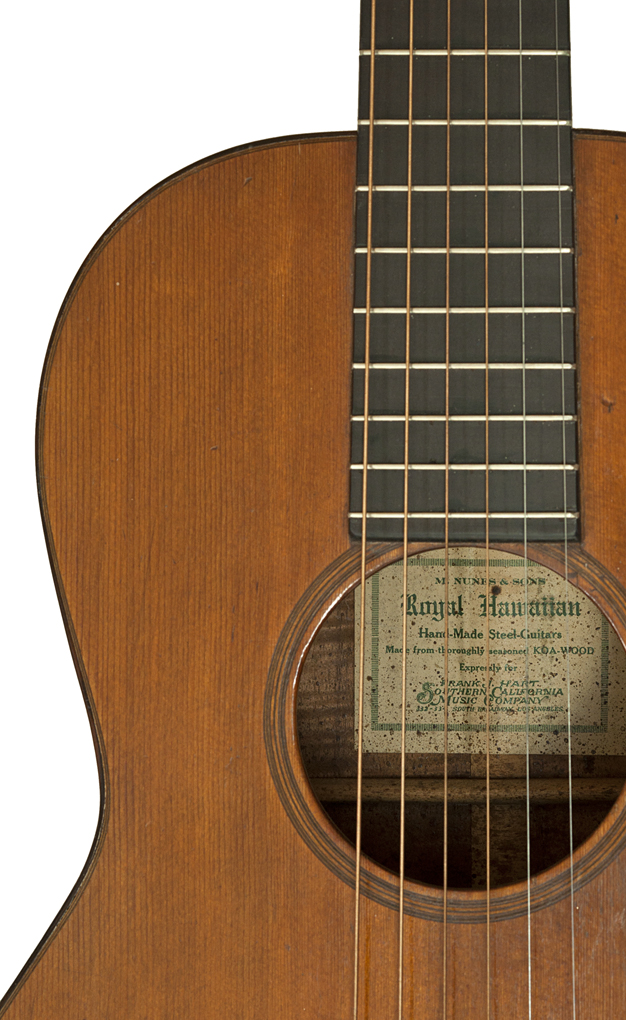
These early guitars were made with Koa wood supplied by SoCal.
This sample instrument has the "M. Nunes, Hawaii" decal on the headstock of the guitar.
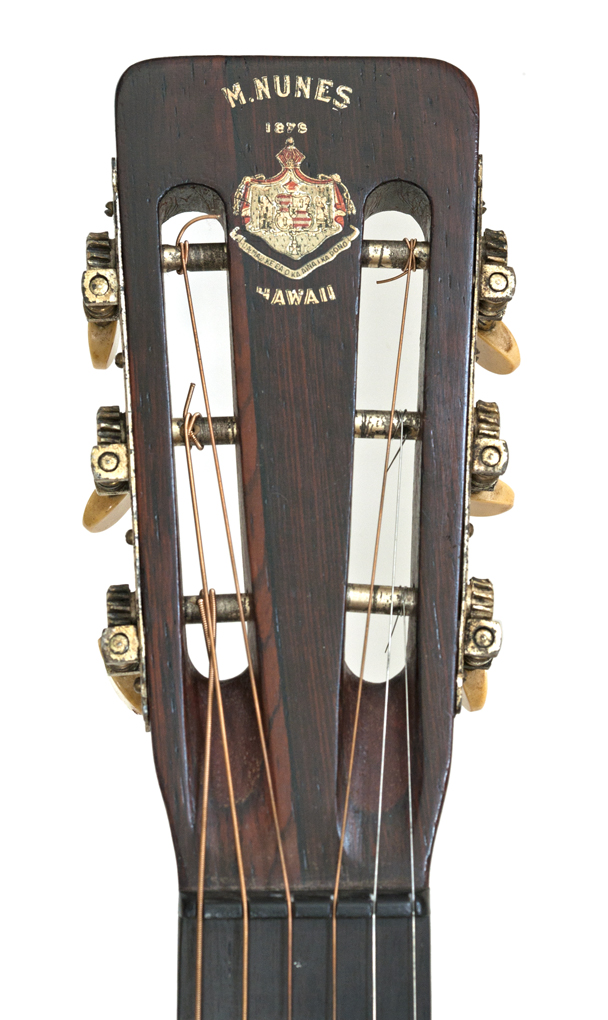
This sample has neither the Southern California nor the Martin stamp on the back of the headstock, however. There is neither a Martin nor SoCal stamp on the back strip inside the guitar.
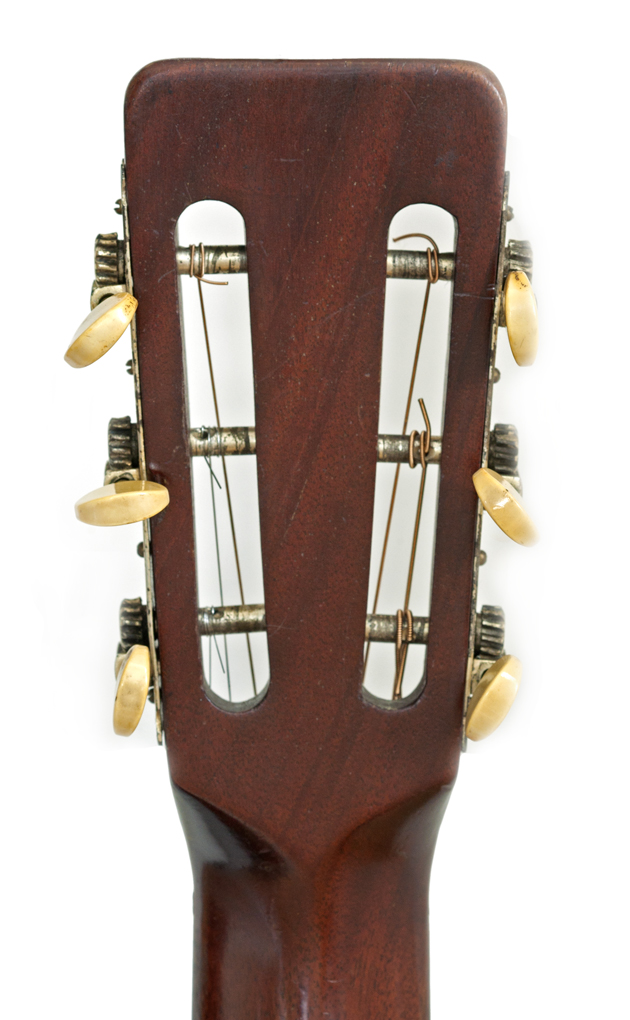
C.F. Martin/Southern California Music Company Model 1350
1916 Southern California Music Company Model 1350
Fan style braces similar to a Ditson dreadnaught.
Stamped inside, "C.F. Martin & Co., Nazareth, PA"
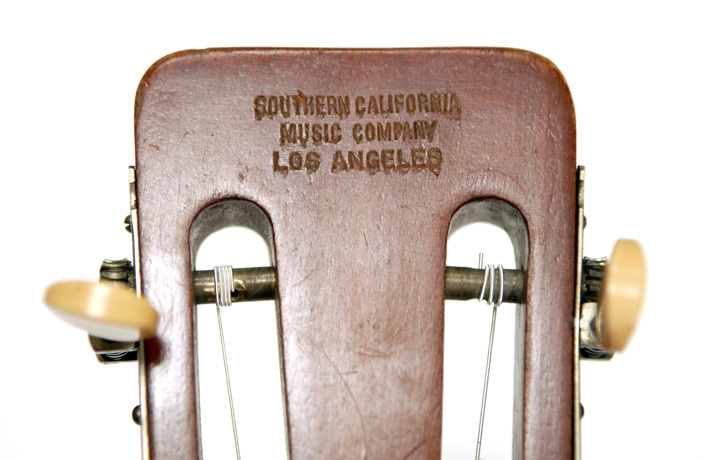
Stamped on back of headstock "Southern California Music Company, Los Angeles"
Early examples have the "Rolando" label
Both the initial samples for the Model 1350 and the earlier 1350 with the Rolando label have a single ring rosette like many of the guitars Martin made for others such as Ditson, Wurlitzer, and Foden, but the later examples with Martin serial numbers have a standard Martin three ring rosette.
138 of the Style 1350 were produced with SoCal serial numbers.
Rolando 1350
SoCal serial number 95
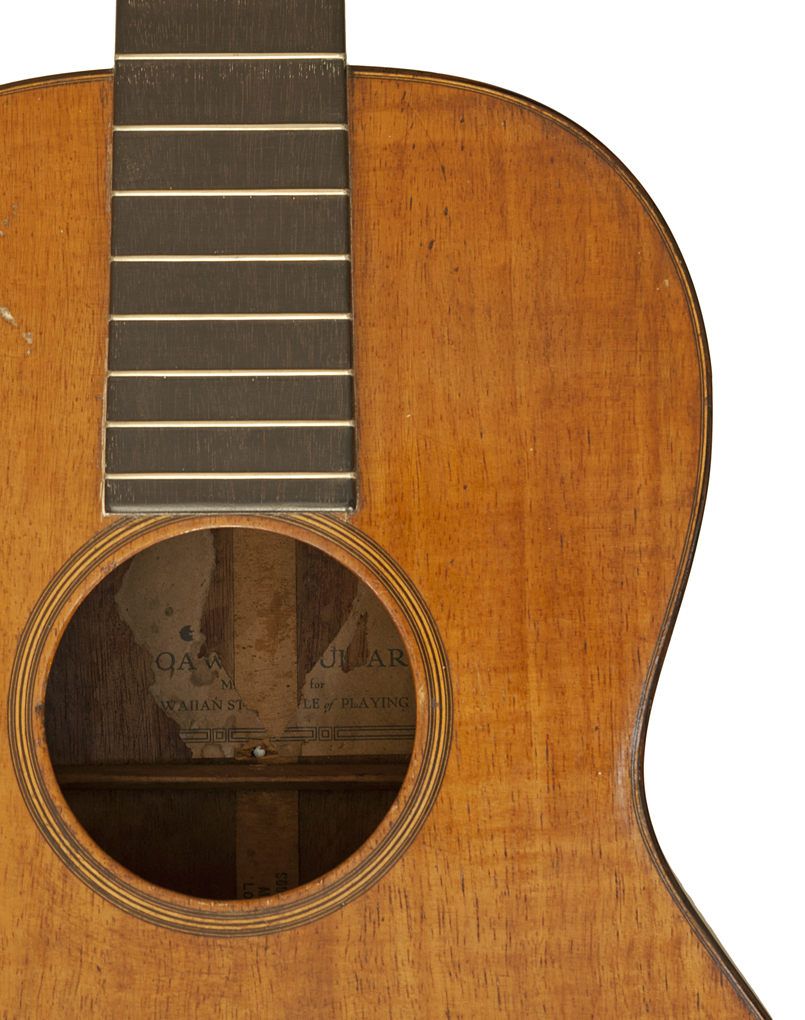
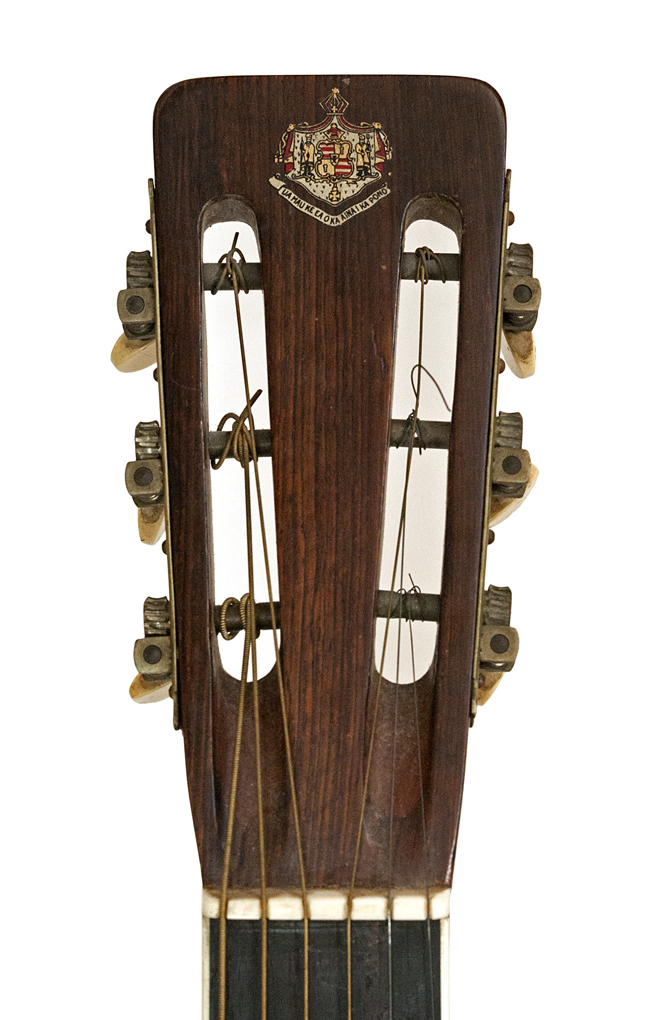
This early example has a Rolando label and a Hawaiian decal on the headstock without the Nunes name.
The new edition of the Longworth book (in a section to which I otherwise contributed) states that "The Rolando label was used on later Style 18K and 28K models made for Southern California Music Company. Unlike earlier koa models made for this firm, those with the Rolando label are identical to Martins and have the Martin stamp on the interior with regular serial numbers." This example as well as the early Style 1500 shown below illustrate that the Rolando label appeared quite a bit earlier than previously thought.
I first thought that the different labels related to the different styles. I now see that the early sample Style 1350 and Style 1400 number 28 have the "Nunes" label while Style 1350 number 95 and Style 1500 number 181 have the "Rolando" label, so it is entirely possible that the label was replaced sometime between the production of numbers 28 and 95.
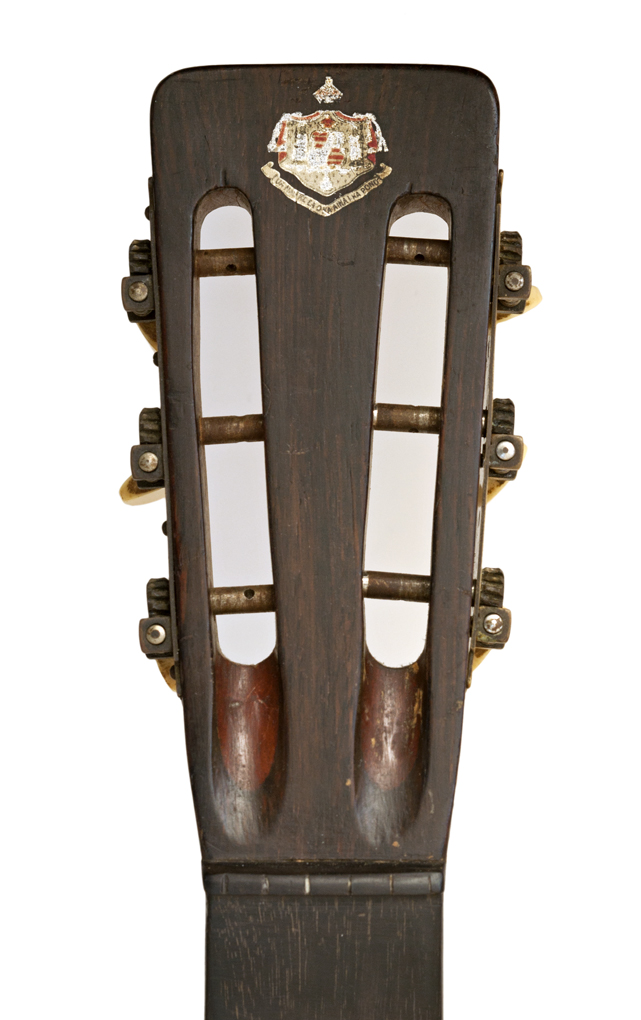
This example has a Martin headstock stamp.
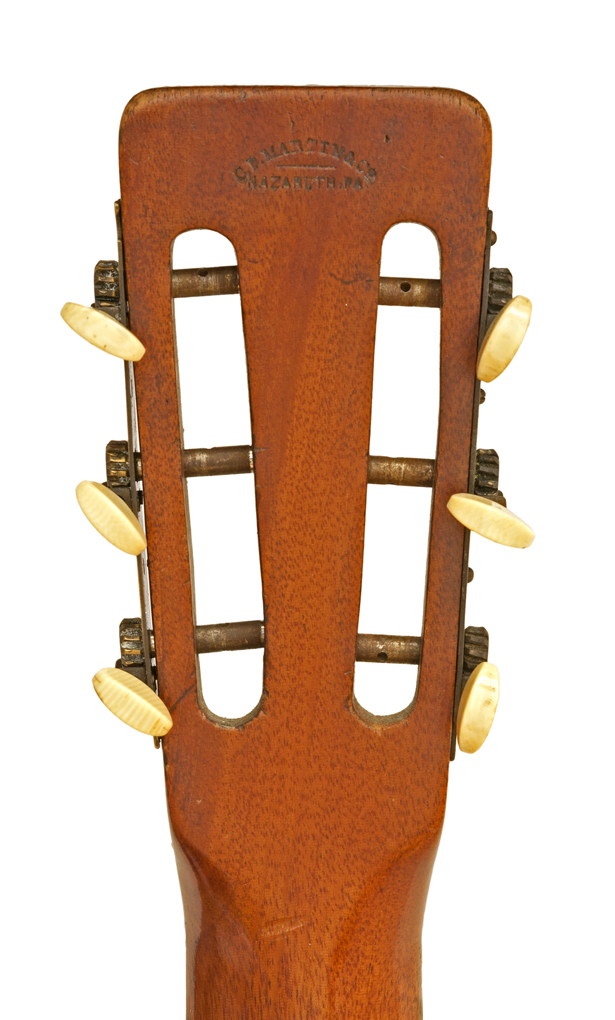
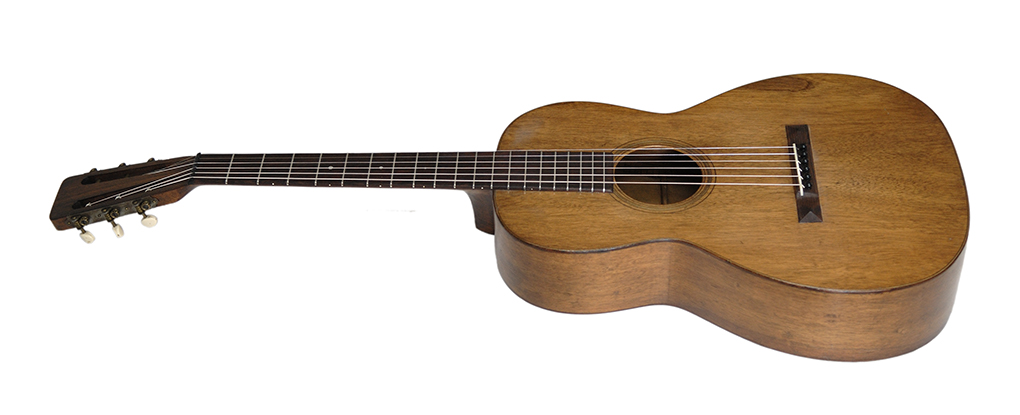
1919 Southern California Music Company Model 1350
Martin serial numbers 14001 and 14003.
#14001
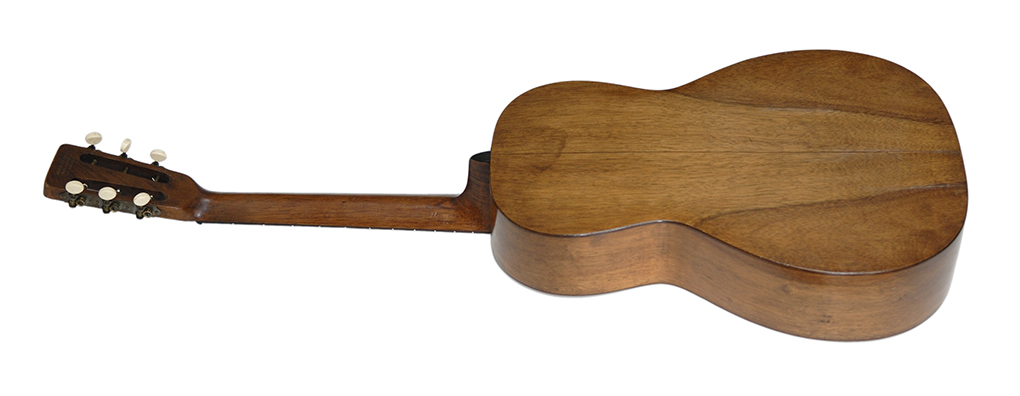
#14003
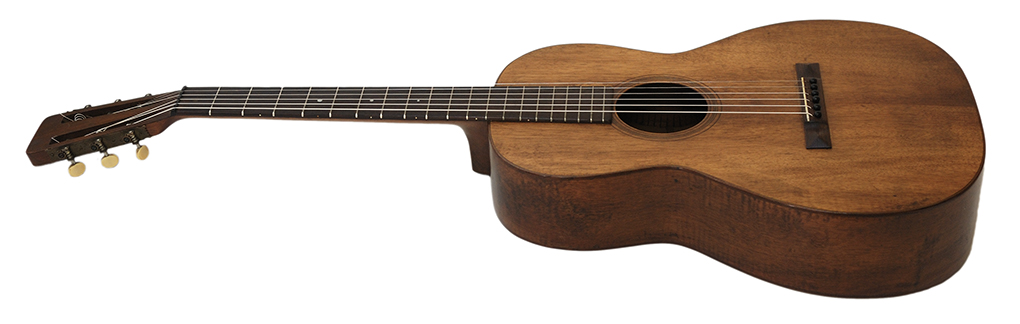
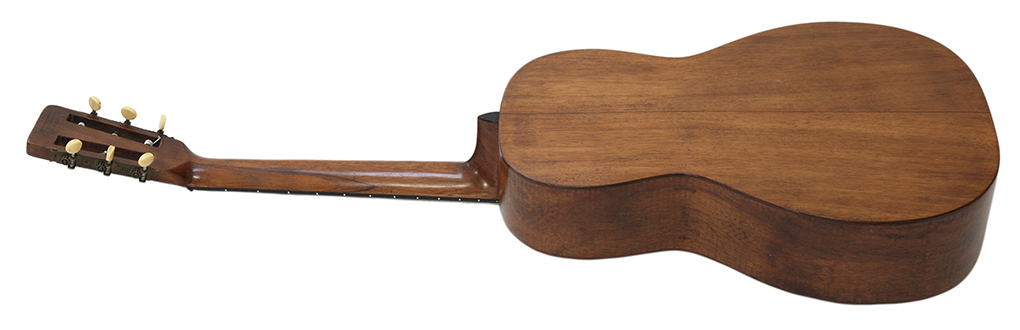
These later examples with Martin serial numbers have no headstock decal or inside label, but a SoCal stamp on the headstock.
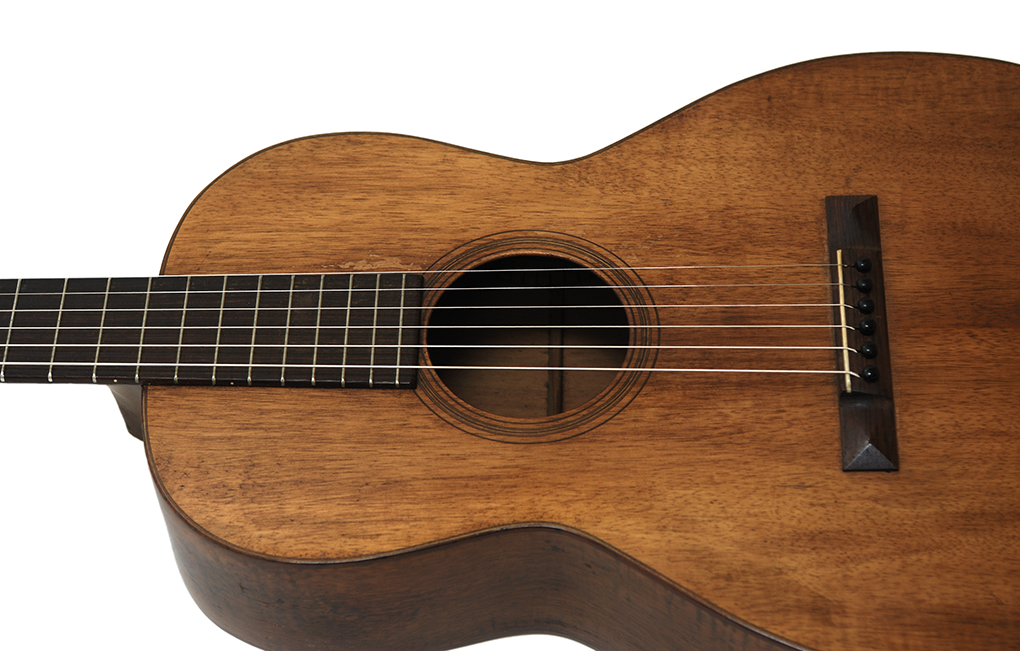
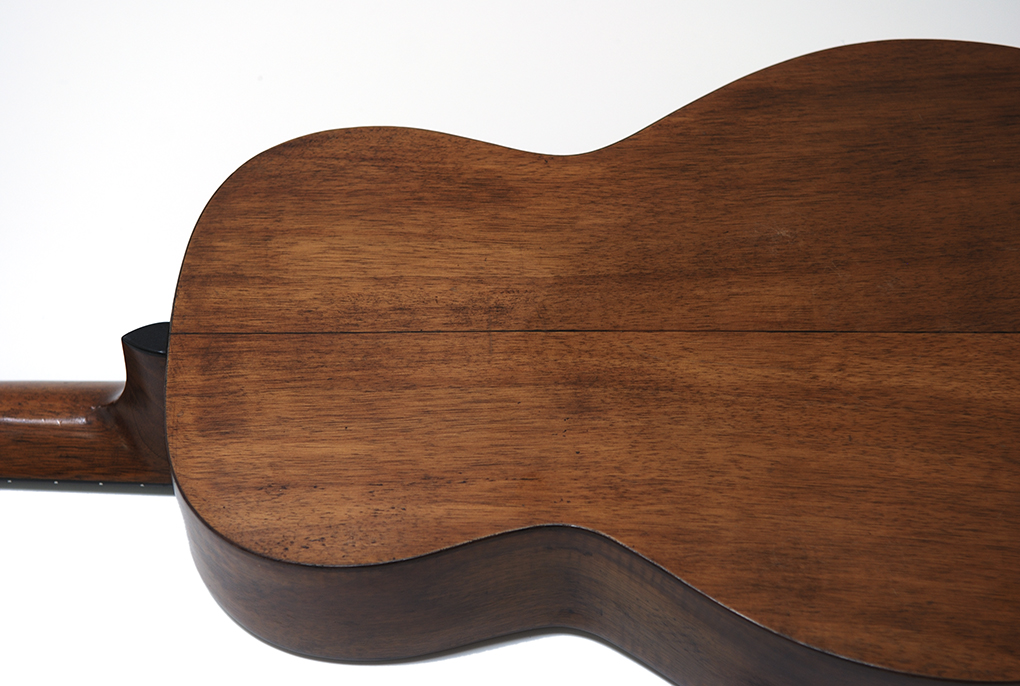
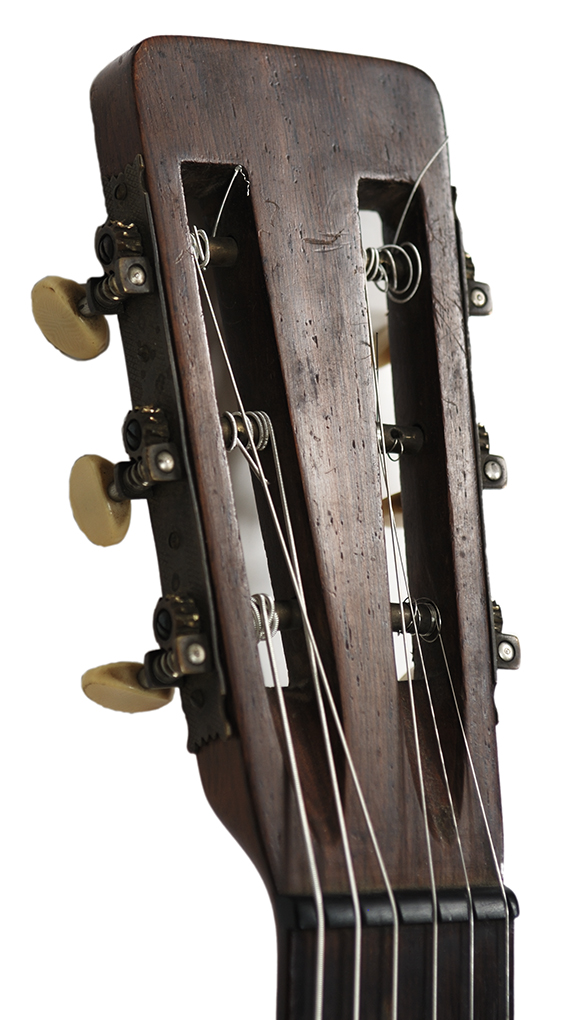
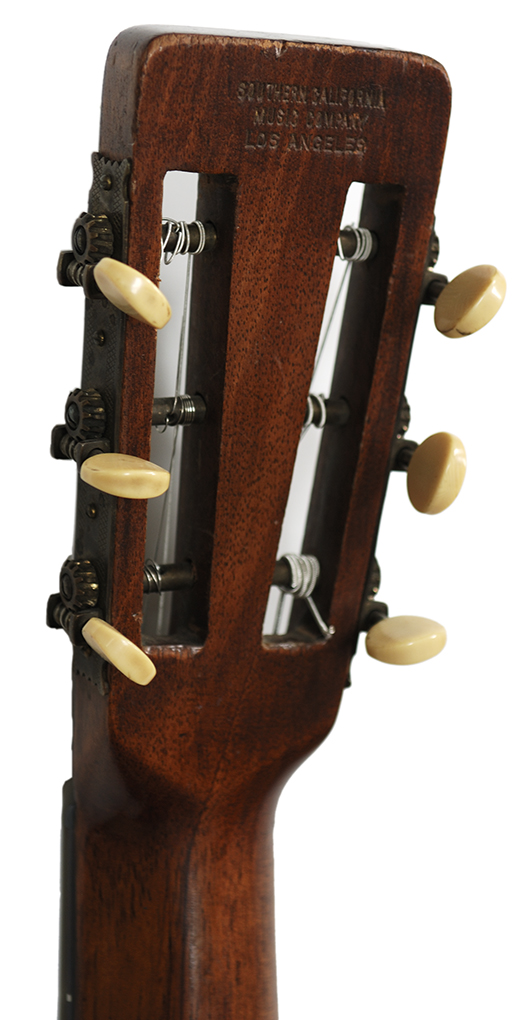
In 1919, Martin began selling their less expensive guitars with rounded slots in the headstock. Previously, all Martins had square slots, a process that took extra time which was in short supply as as Martin's production was doubling yearly. Curiously, these two guitars, two serial numbers away and both from the same batch, have different style headstocks, which is not surprising if you follow Martin history. It also appears that two different stamps with slightly different typefaces were used on these two examples. No doubt, the necks were made first, and different styles appeared when the workers reached into the pile when it came time to attach a neck.
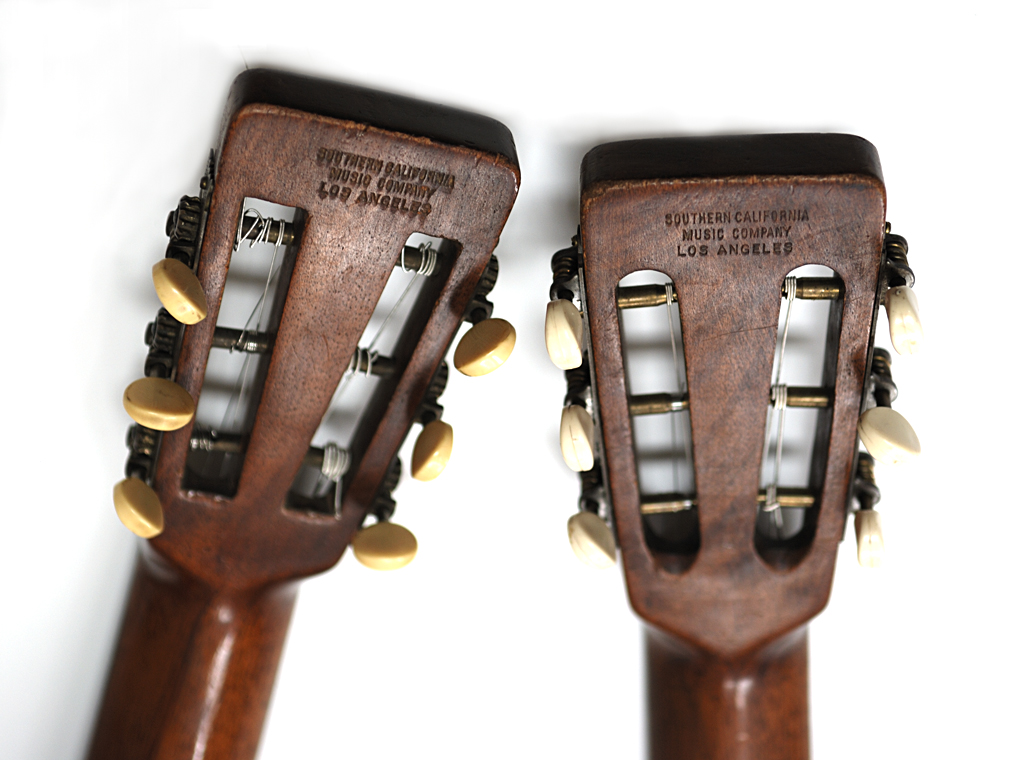
14003 and 14001
By 1919, the Style 1350 would be nearly indistinguishable from the Hawaiian Model 0-18K that would become a standard part of the Martin line.
C.F. Martin 1927 0-18K
Serial number 33958.
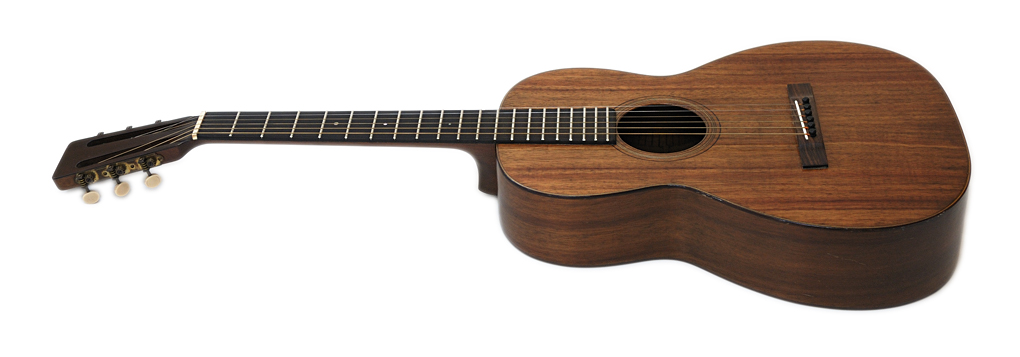
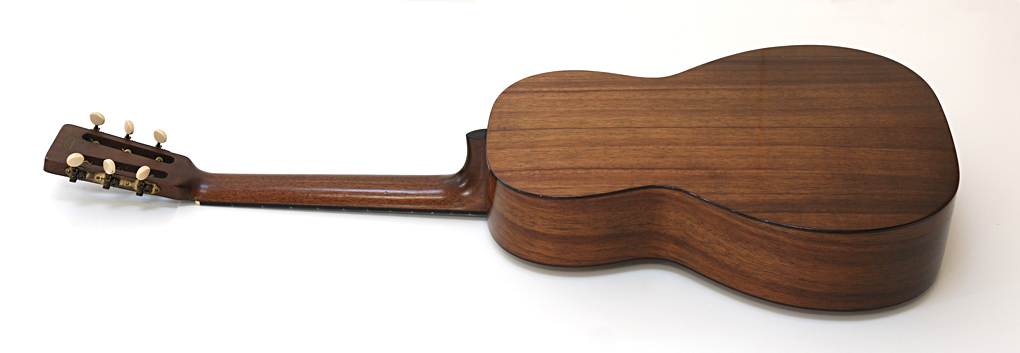
C.F. Martin/Southern California Music Company Model 1400
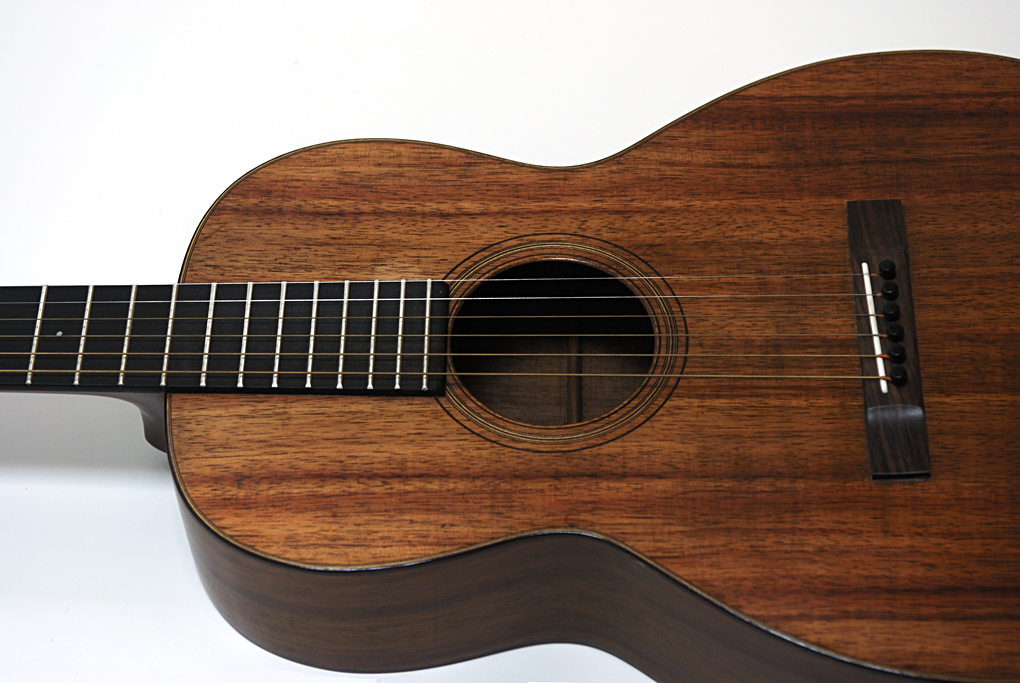
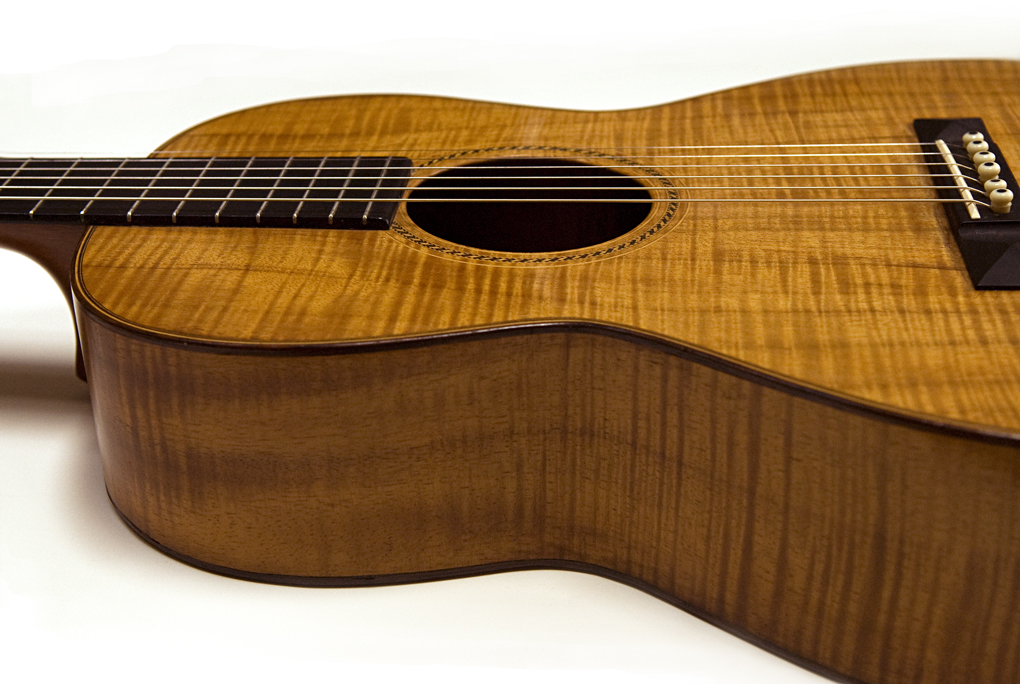
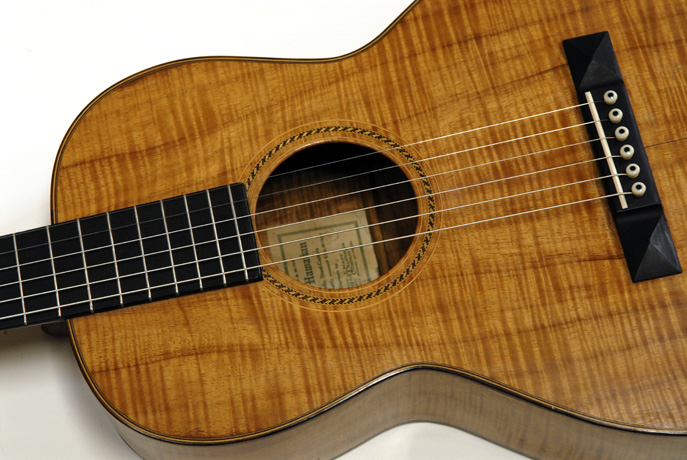
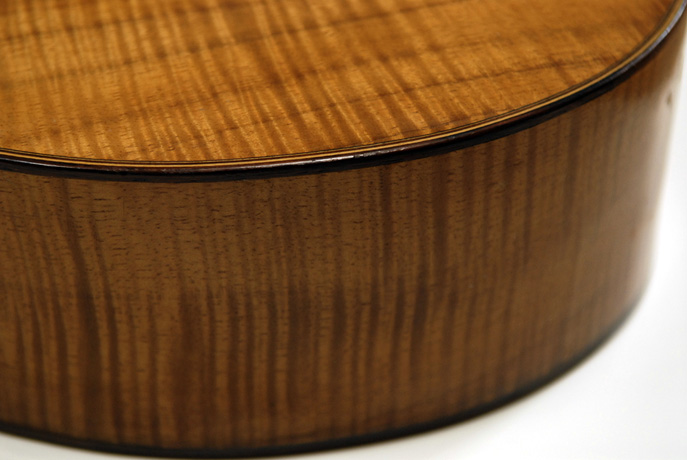
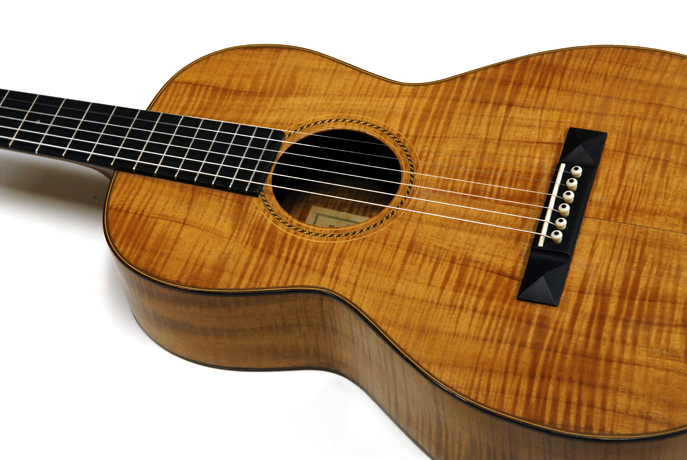
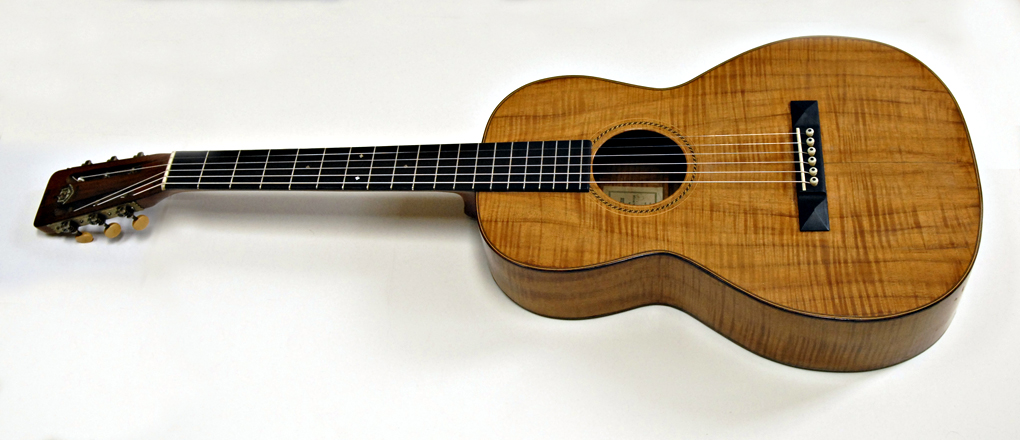
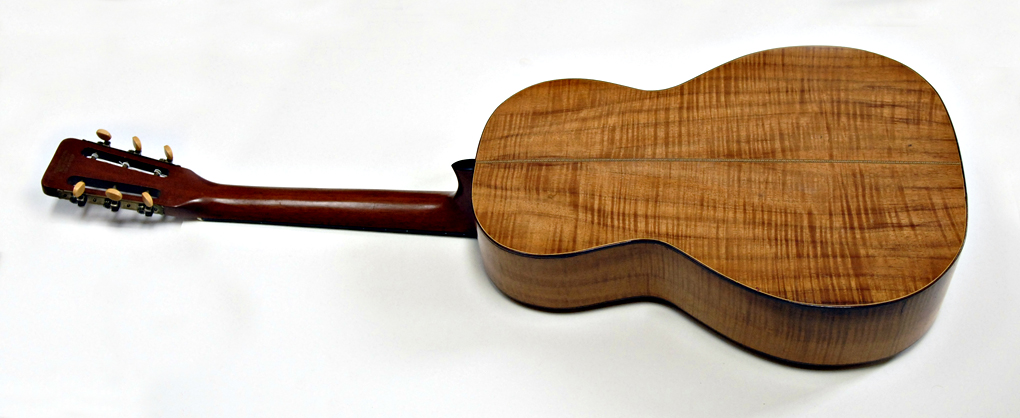
1916 Southern California Music Company "M. Nunes & Sons." Model 1400
This beautiful variation of a style 21 guitar made for the Southern California Music Company was marketed as the Model 1400, the middle of the three models produced by Martin for SoCal.
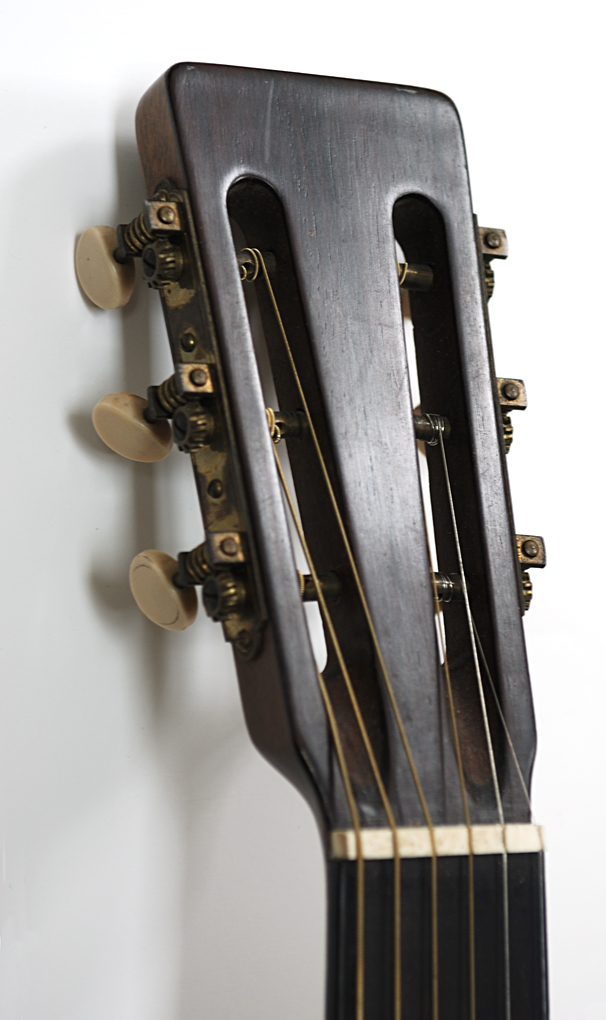
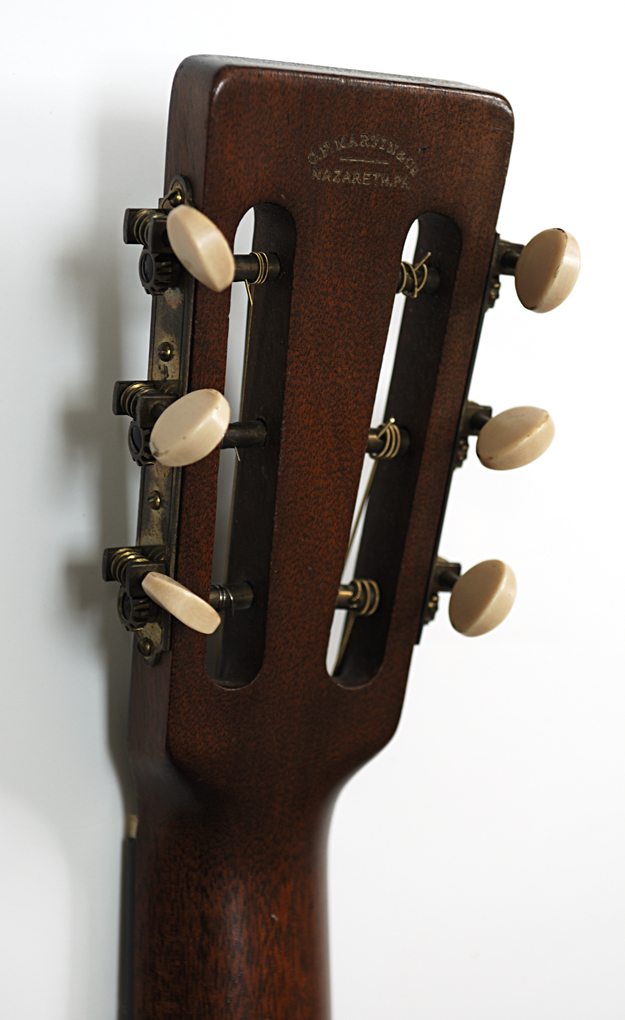
An early version with an "M. Nunes and Sons" interior label and headstock decal, and a Southern California Music Co. stamp on the back of the headstock.
The Martin name is conspicuously absent from this guitar.
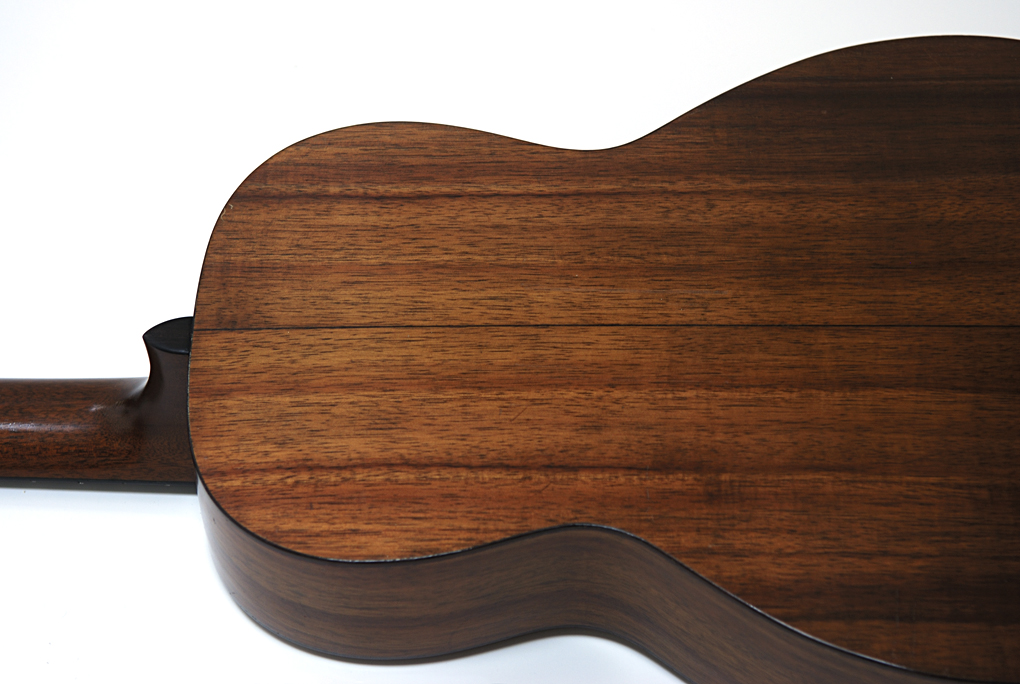
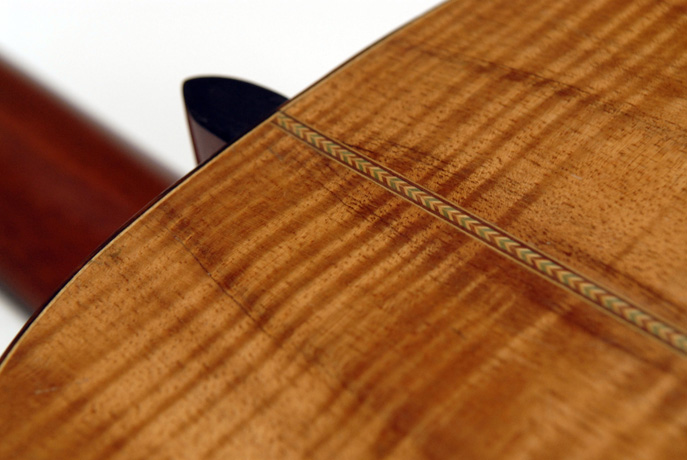
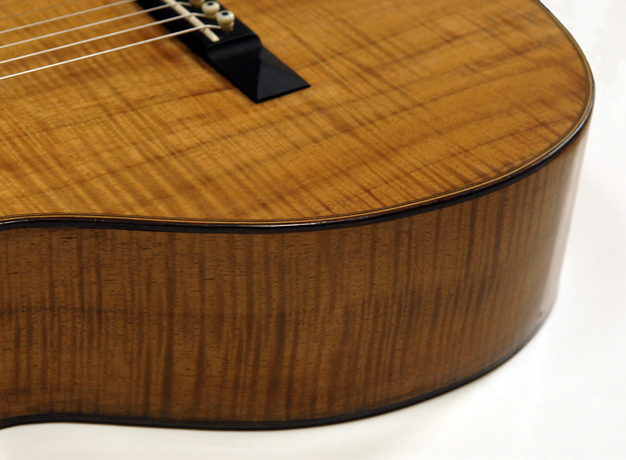
From the first batch of production SoCal guitars, this was also one of the first batch of Martins to utilize all Koa wood construction. Interestingly, the vibrantly flamed koa is quite different from the plainer wood used on both the less expensive Style 1350 and the higher priced Style 1500.
Along with the early Ditson dreadnaught, also made with fan bracing, this was also one of the first production Martins made for steel strings.
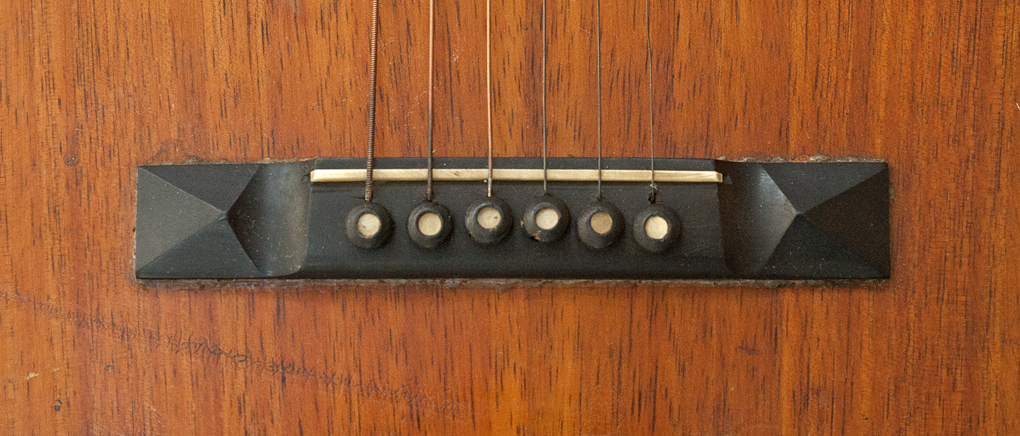
The pyramid style bridge seen here is a later replacement.
76 of the Style 1400 were produced with SoCal serial numbers.
SoCal serial number 28.

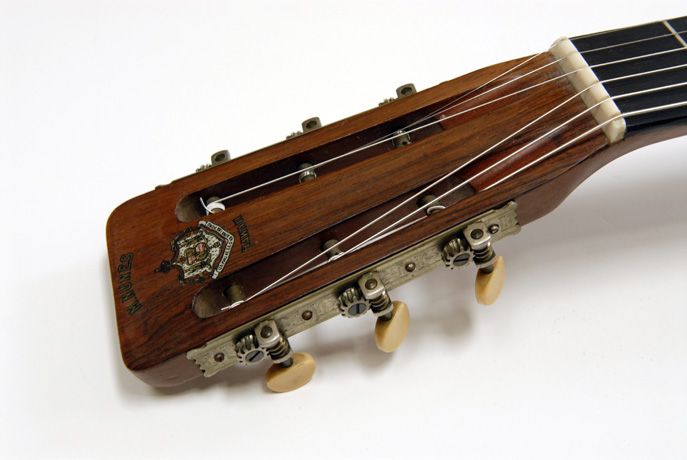
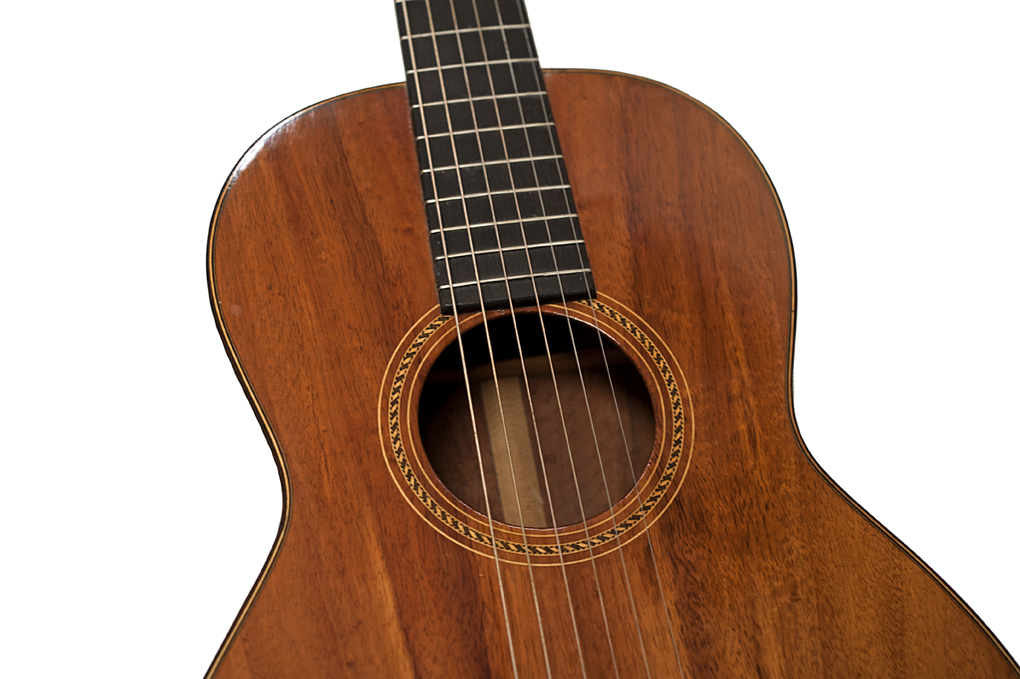
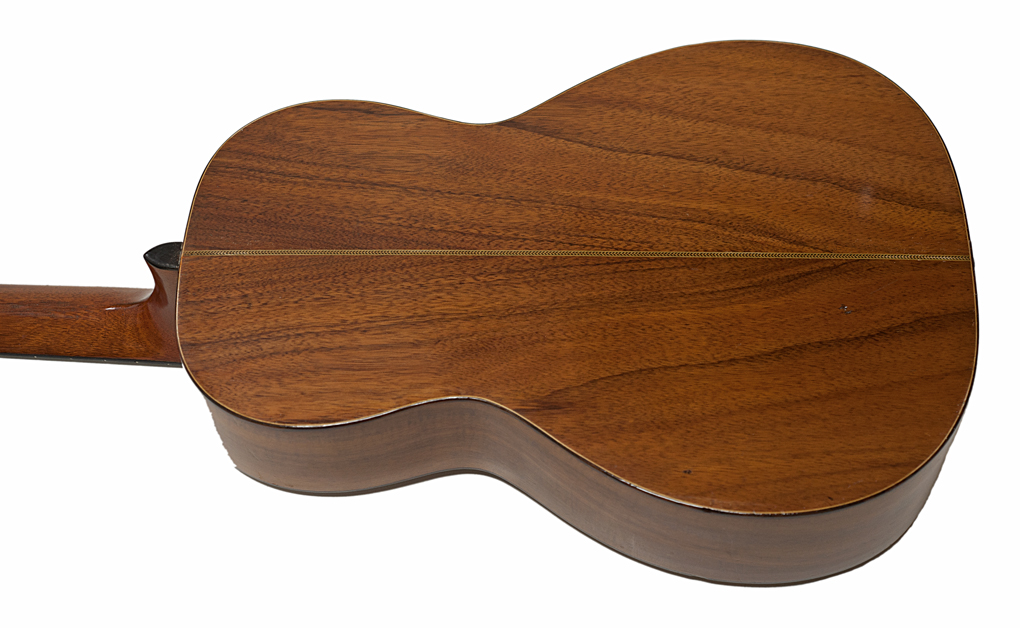
1917 Southern California Music Company "M. Nunes & Sons." Model 1400
The "standard Edition" of the Southern California Music Style 1400
With Martin Stamp on back of headstock.
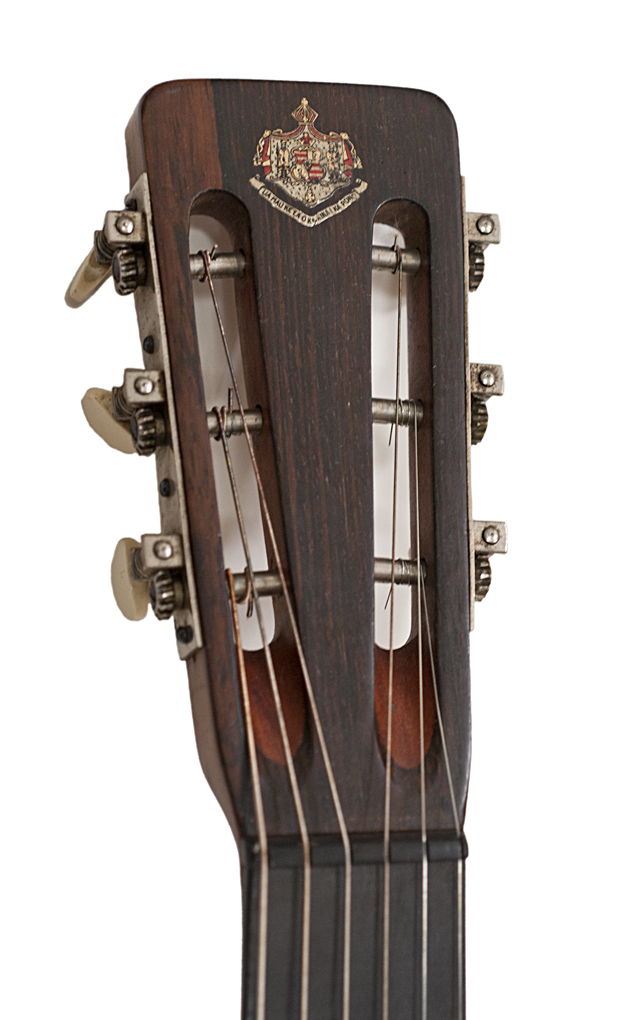
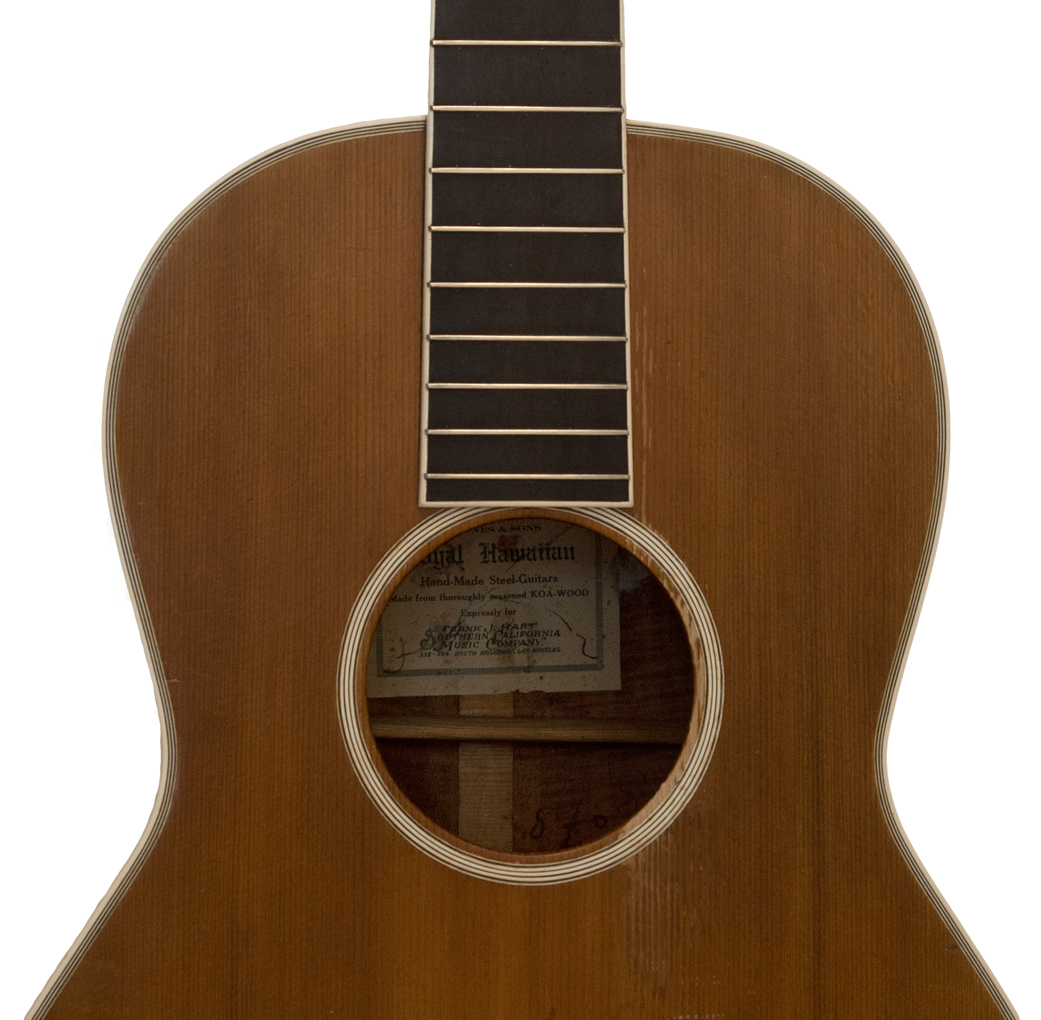
C.F. Martin/Southern California Music Company Sample Model 1500
This guitar is one of the six original samples with spruce tops which were requested of Martin by the Southern California Music Company, in a style similar to the Martin 00-28 but suited for playing in the Hawaiian style, with steel strings and fan bracing, similar to Hawaiian guitars first shipped 3 1/2 months earlier to the Ditson Company.
The sample Nunes also has the same single ring rosette seen on Ditsons and guitars made by Martin for several other firms, and a tinted spruce top similar to those seen on many Ditsons.
No serial number.
These samples have no serial number, while the regular production appears to begin with serial number 19, accounting for the six samples of each model.
Shipped July 10, 1916
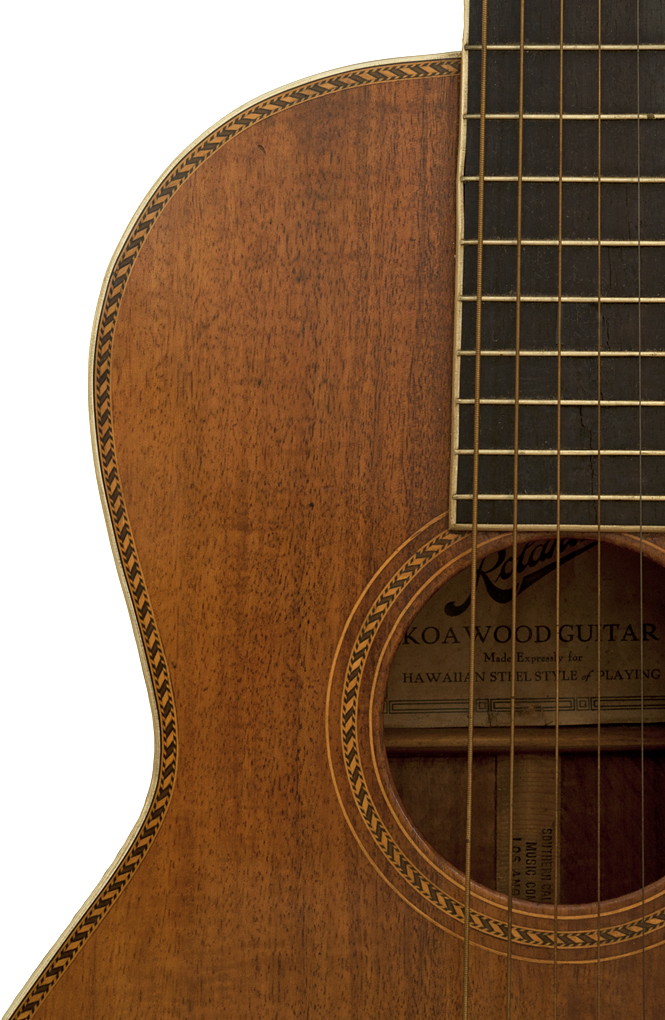
C.F. Martin/Southern California Music Company Model 1500
1916 Southern California Music Company "Rolando" Model 1500
Beautiful original condition variation of a style 28 guitar in 00 size made for the Southern California Music Company, and sold as the Model 1500, the top of the SoCal line.
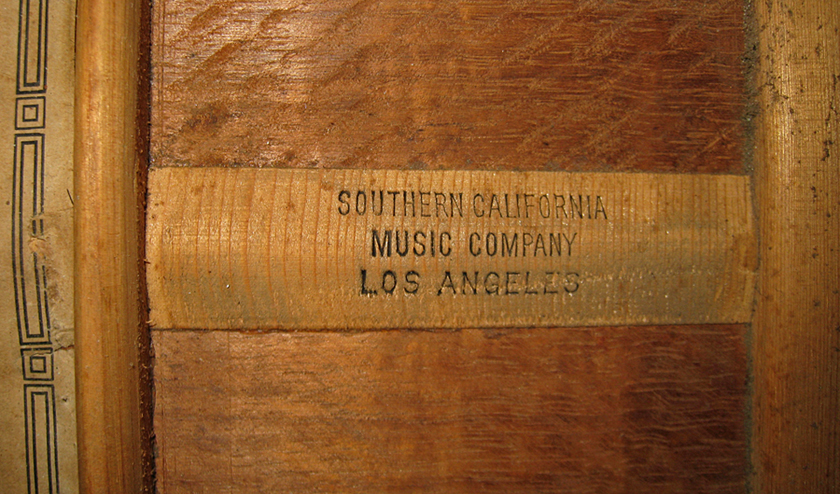
With a "Rolando" paper label, Southern California Music Co. stamp on the center strip of the back, and a Martin stamp on the back of the headstock.
From the first batch of production SoCal guitars, this was also one of the first batch of Martins to utilize all Koa wood construction.
Along with the early Ditson dreadnaught, this was also one of the first production Martins made for steel strings.
14" top width.
Interestingly, while all other early Hawaiian steel string Martins have fan bracing, the early Style 1500 has X bracing, though it appears to have been made for Hawaiian playing.
Always a surprise, by 1919 this SoCal model still had the Rolando label and SoCal headstock stamp, but was produced with fan bracing! Though the 1919 examples have standard Martin Style 28 trim and a Martin stamp inside.
None of these early Hawaiians were actually set up for Hawaiian playing with high strings, but were meant to be played in the Hawaiian style with a nut extender.
Later examples of this model have standard Martin trim and Martin serial numbers.
47 of the Style 1500 were produced with SoCal serial numbers.
SoCal serial number 181.
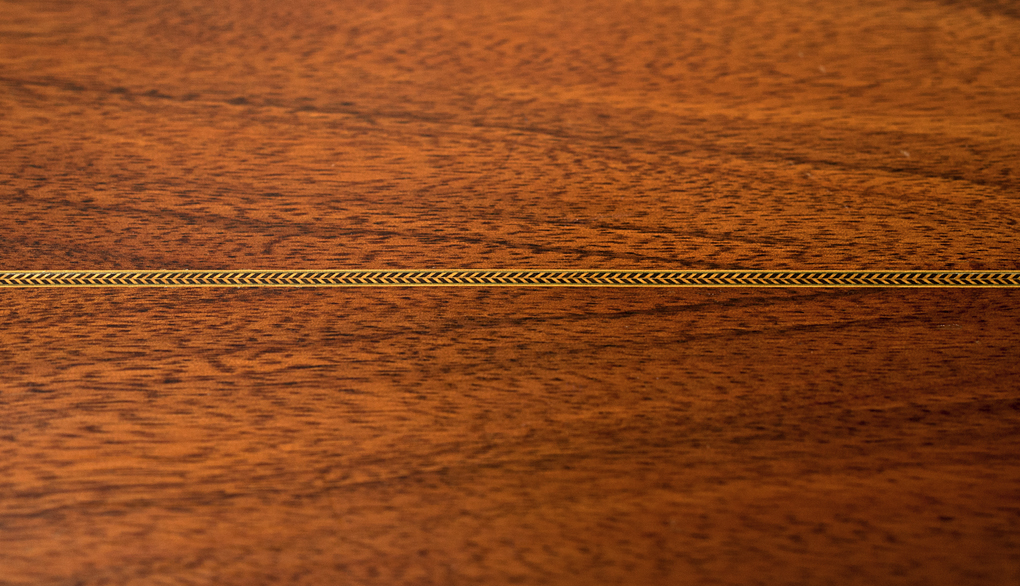
In some years, Martin put highly flamed koa on their finest koa guitars.
Just as often, Martin preferred the boring kind.
The photo at the top of the page shows two very early koa Martins built for the Southern California Music Co. at a time when Martin had their pick of the finest koa.
The guitar on the left is a beautiful, highly flamed Model 1400. On the right is the fancy, top of the line Model 1500, also shown above here, with no figure whatsoever.
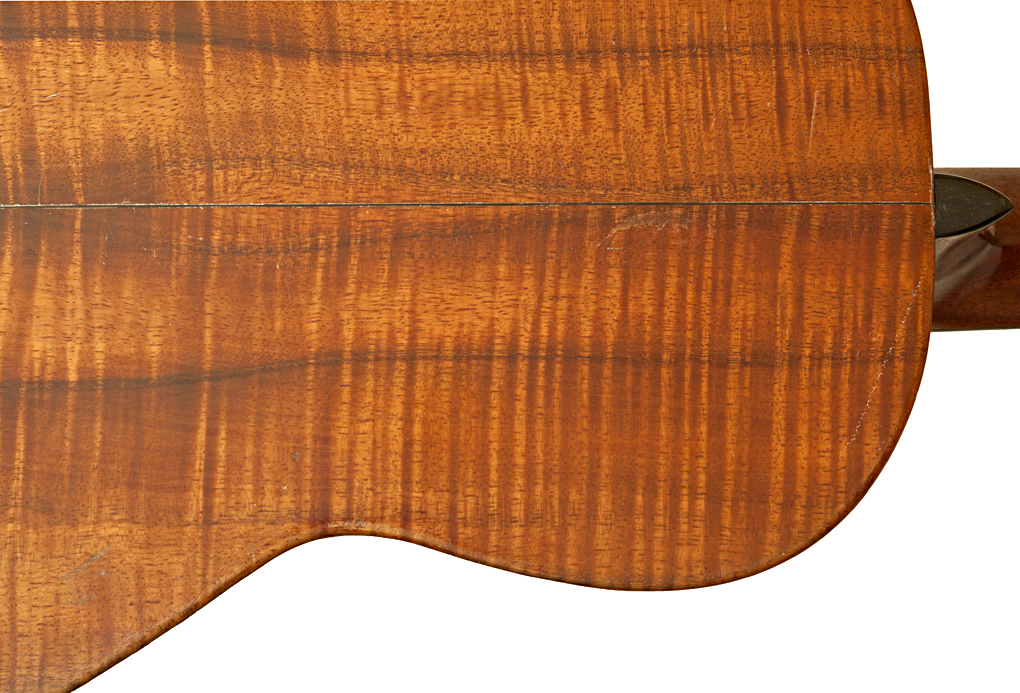
The back of the sample for the cheaper Model 1350, the base model, shown near the top of this page, shipped by Martin to SoCal for final approval with wood intentionally selected by SoCal, was also highly flamed.
Martin was definitely not consistent in their use of flamed koa.
Like the straight grain, quartersawn rosewood, with no figure, the boring koa is more stable.
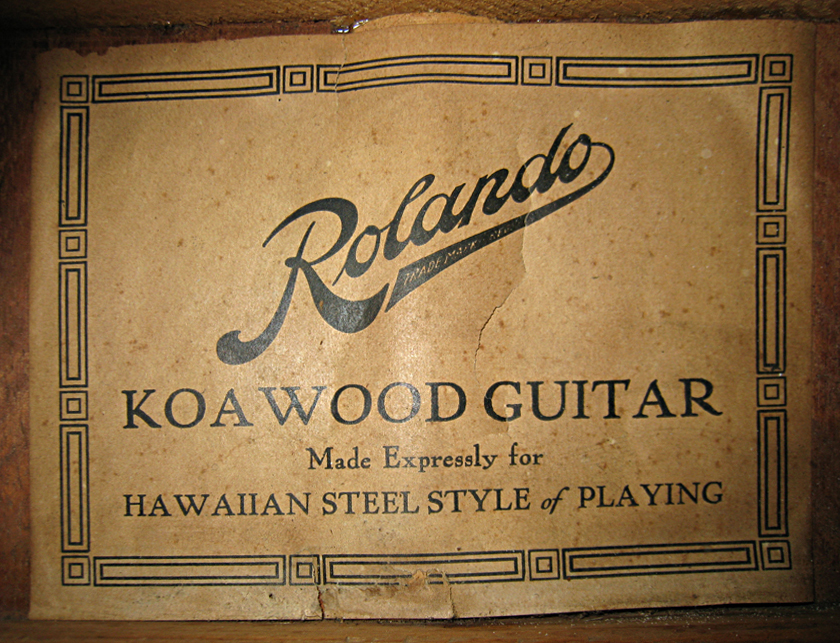
The early Rolando 1500 has the Martin stamp on the headstock, but a Southern California Music Company stamp on the back strip inside the guitar.
This early Rolando 1500 has the Hawaiian decal on the headstock without the words "M. Nunes" or "Hawaiian".
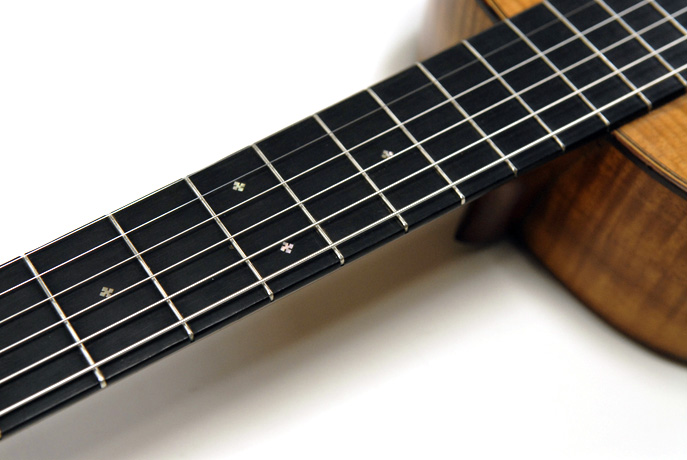
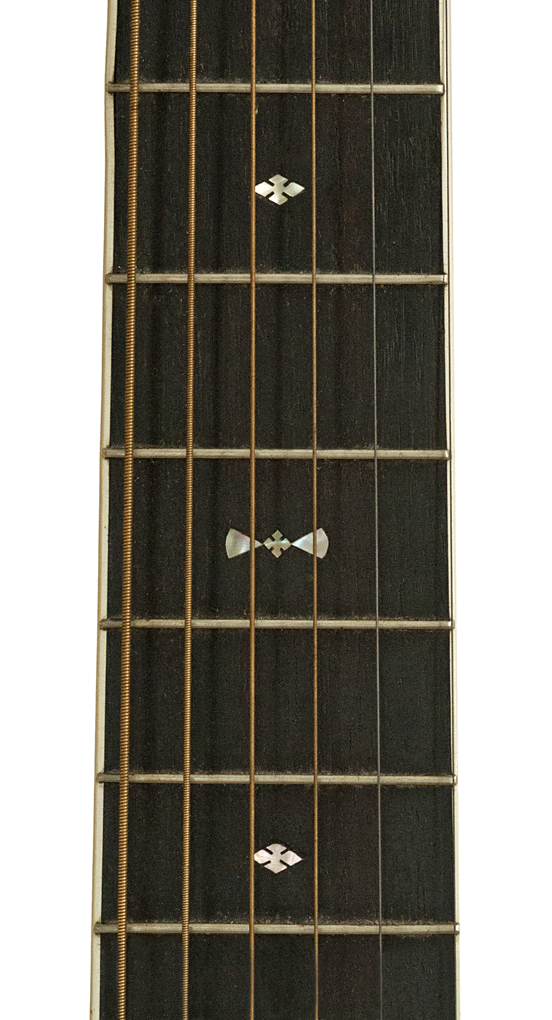
The Rolando 1500 also has a unique fretboard inlay not seen on any other Martin with the exception of the Foden Model C.
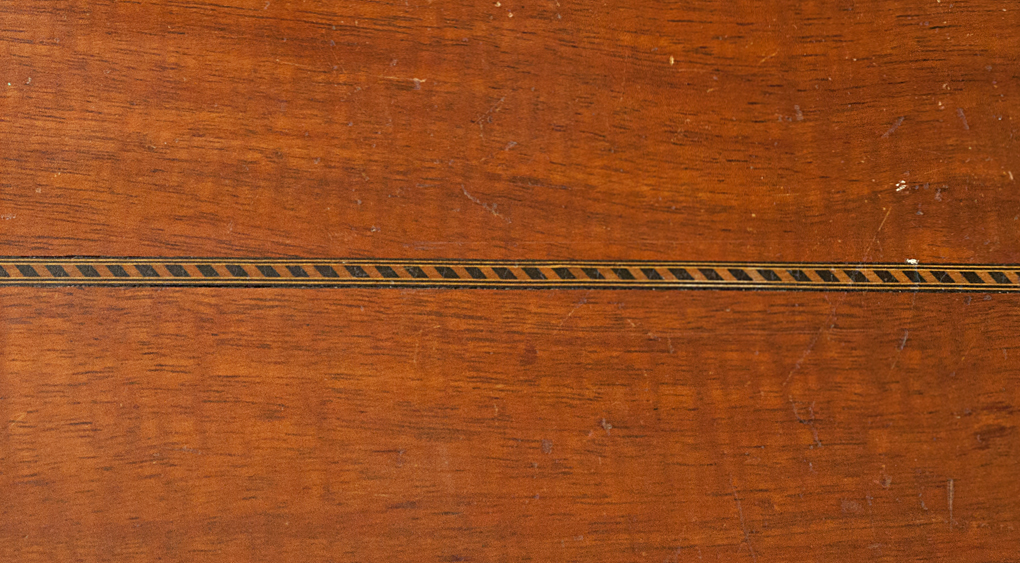
...and a back strip Marquetry different from other Martins as well, though similar to other Martins from the period.
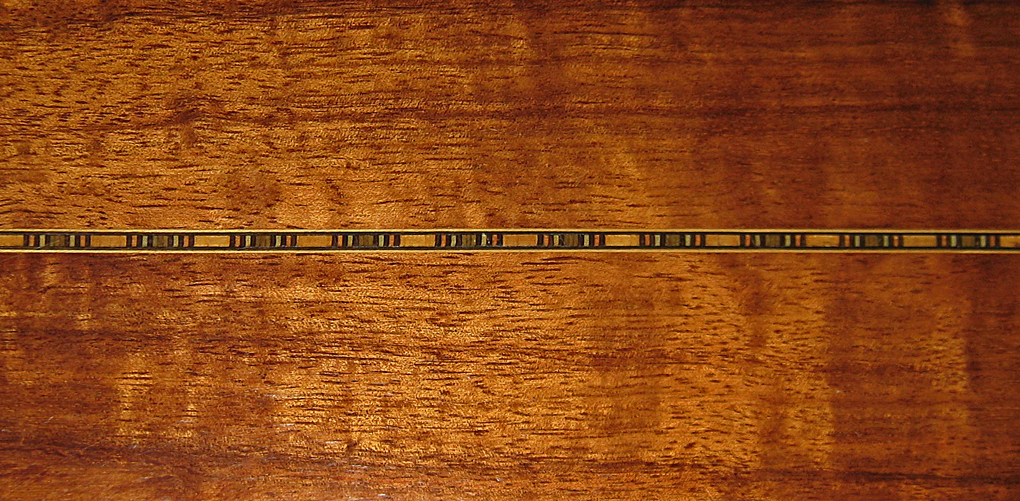
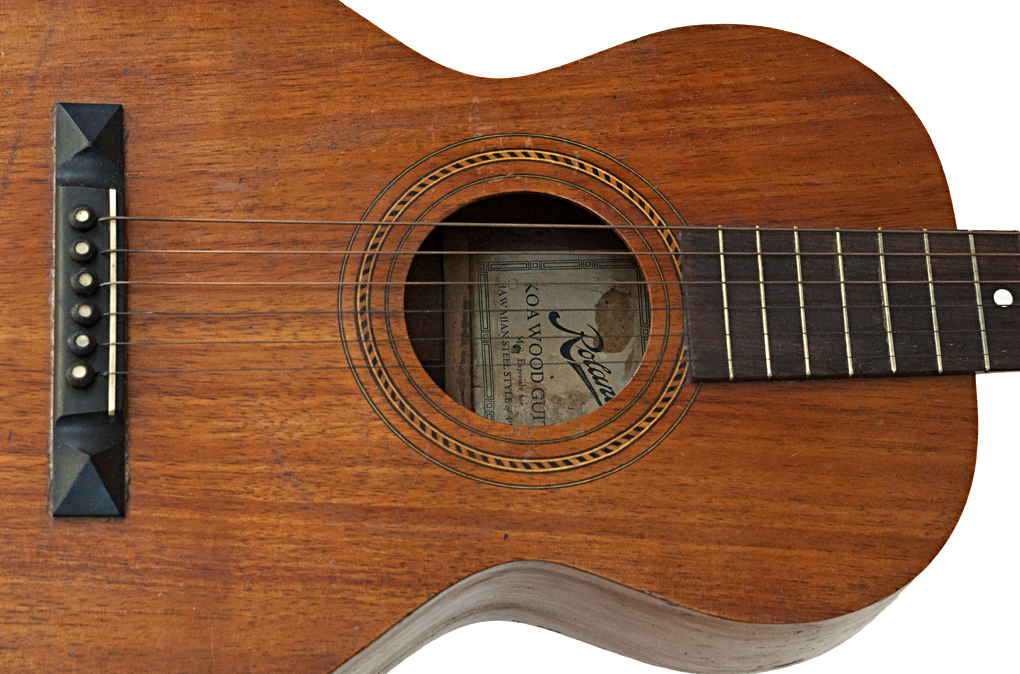
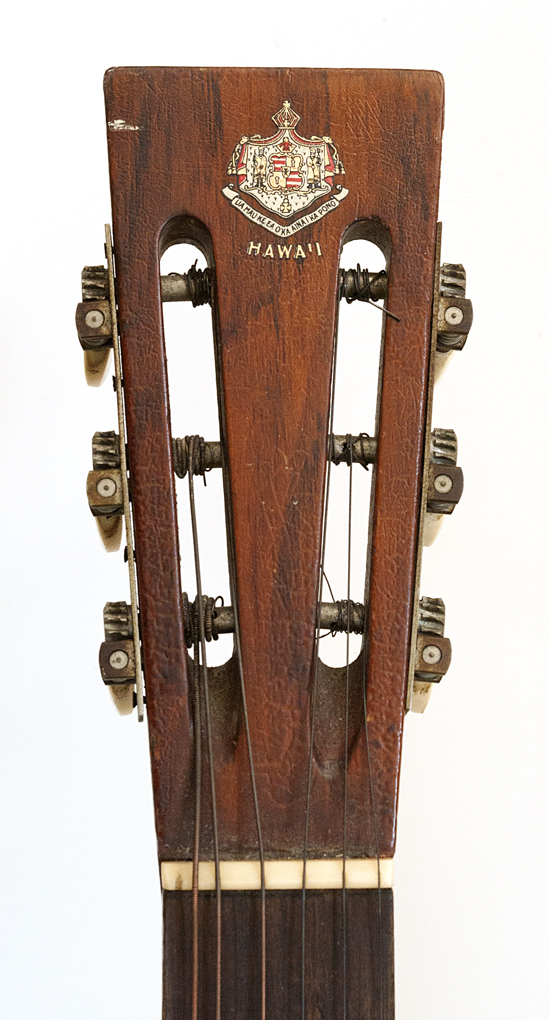
Oscar Schmidt Rolando
It's been said that SoCal supplied Martin with sample SoCal ukuleles so that Martin might match the trim on the new Martin built models to existing instruments in the SoCal line.
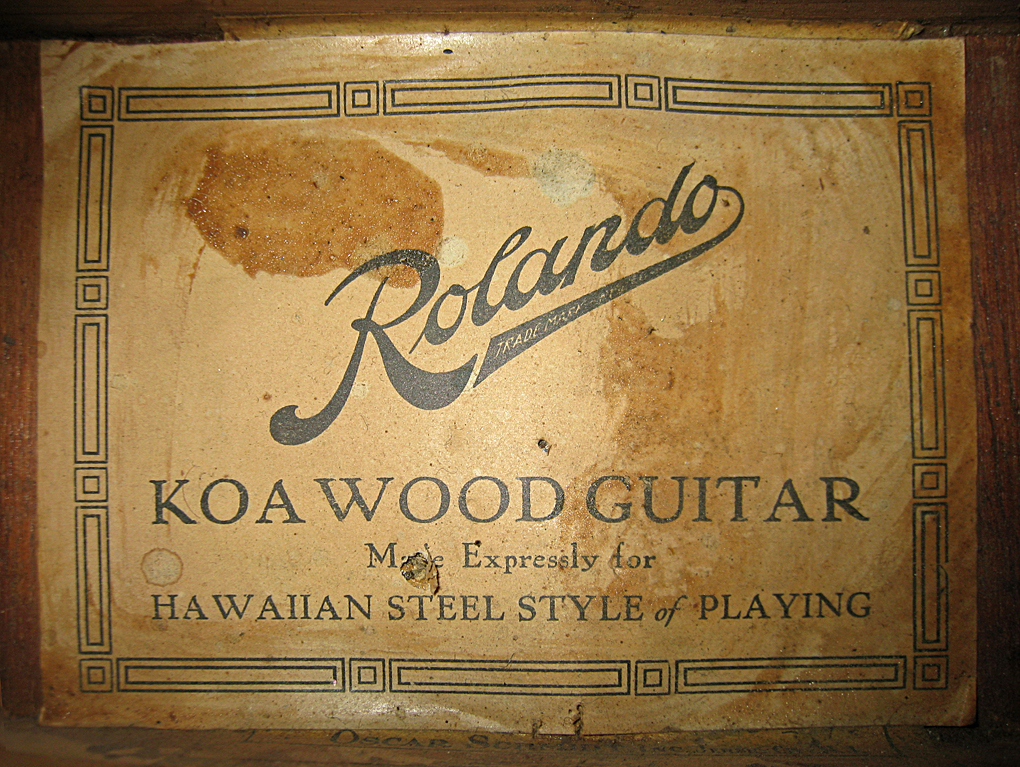
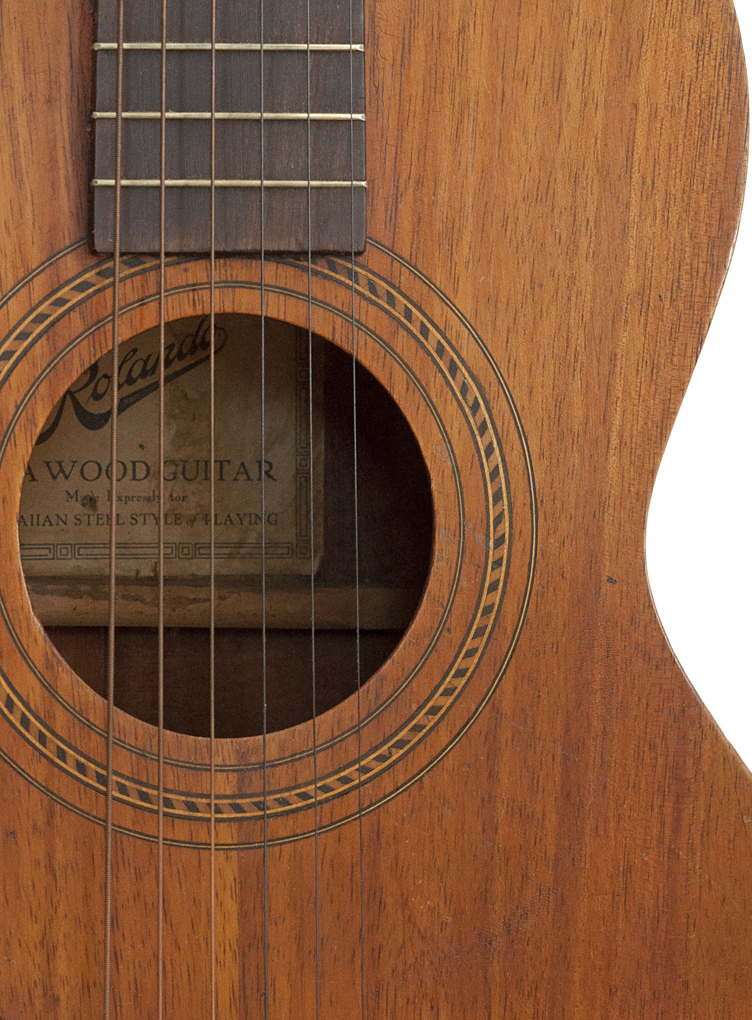
This guitar, remarkably similar to those produced by Martin, with the exact same headstock decal, same "Rolando" label, similar marquetry, and similar koa body, but apparently made by Oscar Schmidt, leads me to belive that SoCal may have had this guitar produced before the Martin, and supplied a guitar such as this for Martin to replicate.
It is also possible that SoCal moved to this cheaper version after the Martin, since the first sample Martin SoCals did have the "Nunes" label, not the "Rolando" label, and we have not yet seen a sample with similar trim.
No serial number
/\ /\ /\ /\ /\ /\ /\ /\ /\ /\ /\ /\ /\ /\ /\ /\ /\ /\ /\ /\
With careful examination, note at the bottom of the label above: "Oscar Schmidt, Inc. Jersey City" printed on a second label underneath:

I was wondering which of the Chicago makers built the guitar.
So you can imagine how surprised I was when I photographed the label and "Oscar Schmidt, Inc. Jersey City" popped up in front of my eyes on the camera display!
I never would have noticed this by inspecting the guitar in hand alone.
earlymartin.com
To See Robert Corwin's Classic Photography of Folk and Roots Musicians, visit:
For Information on Photography for
Exhibition, Publication, CD's, Promotion, Web Pages, Tour Books,
to Purchase Photographic Prints, or
If You Have Questions About An Early Martin Guitar:
e-mail: Robert Corwinentire site copyright ©1998 through 2011 Robert Corwin/Photo-Arts. All rights reserved.