Photo Finish
According to "Martin Guitars: A Technical Reference": "Most pre-1900 Martin guitars have a French Polish finish... Shortly after the turn of the 20th century, Martin began to use a varnish finish. Since this was French polished in the final stages of buffing, it often did not look much different than the earlier finish, although the varnish often developed a fine pattern of checking or crazing. The finishes on higher models is usually thicker and has a higher gloss than what is found on the less expensive models."
"As the company's production increased dramatically around 1916, more changes took place in the finishing department. A note included in the company's copy of the 1918 price list states 'Beginning April 1, 1918 all Martin instruments will be finished dull.' This was apparently a shellac finish dulled by oil sanding. There were several more experiments with combinations of shellac and varnish until nitrocellulose lacquer began to be used at Martin around 1926."
Martin was doing a lot of experimenting in this period, and finishes varied tremendously from one model to the next, typically with thinner finishes on less expensive models, and heavier glossier finishes on the pearl guitars.
According to the new Longworth book "most models" had lacquer finishes by 1929. In fact, some 1930 Martins, including my January, 1930 OM-28, still did not have lacquer finishes.
Once lacquer was in use, low gloss finishes could be achieved by adding a flattening agent, while high end guitars benefited from extra hand rubbing and polishing.
Tinted Finishes on C. F. Martin Guitars
Tinted or "Stained" finishes were first an option on some Martin guitars in the 19th century, but eventually became standard on some Martin models toward the end of the century, before being offered on some models made for dealers such as Ditson and the Southern California Music Company in the early 20th Century.
Various tinted guitars...
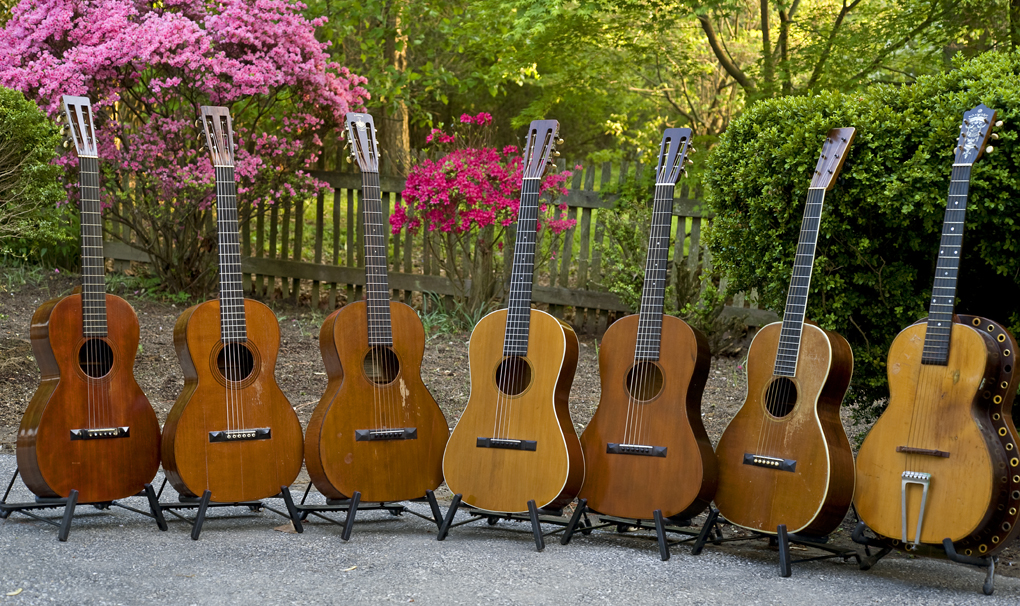
...including 1897 and 1898 Martins with dark tint & pumpkin tint options, 1916 Southern California Music spruce top sample,
light tint 1916 Ditson Style 22, Ditson Style 11 with $1 dark tint option, 1922 Olcott-Bickford 0-44, and 1931 Wm. Lange Paramount.
Note that every tint is slightly different in color.
The light tint Ditson Style 22, and Style 11 with $1 dark tint option from the "teens":
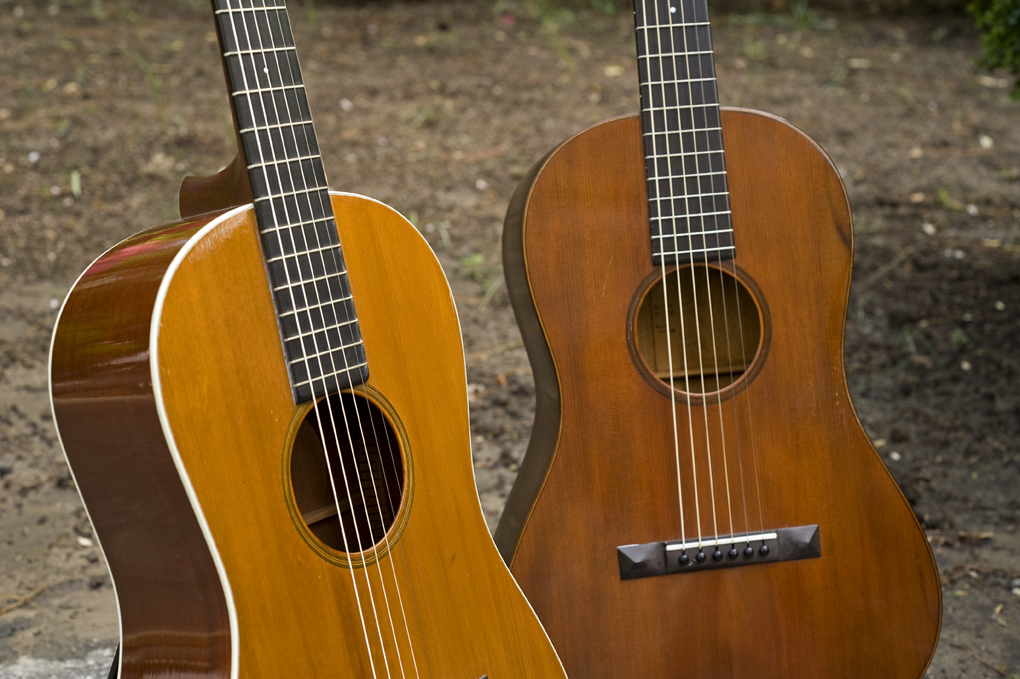
Comparing the 1897 Martin with dark tint with the 1916 Ditson Style 11 with dark tint option.
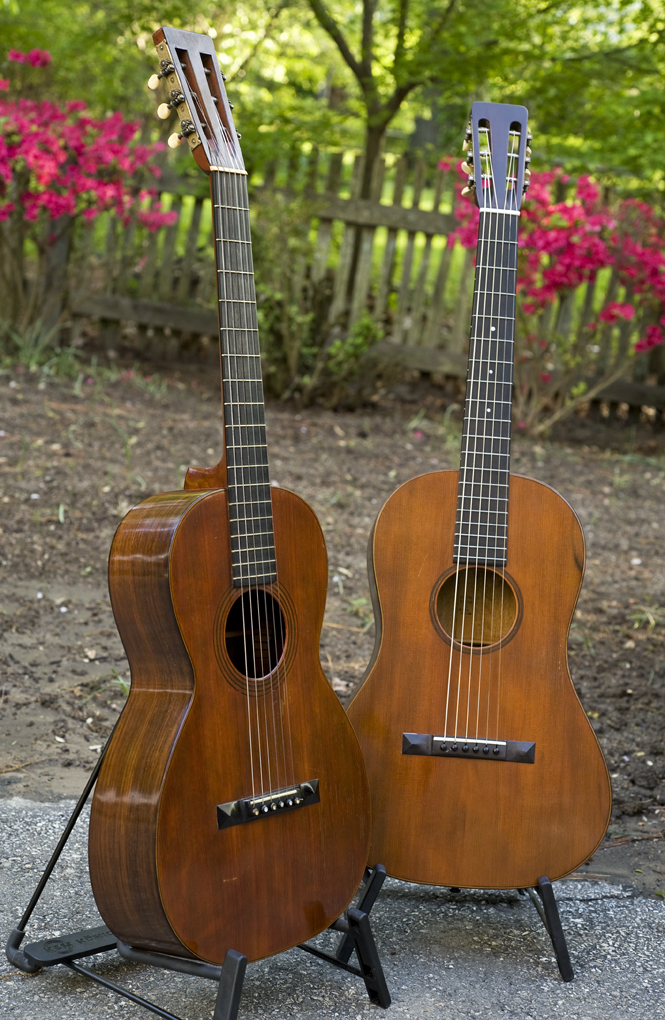
The 1897 martin has a darker tint.
The Style 33 has the darkest tint of any Martin built Ditson guitar, not quite as dark as an 1890's dark Martin top, but more consistent, and less brown, with more red.
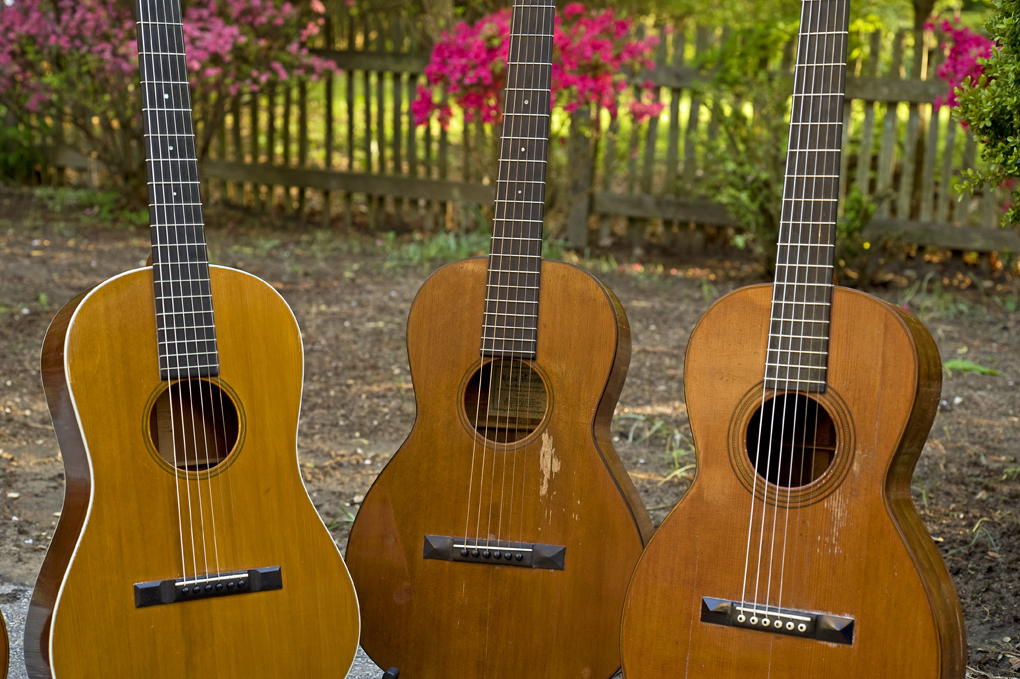
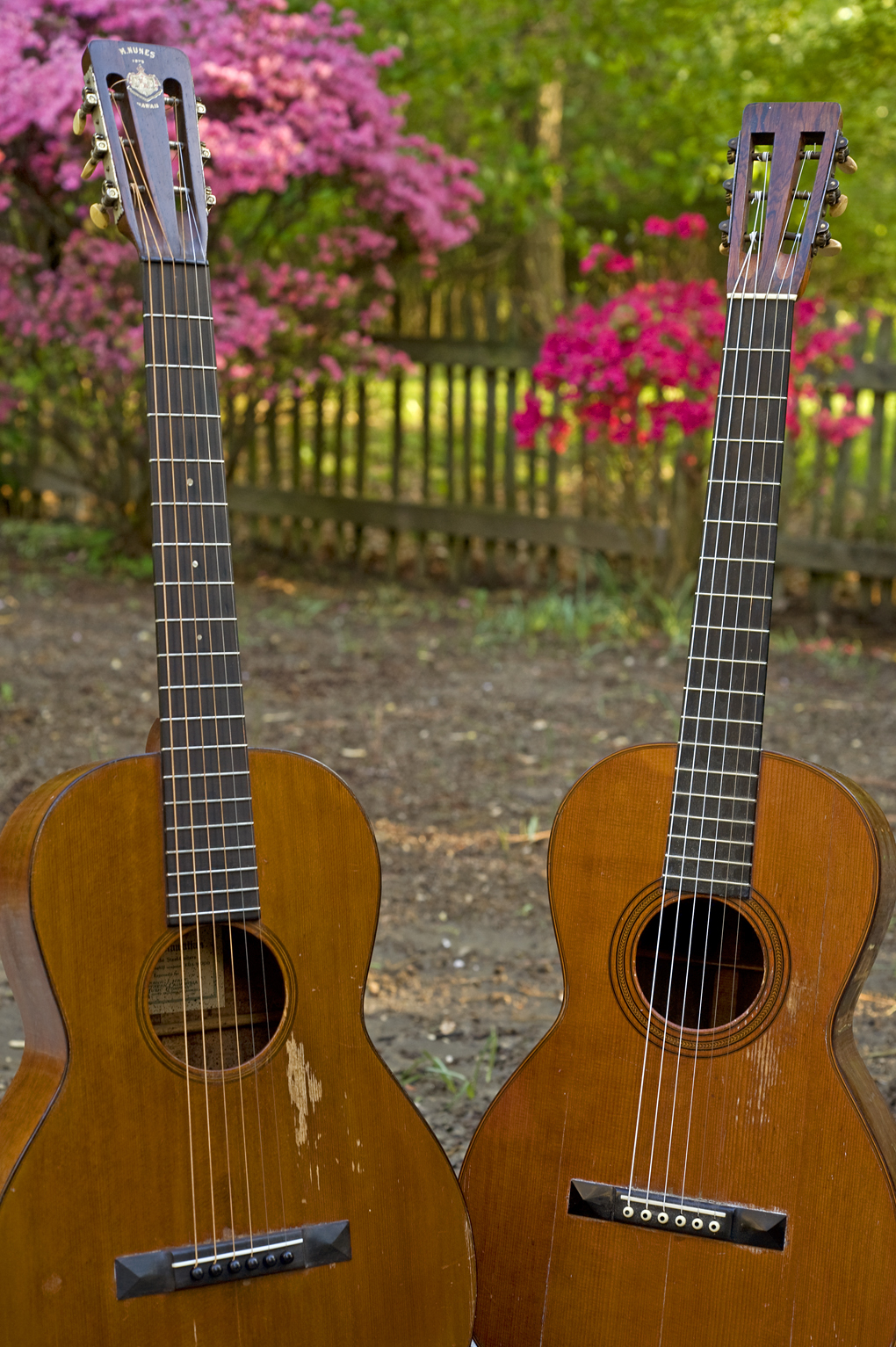
Light tint 1916 Ditson Style 22, Spruce top 1917 sample Southern California Music, Pumpkin top 1898 Martin:
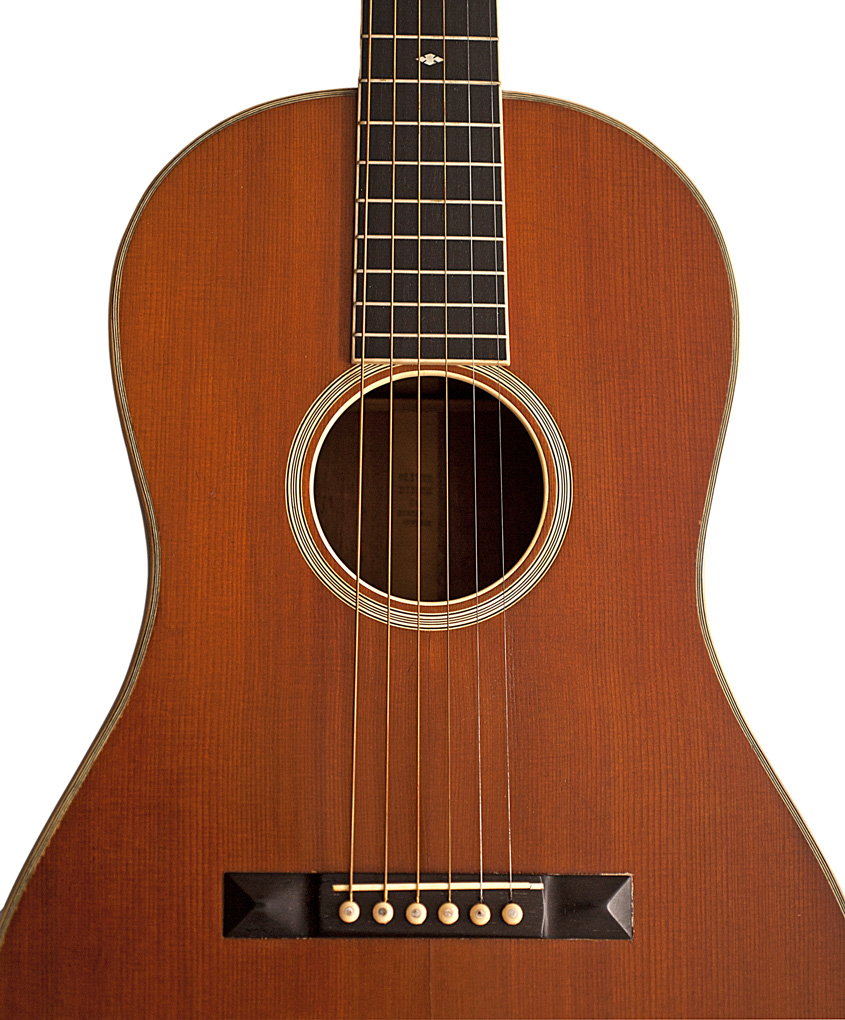
Spruce top sample Southern California Music, Pumpkin top 1898 Martin:
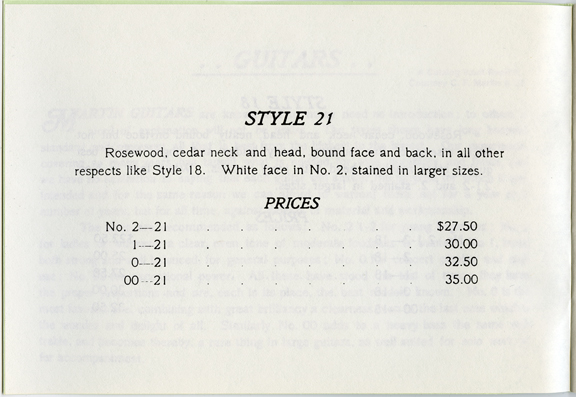
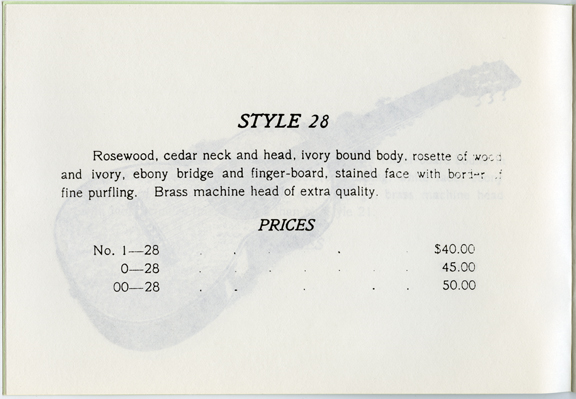
The 1898 Martin Catalog lists the "stained face" as standard on the Style 28 and the larger sizes of the Style 21.
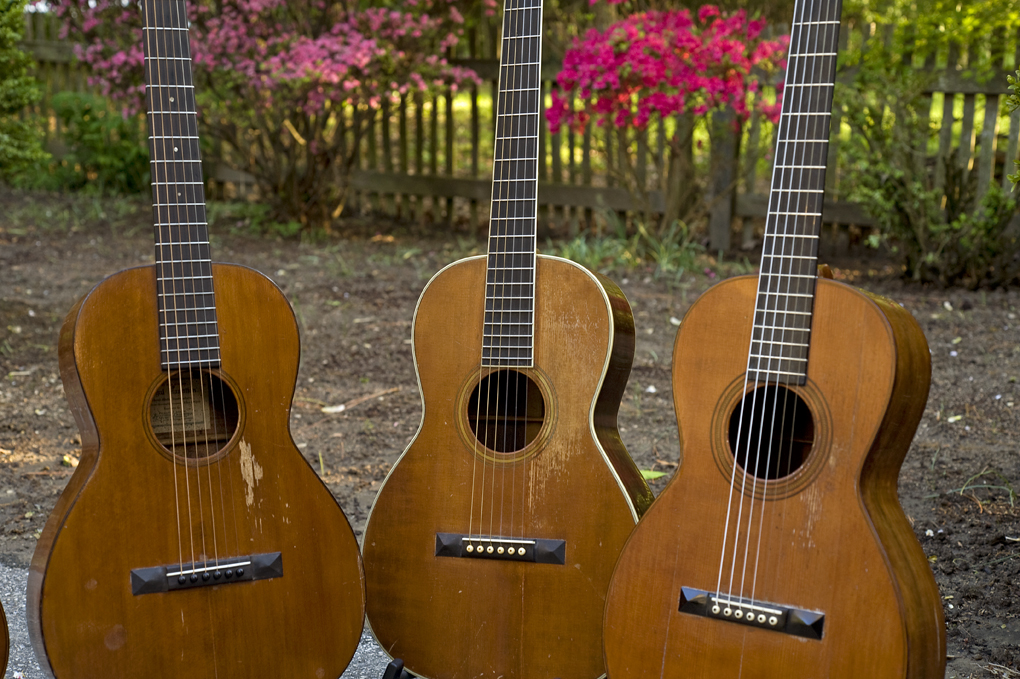
Spruce top sample Southern California Music, Olcott-Bickford Style 0-44, Pumpkin top 1898 Martin:
Shaded Finishes on C. F. Martin Guitars
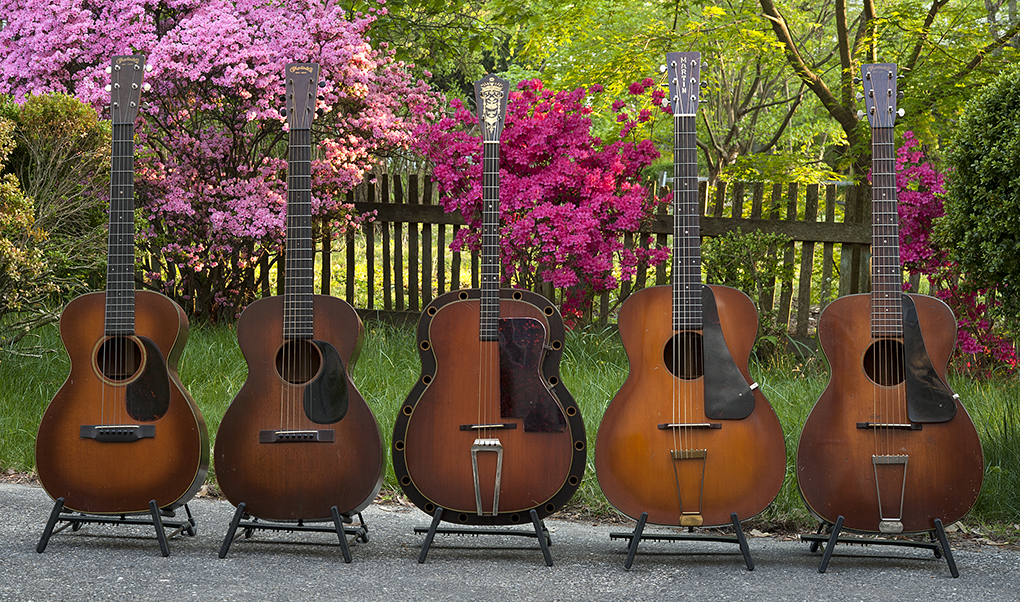
1932 Martin "32 Model" 0-18 and 1933 Martin 0-17 14 fret "Orchestra Models", 1931 Martin for Wm. Lange "Paramount" tenor, and 1931 C-1 and 1933 R-18 Martin archtops.
While "sunburst" finishes have played an important part on Gibson guitars from Lloyd Loar's mid-1920's "Master Models" until today, the more subtle "dark tops" or "shaded tops" became standard on several Martin models, such as the 0-17, 0-18, OM-18, as well as Martin's archtop models, in the early 1930's, but have played a relatively modest part in Martin's history, offered mostly as an option, and seen rather infrequently through the years. The scarcity of shaded Martins have helped them gain popularity and fetch high prices, but until relatively recently, shaded Martins were not perceived as desirable to vintage buyers, and were often tought to hide blemishes and inferior quality top wood. Most likely, shaded Martins were simply a response to potential customers who were attracted to the sound of Martins, but viewed more favorably the appearance of the sunburst Gibson archtops that Martin's "Orchestra Models" were originally intended to compete with.
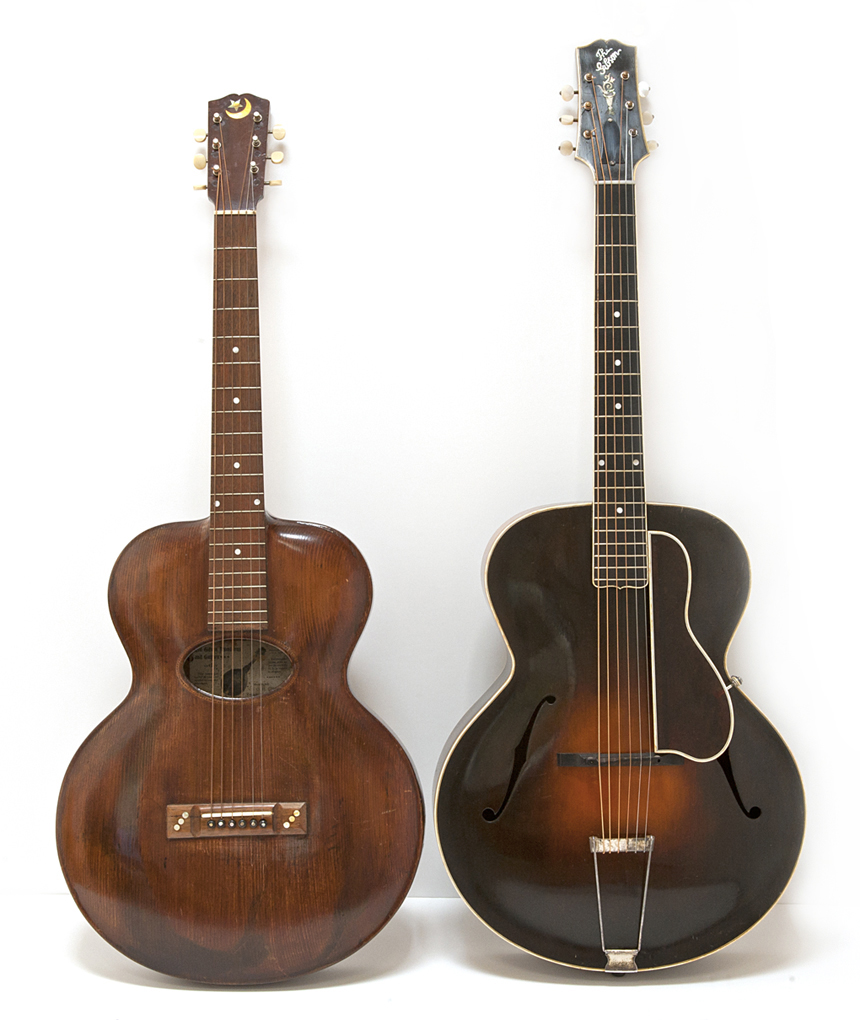
Stained 1898 Orville Gibson made Style "O" Guitar with 1924 "Lloyd Loar Master Model" L-5.
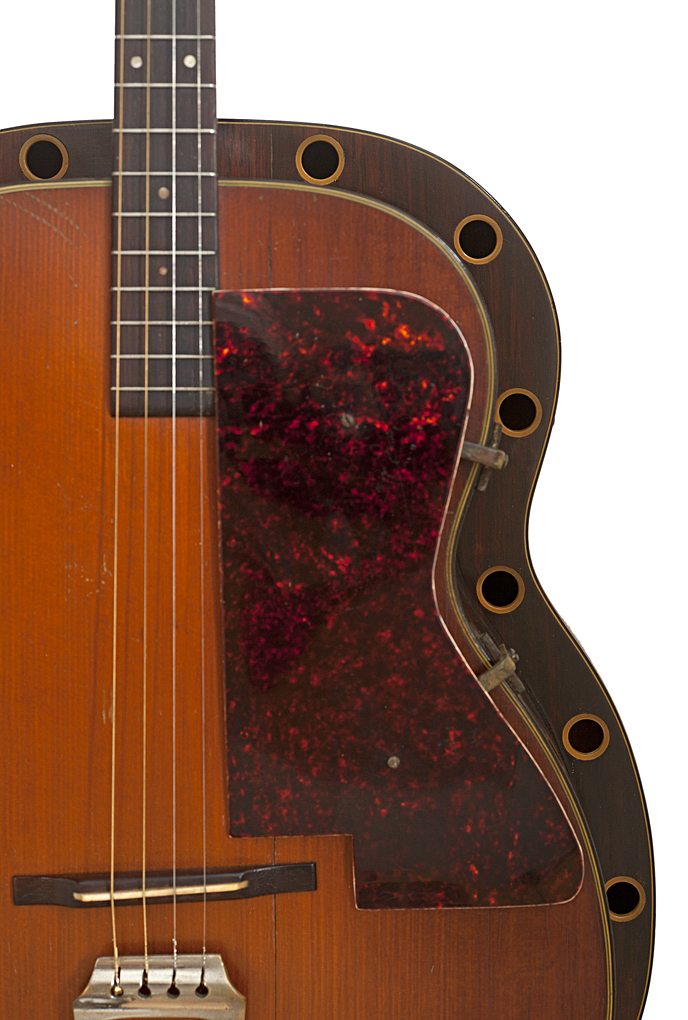
Martin "Paramount" Tenor for William Lange
Martin 1931 C-1 Archtop
Martin 1933 R-18 Archtop Guitar
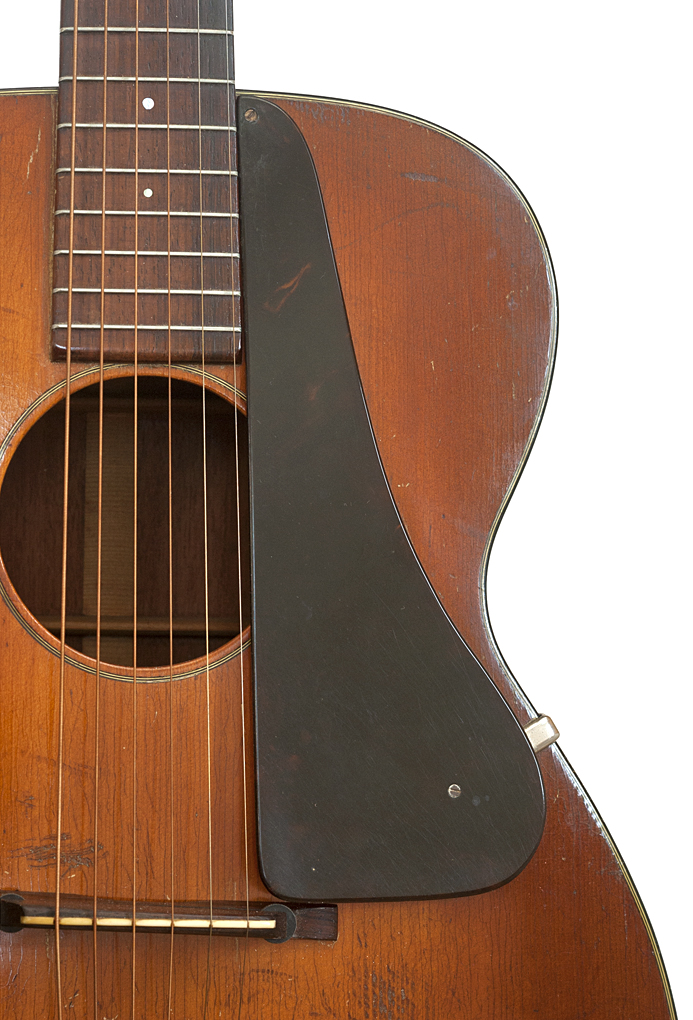
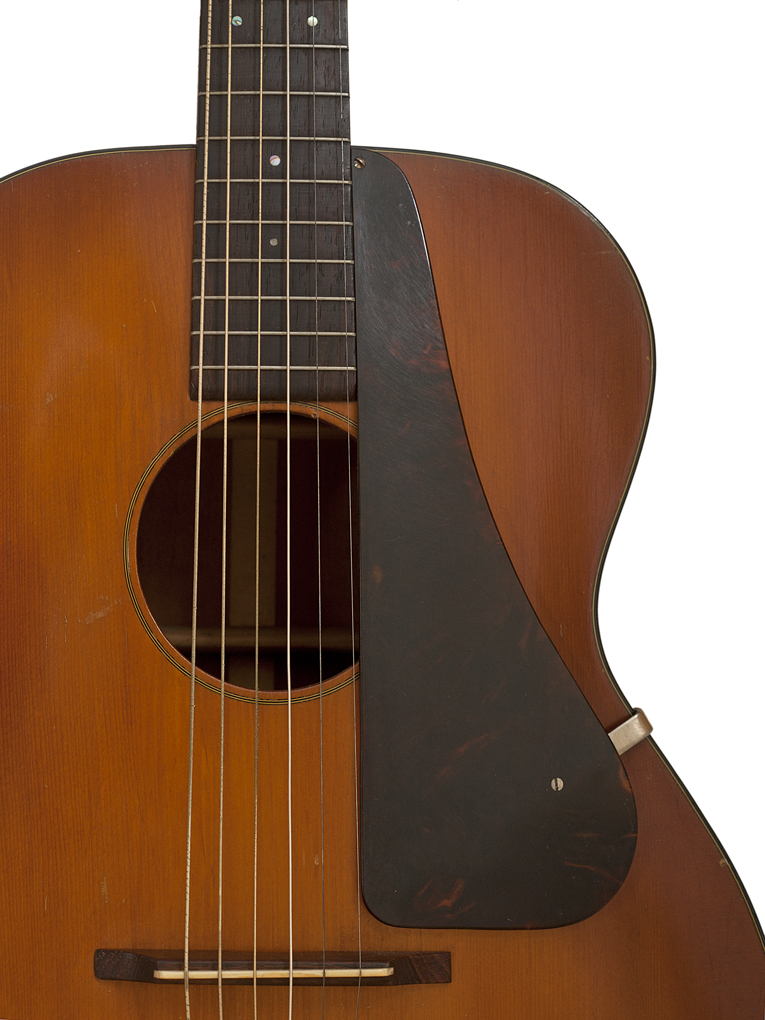
Martin 1932 0-18 "model 32"
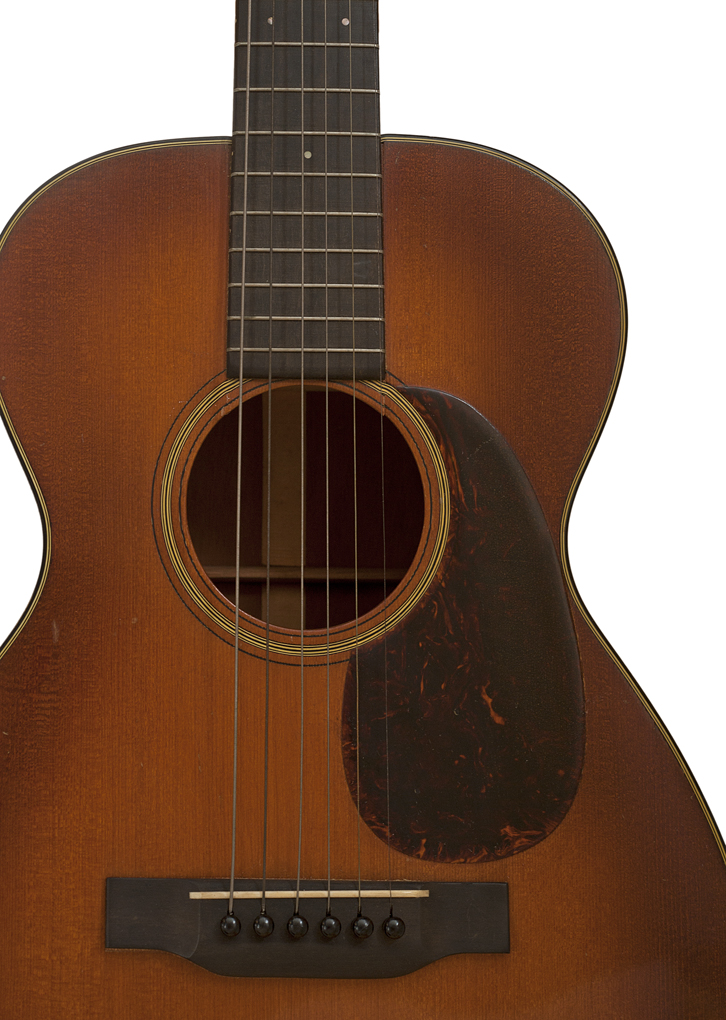
The Martin 0-17 and 0-18 were given the designation "32 Model" from February and March, 1932, respectively, to November, 1932. A standard feature of the new 14 fret "32 Model" 0-18 was it's shaded top, while the shaded top was standard on the OM-18 as well in 1932.
The earliest shaded 0-17 I know of so far, #52465, from December, 1932, is from the first batch not to be labeled "32 Model". The first I know of to revert to having no shading is #53241, from mid-1933. I have heard of no non-shaded 0-17 between these times.
So I believe it's reasonable to assume, until we see evidence to the contrary, that Martin began to shade the tops, backs and sides as a standard feature of the 0-17 in December, 1932, at the same time the "32 Model" designation was dropped from both the 0-17 and 0-18, and shading of the 0-18 was discontinued, and continued shading the 0-17 until May or June of 1933.
Martin very rarely mentioned shading in their shop orders for any guitar in any period.
It's not unheard of for Martin to move features downscale, as the Style 17 became a glossy finish 00, and the Style 15 was introduced to fill the gap as a matte single 0.
The 0-17 was a popular model, so it may seem odd that so few are seen today with shading as a regular feature. Yet nearly every Ebay ad I've seen for a tortoise headstock 0-15 says "extremely rare, we've only seen one other like this", despite the fact that I've now identified sixteen separate batches of 0-15 Martins built with tortoise headstocks, with a minimum of 1680 built, compared to an estimated total of less than 300 shaded 0-17.
Martin 1933 0-17
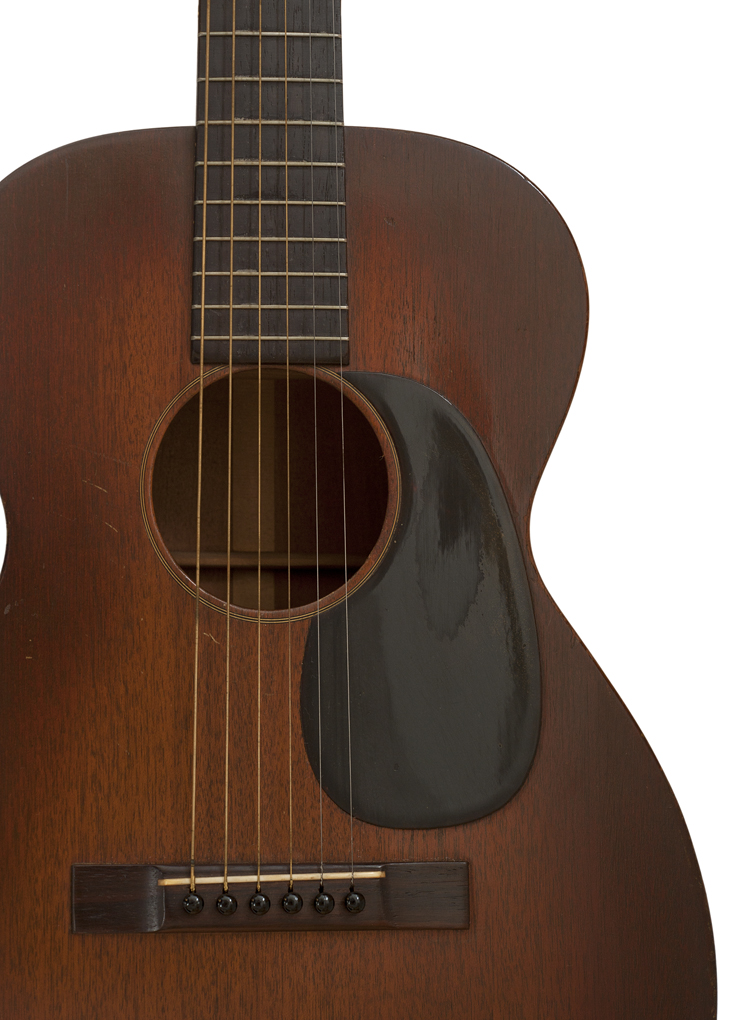
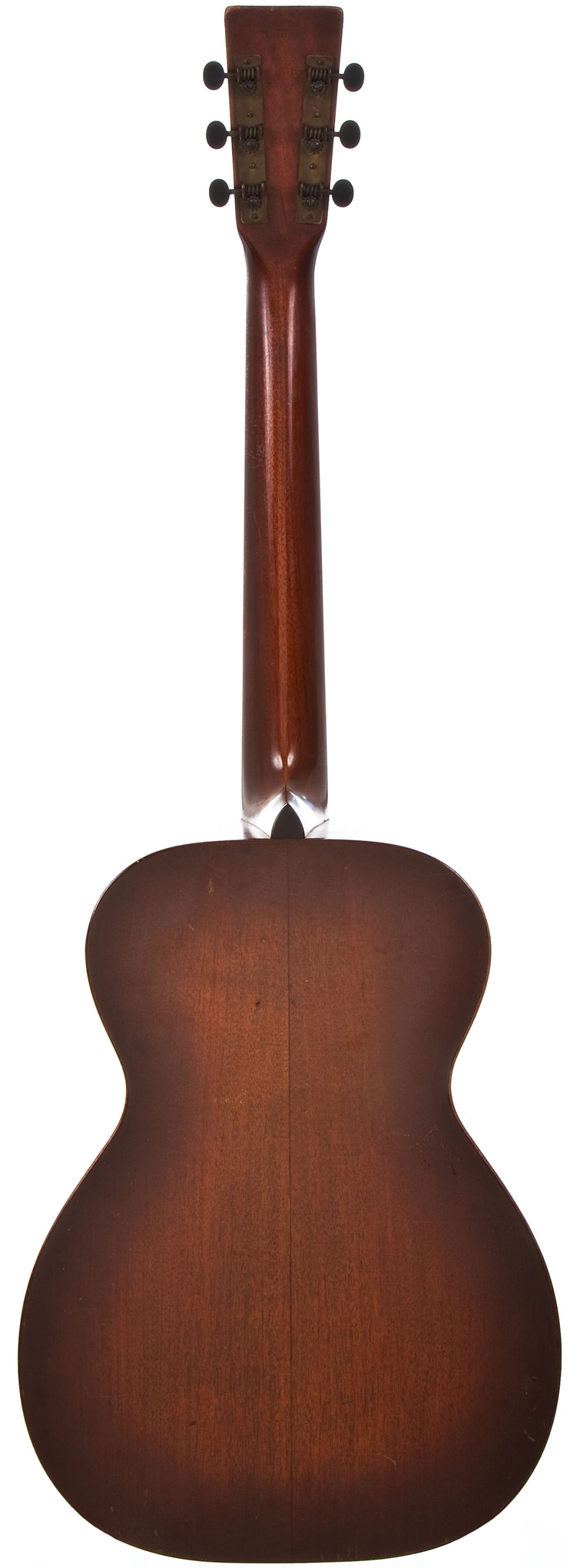
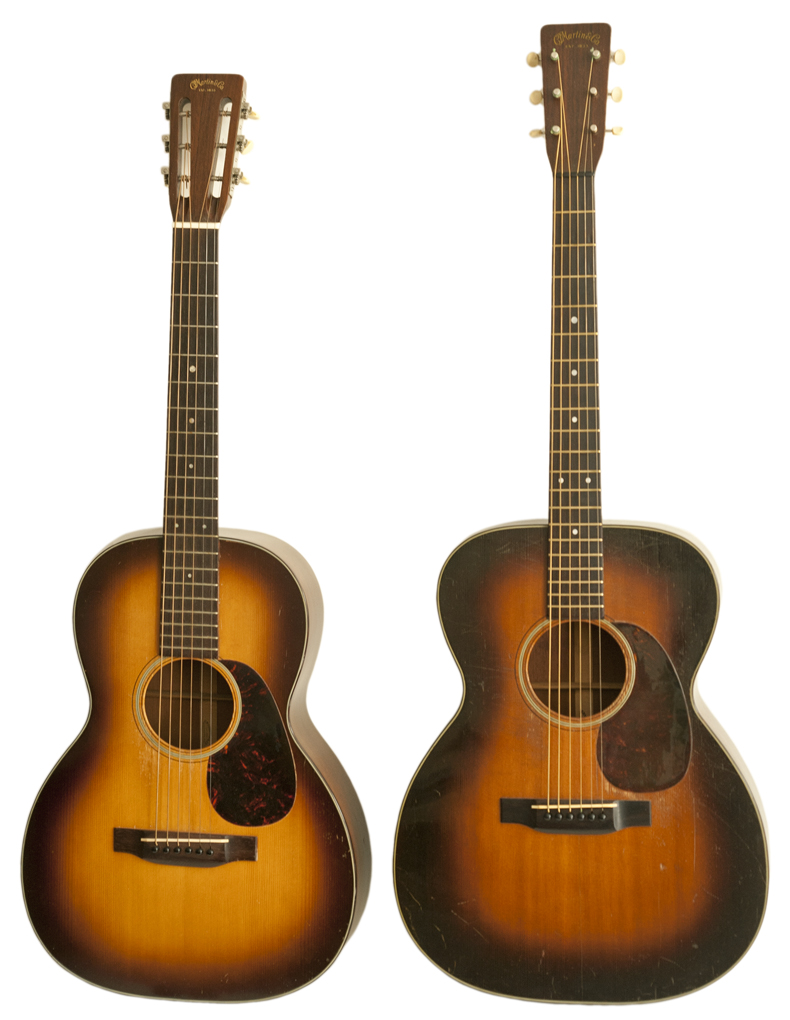
In the mid-1930's, Martin began producing shaded finishes with more definition and contrast, more typical of the finishes generally associated with Gibson guitars. The most notable difference between the more subtle earlier finishes and the later finishes is a product of the method, with earlier graduated finishes being hand rubbed, while the later finishes were sprayed. In fact, the earliest shaded finishes produced by Gibson were hand rubbed as well, with more typical "sunburst" Gibson finishes appearing in the 1930's.
This three tone 1941 00-18H and 000-18 from 1945 are typical of the later styles of Martin finish.
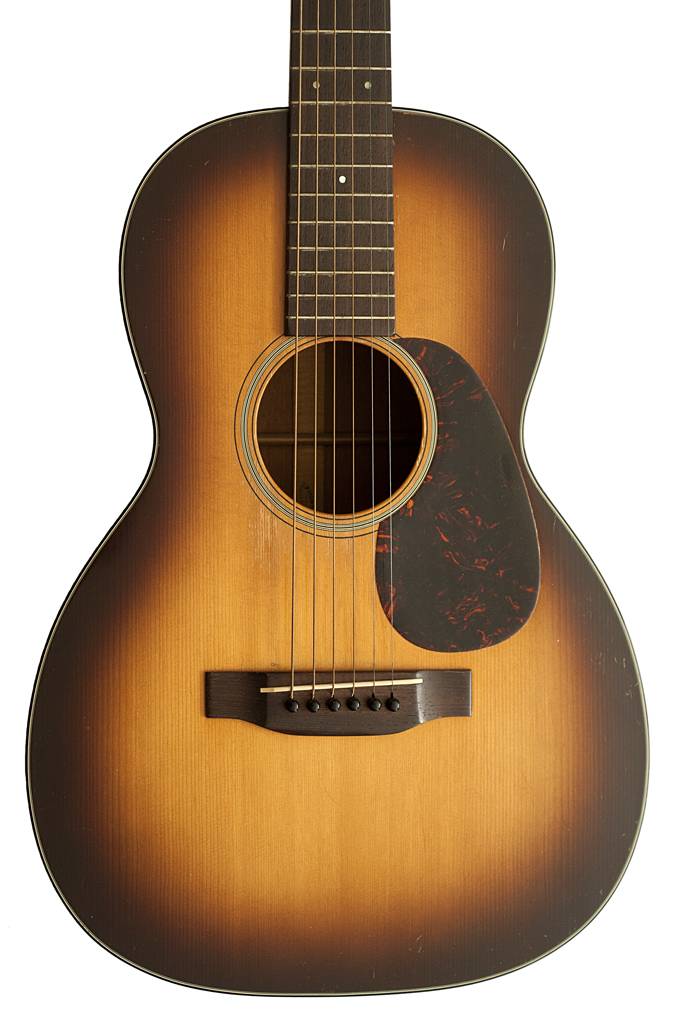
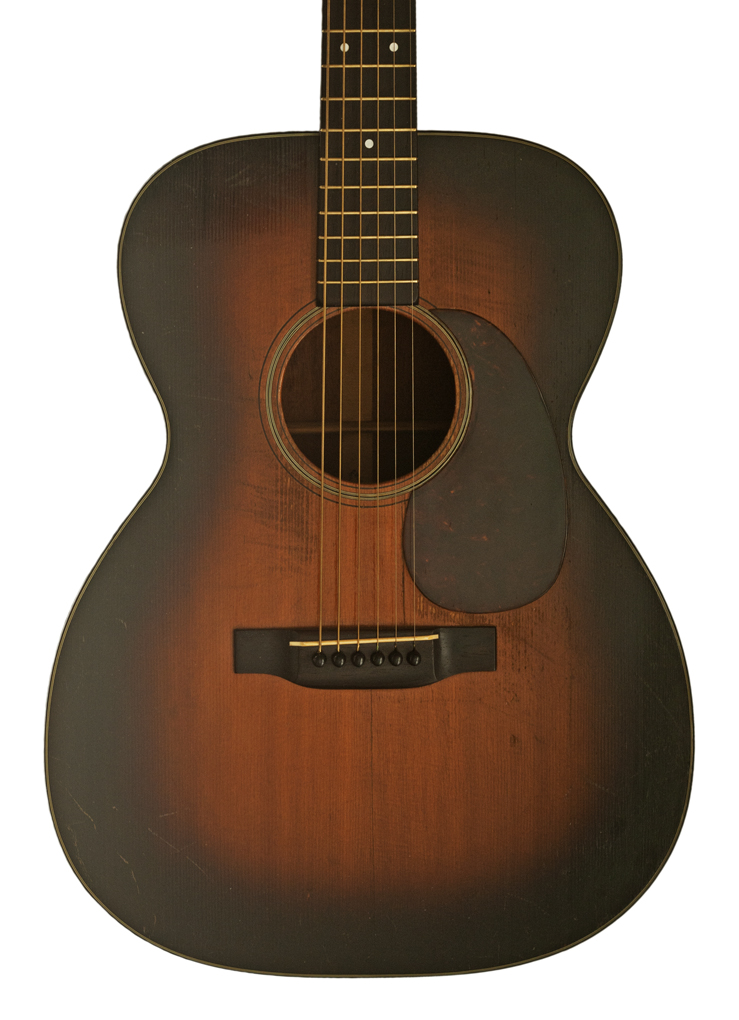
Martin 1942 R-18
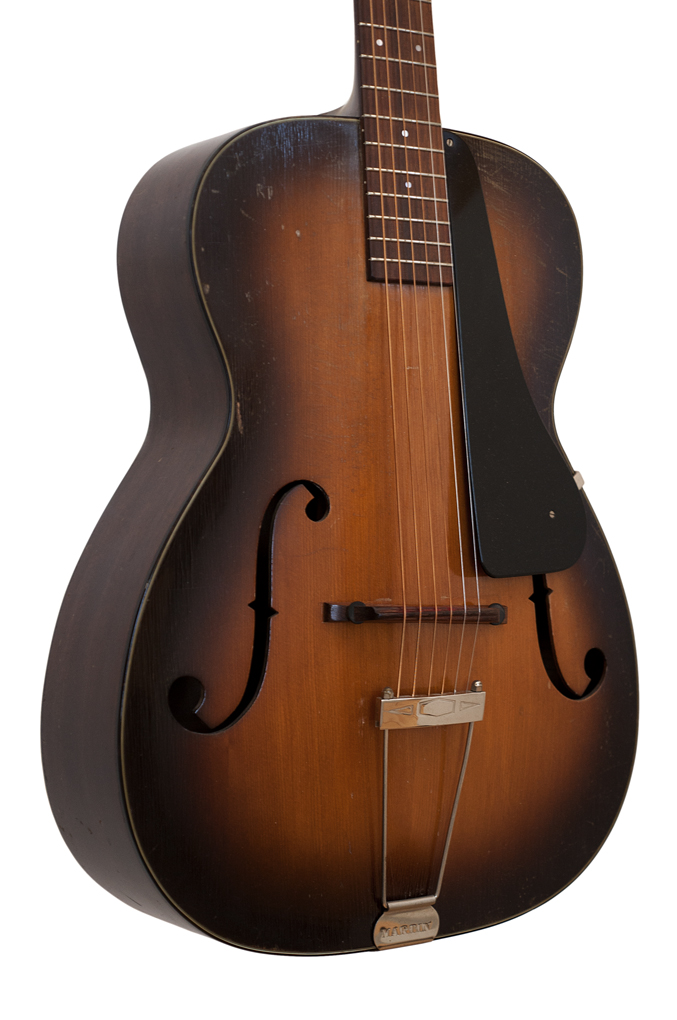
Martin 1942 F-1
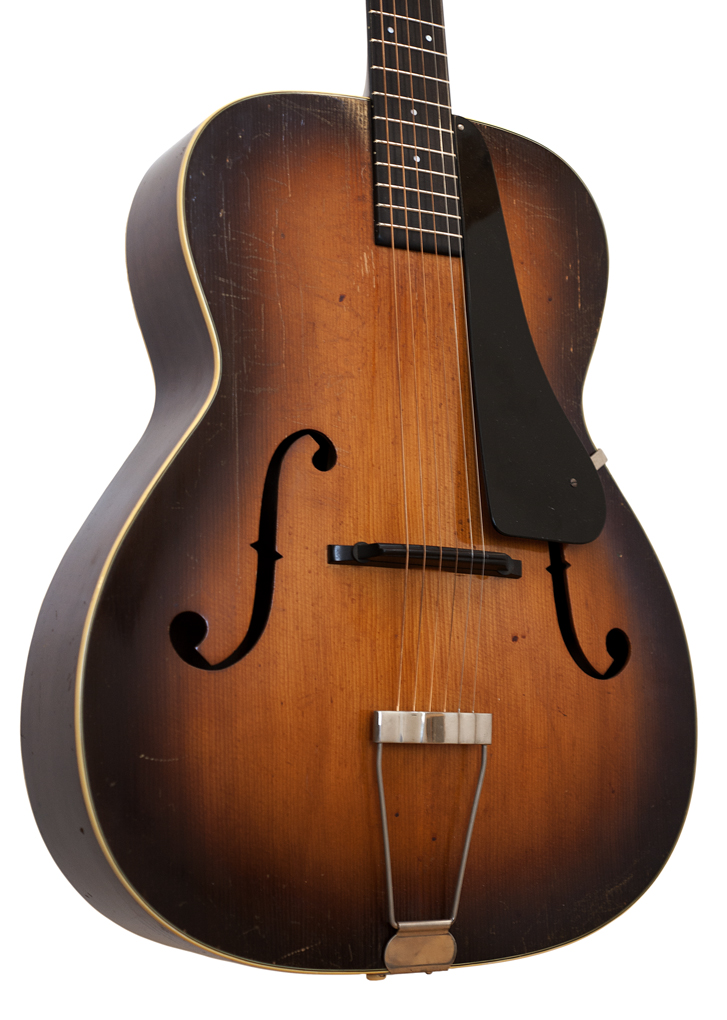
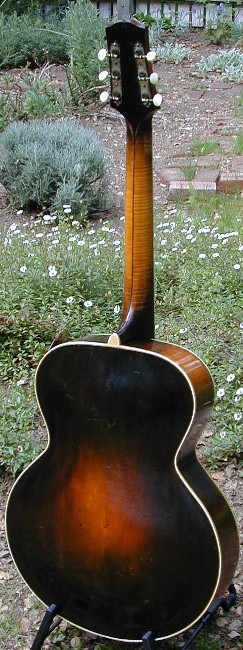
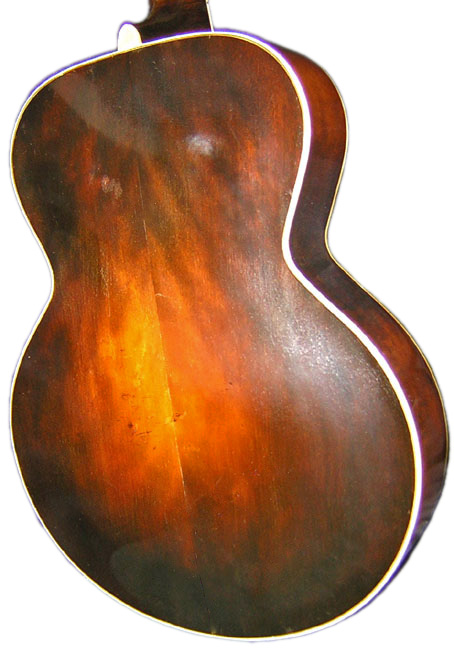
Photographs of Dark Finishes on Guitars
Martin's dark finishes changed many times over the years, but the changes were not unintentional. Martin was quite thoughtful about such things.
The variation in photographic color balance is much greater than any difference between the finishes on individual guitars at any given time.
These pics of my '24 Gibson Loar L-5 illustrate the difference between natural light and flash on a sunburst finish:
Over-Finishes or Over-Spray on C. F. Martin Guitars
A few words about "over-finish" or "overspray", refinished Martins, and values:
In the early days of French polish finishes, it was natural for Martin to add a bit of extra polish to spiff up a guitar when it came back to the factory. When Martin moved to lacquer, they continued the practice. This tended to happen most often to their best guitars, and the ones built for show, which means more pearl Martins than any others received this treatment. In the days of Martin's best work, the company often considered a guitar with over-finish to be superior to the guitar with the original finish, and swore that they sounded just as good, if not better.
Far more Martins than you would ever imagine with "original finish" were refinished by Martin, after fixing minor problems, either before leaving the factory, or before being sold by the dealer, with no negative impact at all.
Martin routinely refinished guitars if they had a problem when they reached the dealer, and sold them as new, and refinished almost new guitars if they had a problem covered by the warranty. No one ever thought of these refinished guitars as inferior, and your guitar might just be one of them without you even knowing it! I have one old Martin with a replaced back that I never would have known about from a simple inspection.
Refinishing usually involves sanding, which can thin the wood of the top, often making a guitar louder, but without the full sound and balance of the original guitar. Martin has always been expert in refinishing guitars, and routinely does so with minimal noticeable thinning and little detrimental effect to the guitars.
Some folks automatically value any Martin without un-tampered original finish as being worth only 50%. I believe that following this "50% rule" is painting with a very wide brush. Or refinishing with a very wide brush, perhaps. Old Martin factory finish work doesn't bother me at all, and to lump these in the same category as crude, amateur refins with thick globs of finish and thinned tops, makes little sense. Fred Oster of Vintage Instruments in Philadelphia told me the best sounding Dreadnaught he had heard in decades was a 1944 D-18 with an old, light factory over-spray.
If it takes endless inspection and debate to decide if a guitar is indeed refinished or over-sprayed or not, could it really be that big a deal?