Herringbone Top Borders on Martin Guitars
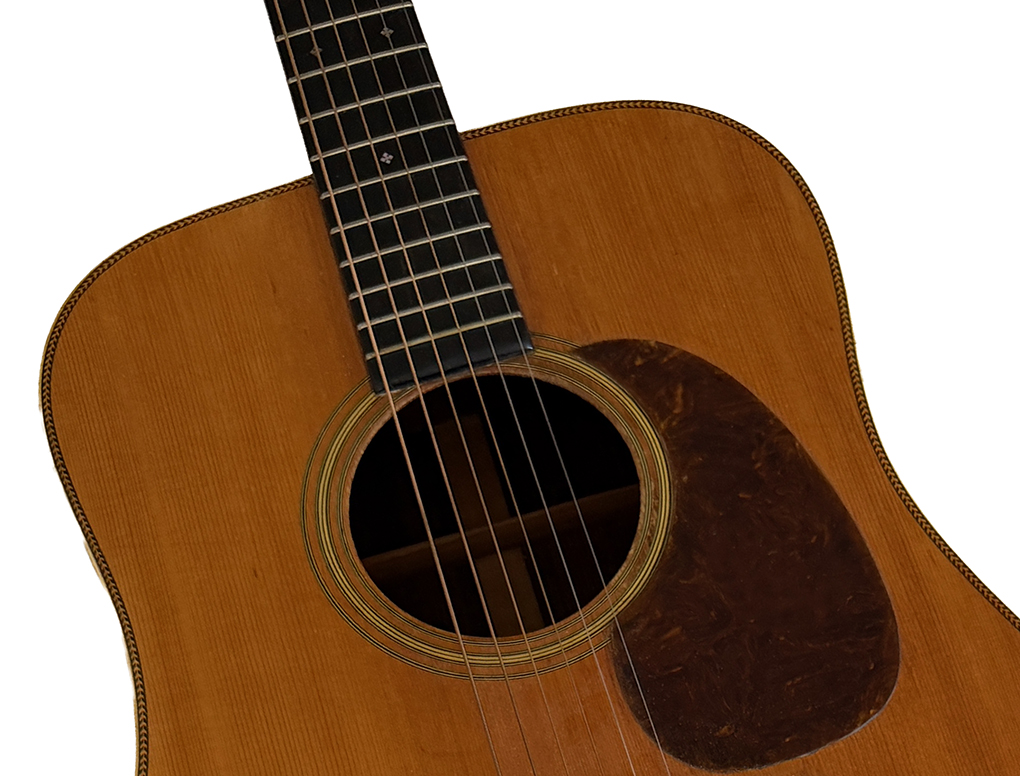
The Pre-war D-28, with it's distinctive herringbone top border is often affectionately referred to as a "Bone".
In truth, the herringbone top border was long a distinguishing feature of the Style 28 in all sizes.
And herringbone purfling on the rosette and back strip was a defining feature of the pre-war Style 21.
But the herringbone marquetry that is still a hallmark of Martin guitars over 175 years laterwas actually a favorite of C. F. Martin Sr. from at least the time he arrived on our shores
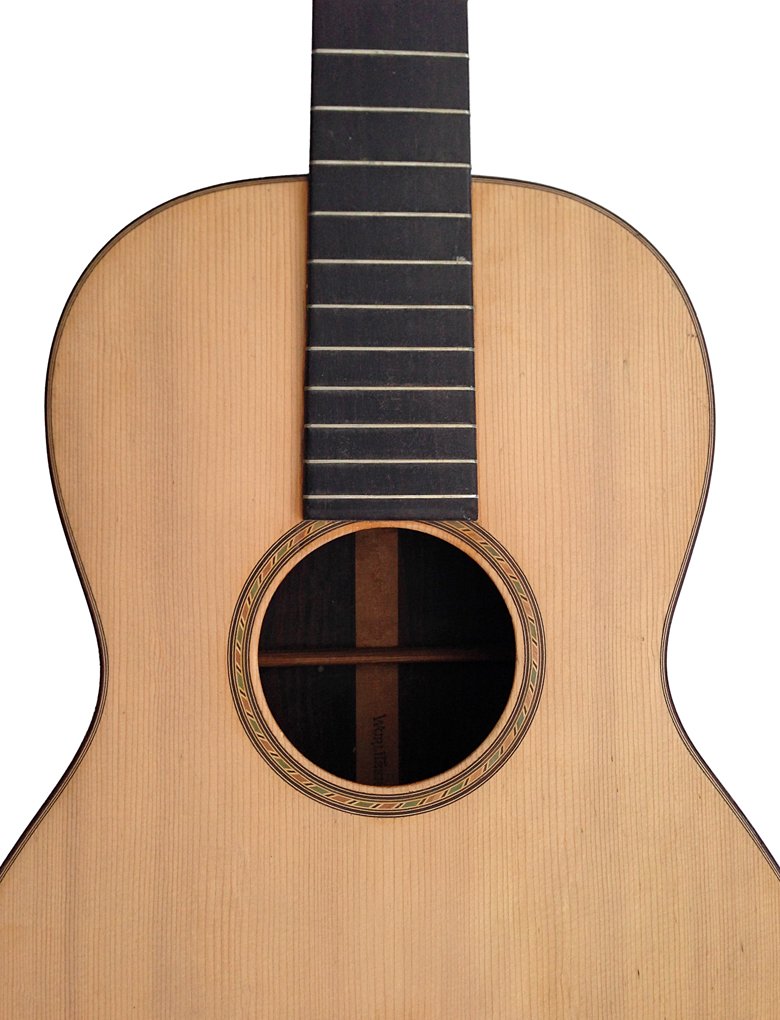
This 1834 Martin Guitar has a small version of the herringbone.
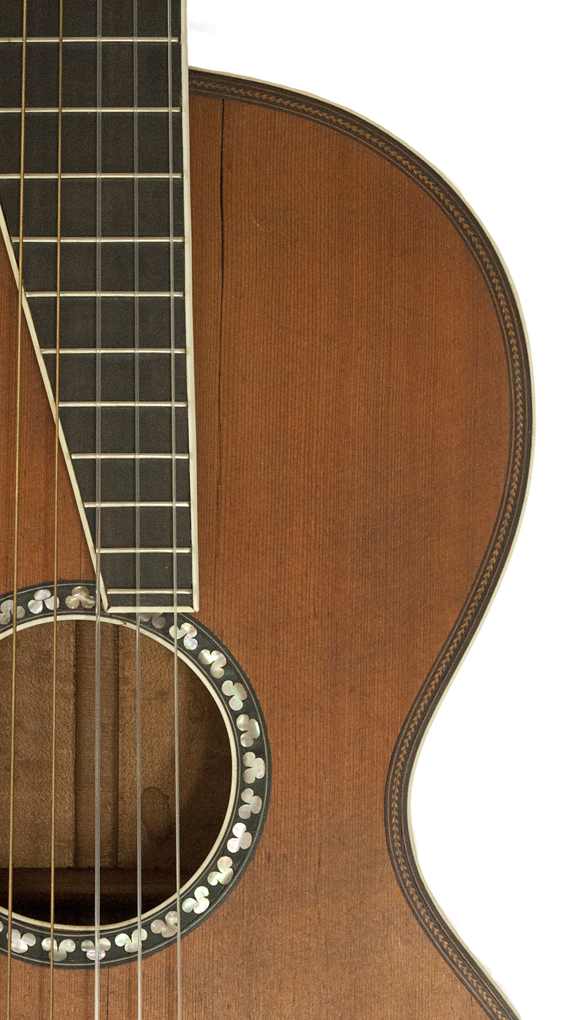
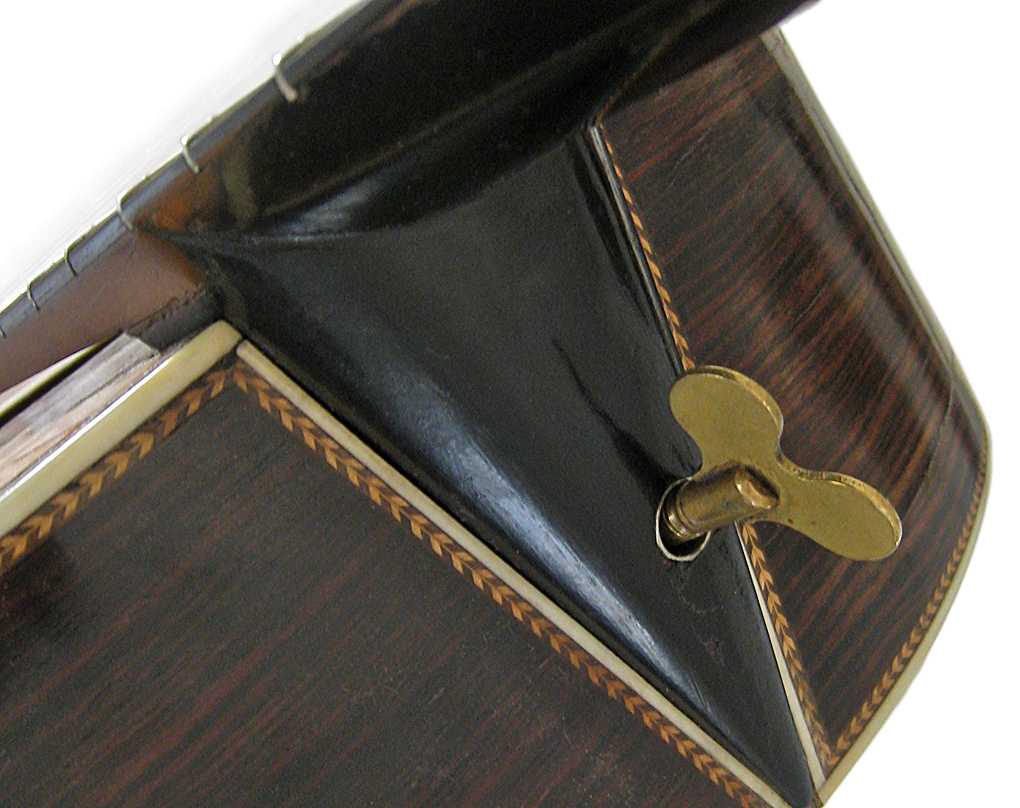
This 1837 Hudson Street Martin has a larger herringbone marquetry inlaid adjacent to the ivory side bindings as well as adjacent to the ivory border surrounding the ice cream cone heel with the clock key adjustment.
And this Martin & Coupa from just a few years later, and long before established models were defined, has the combination of herringbone rosette and back strip that would
define the late Style 21.
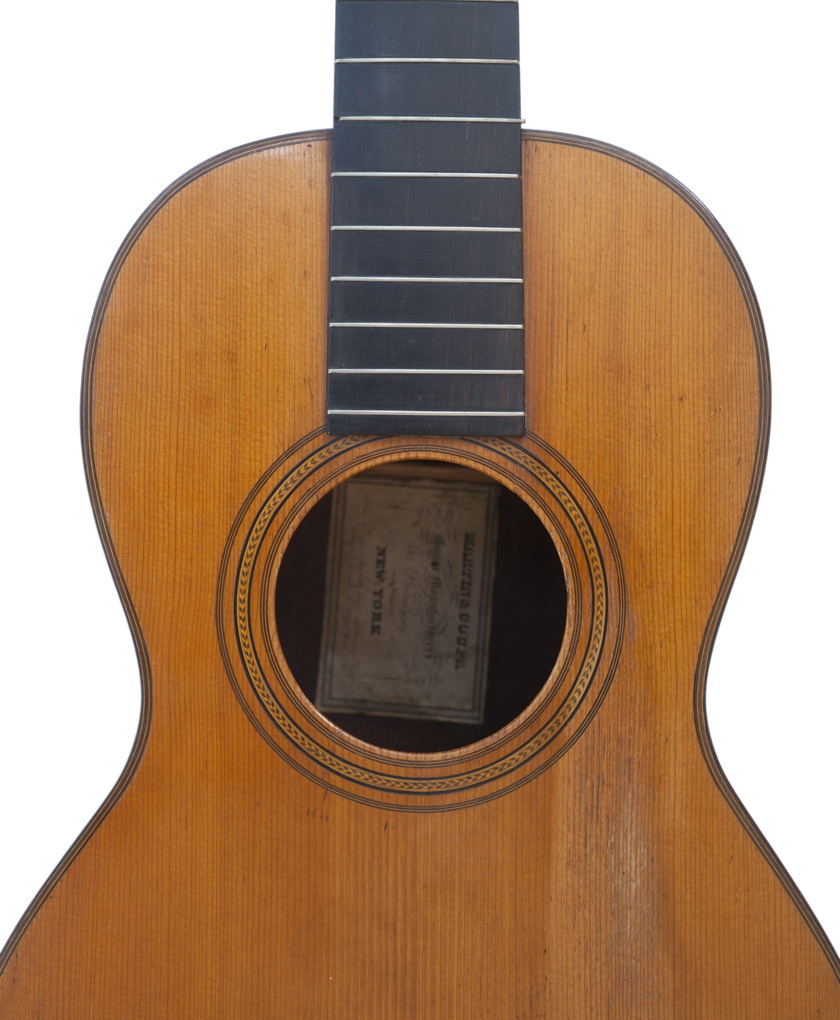
And we see many other examples throughout the early years.
1840's Martin "Renaissance" Style Guitar
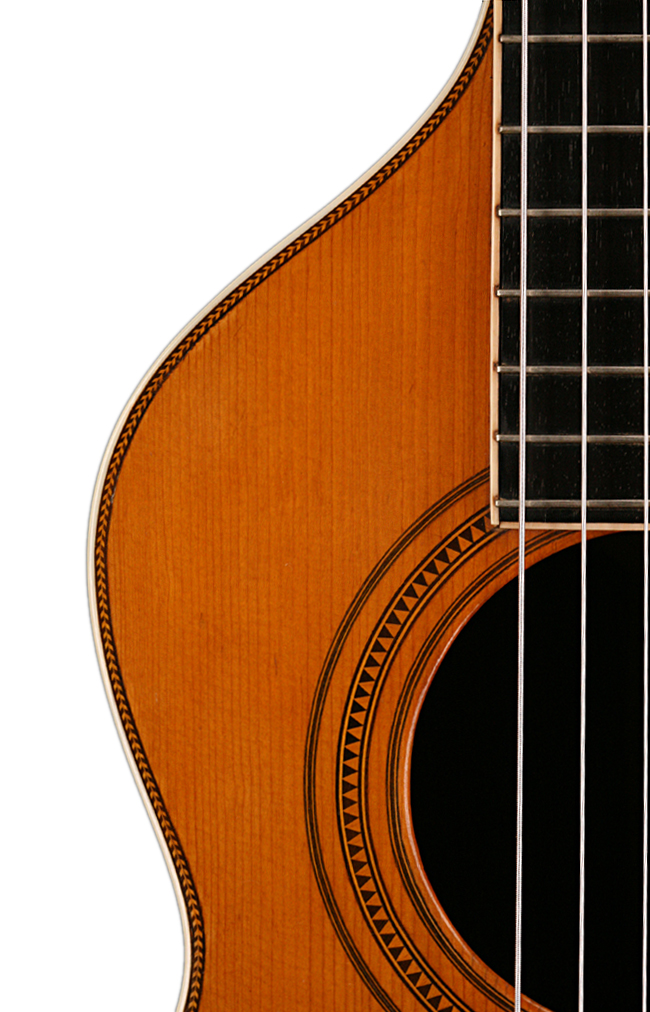
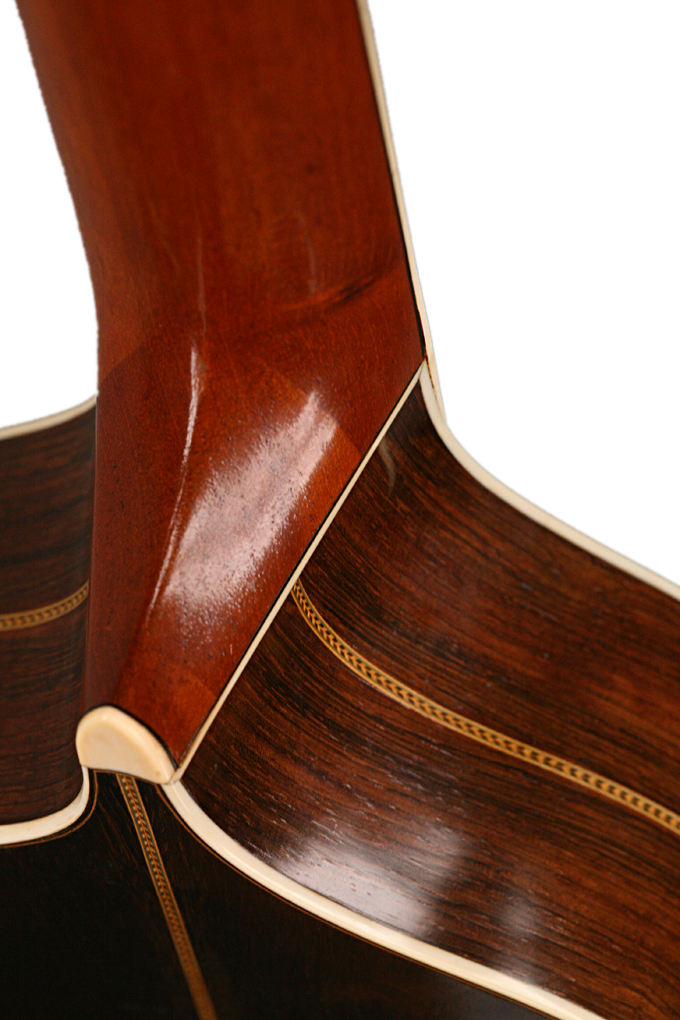
By the time Models were defined in the 1850's, the choice of marquetry on an individual guitar was often random. But herringbone was a regular feature of several models.
The Style 20 typically has monochrome herringbone with green border, or a multicolored herringbone rosette and back strip
1850's Martin 2-20
file:///Users/robertcorwin/Documents/**NEW%20VM**/Martin60_220_027.jpg
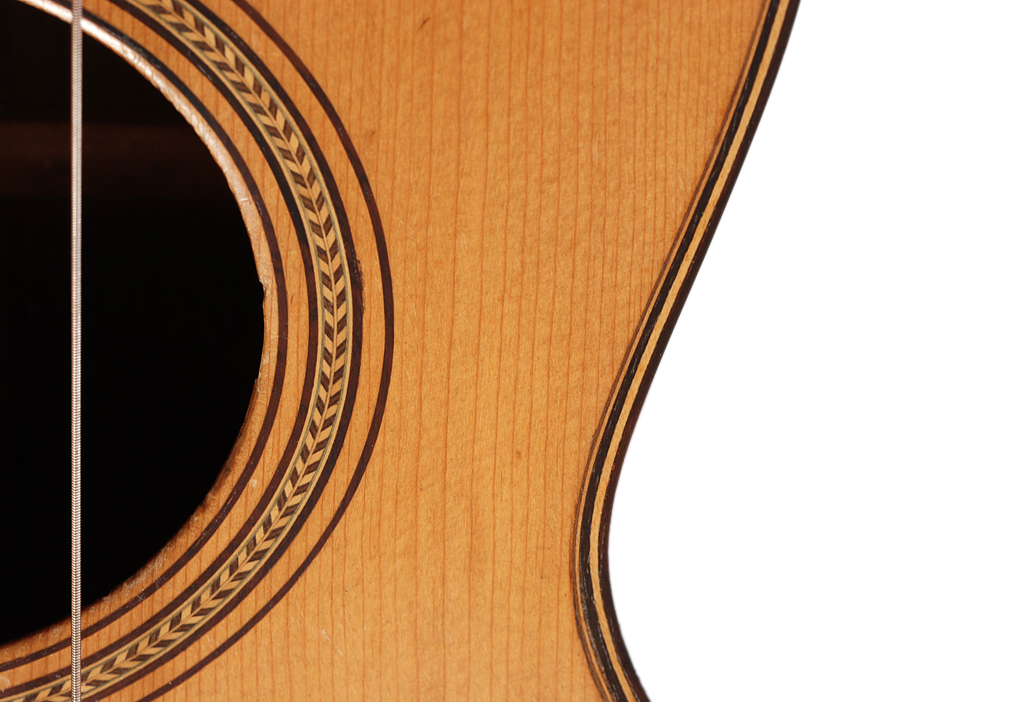
1860's Martin Style 2 1/2 - 20
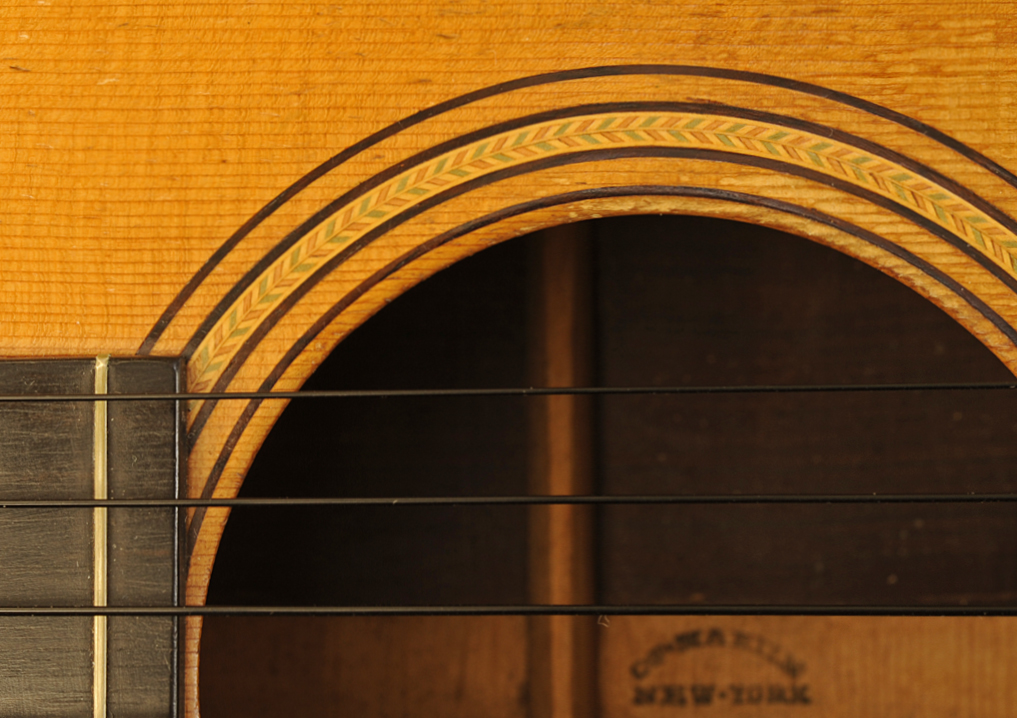
The Style 21 is distinguished by a herringbone pattern on the rosette as well as a herringbone back strip.
1897 Martin 1-21
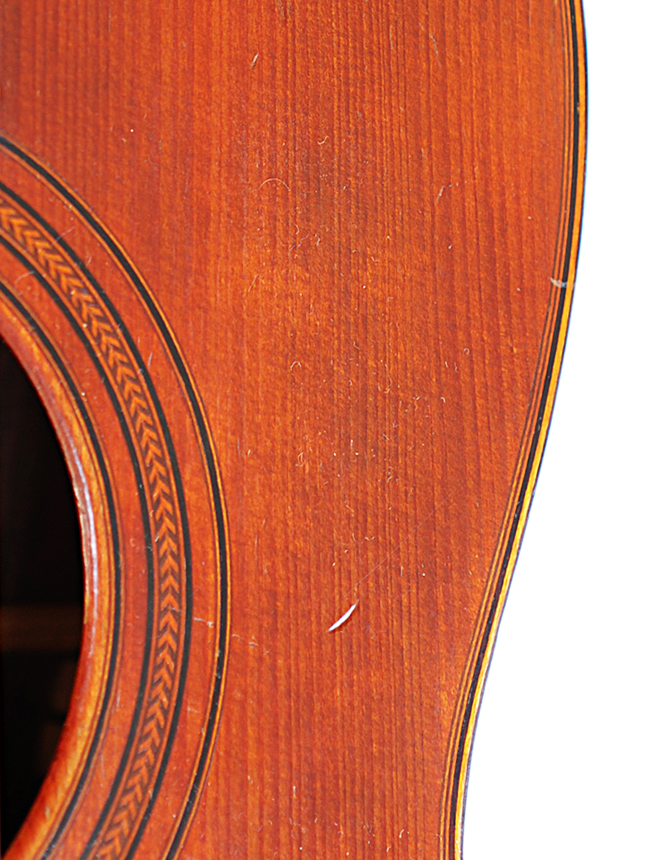
The colored herringbone is common on early Style 34 Martins in Size 2.
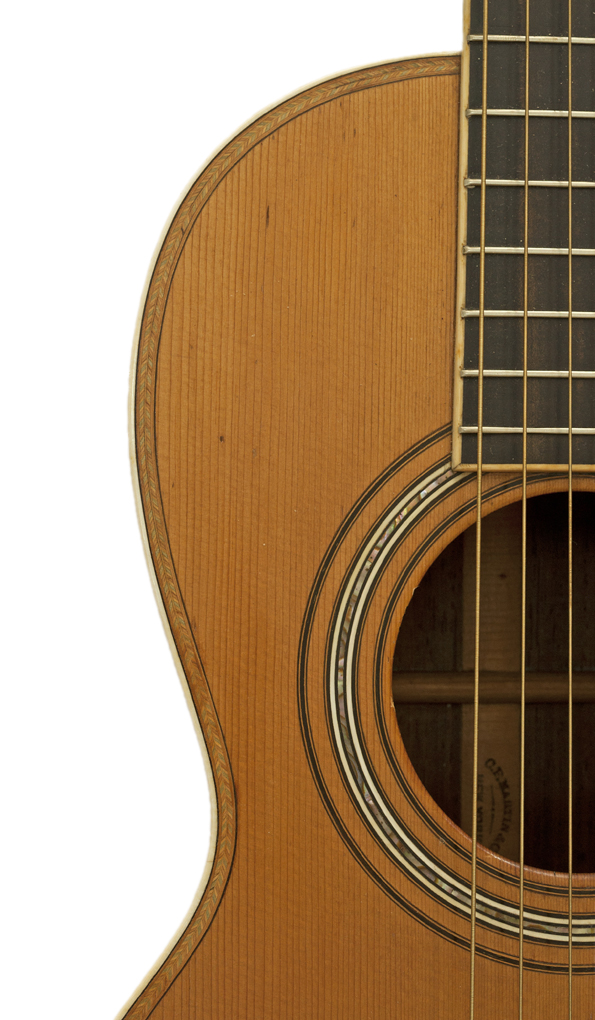
Interestingly, the Style 28, now associated with the herringbone, evolved from a guitar that often had other another pattern.
The Style 28 was really a larger Style 0 guitar that evolved from the Size 1 Style 26.
The Style 26 later had was is sometimes called the "rope" pattern, and sometimes called the "half herringbone".
1870's Martin 1-26
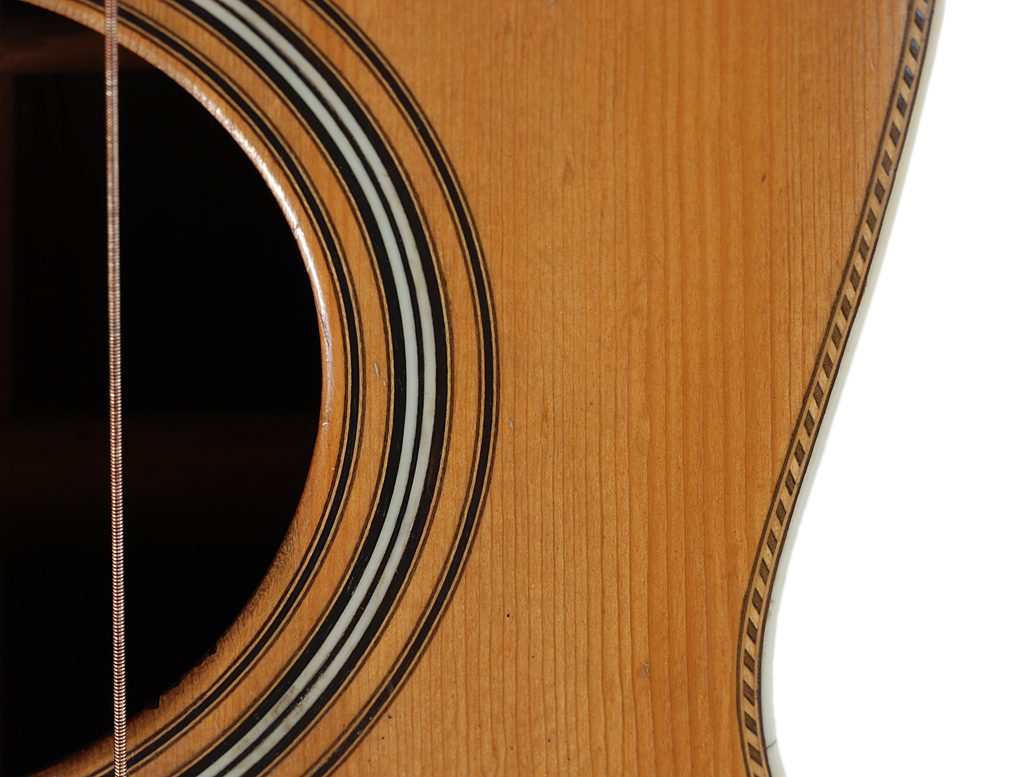
But the $26 guitar evolved from a size 1 guitar often with a pearl rosette and "zig zag" top border.
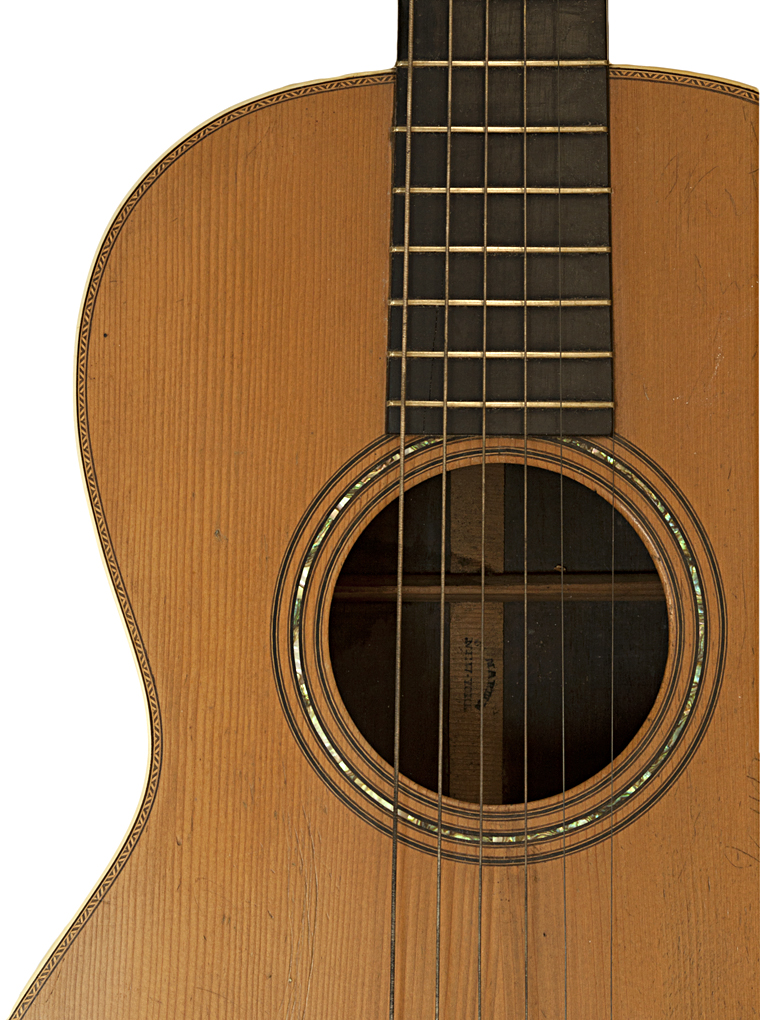
...sometimes with a pearl rosette and herringbone.
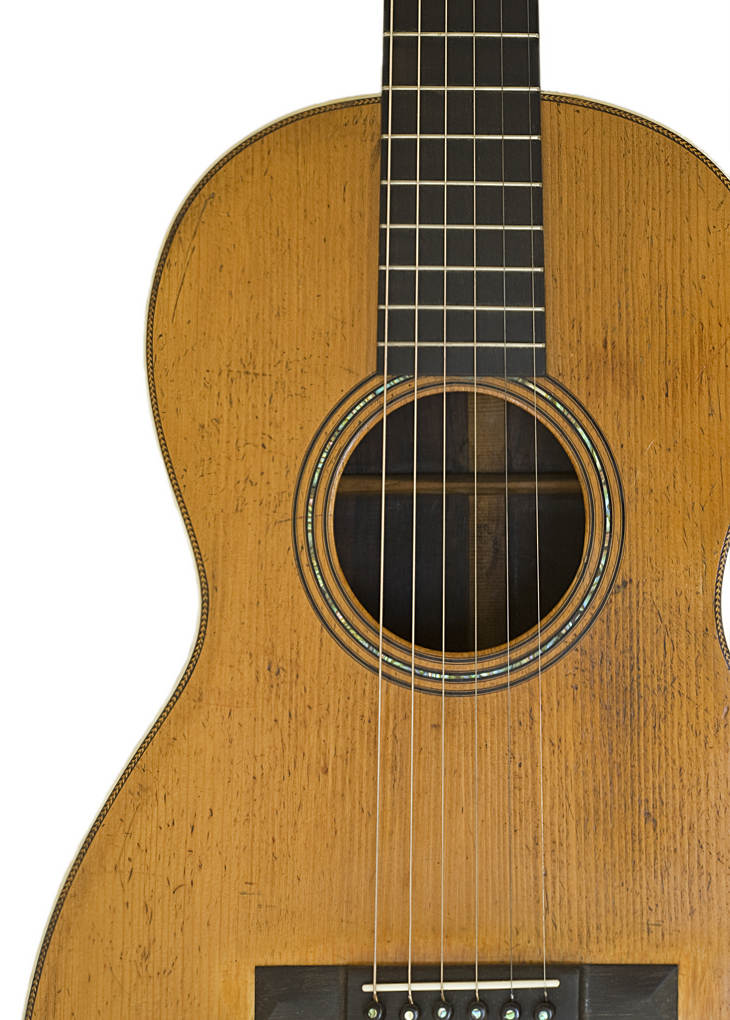
...we then see the zig zag top border without the pearl...
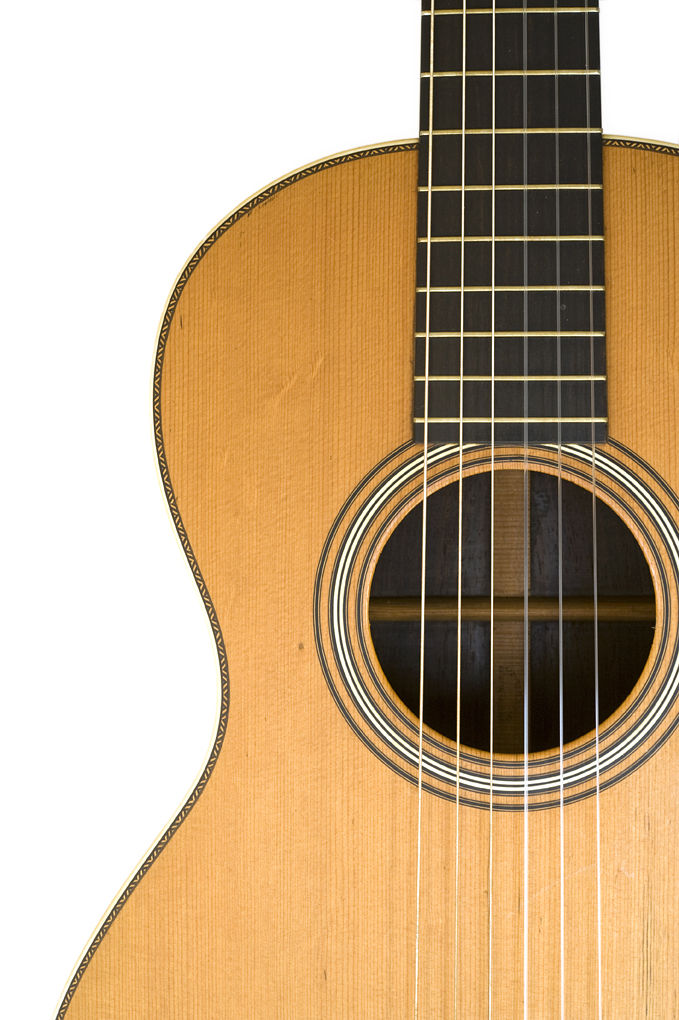
On the rosette of the Style 21 as well...
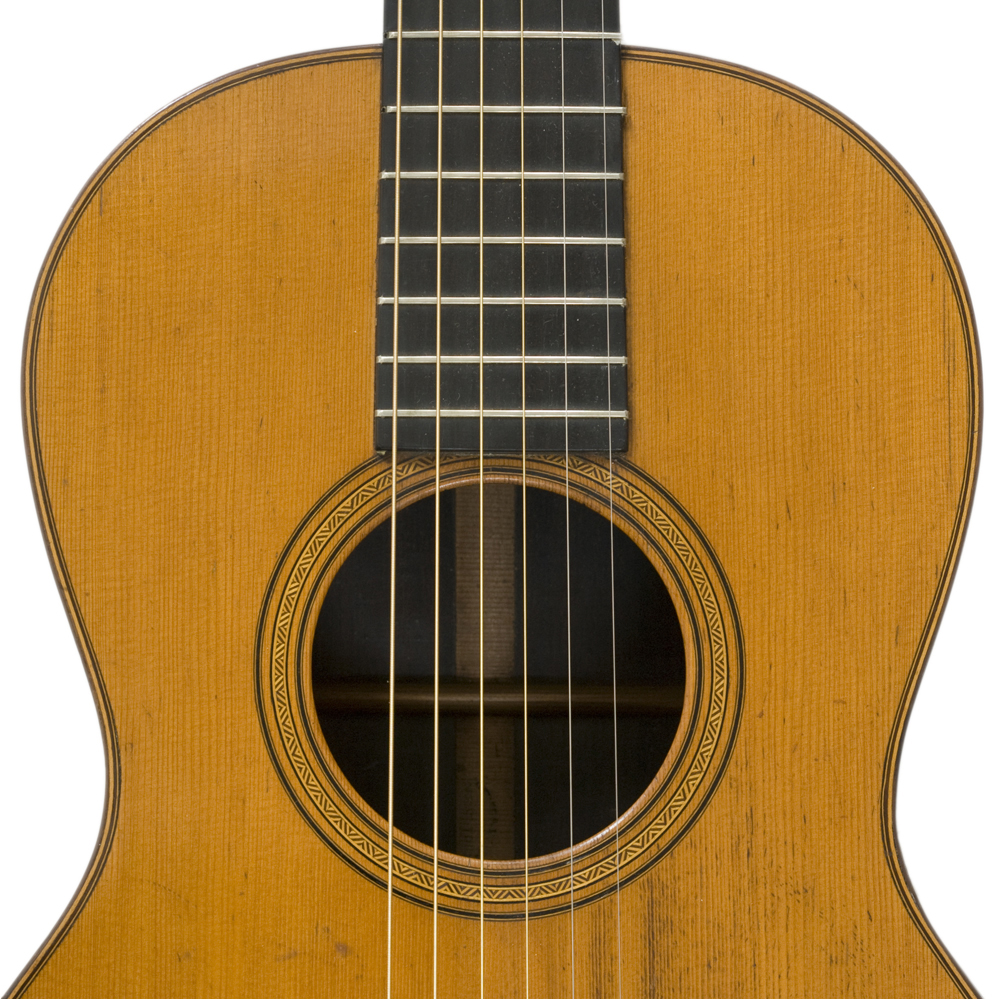
...and then often a checkerboard top border as seen on a post war 28 back strip in place of the herringbone, and a very early presentation of rosette rings in the form of a standard Style 28, but with outer rings of small black and white squares in the style often seen on Martin & Coupas of the period.
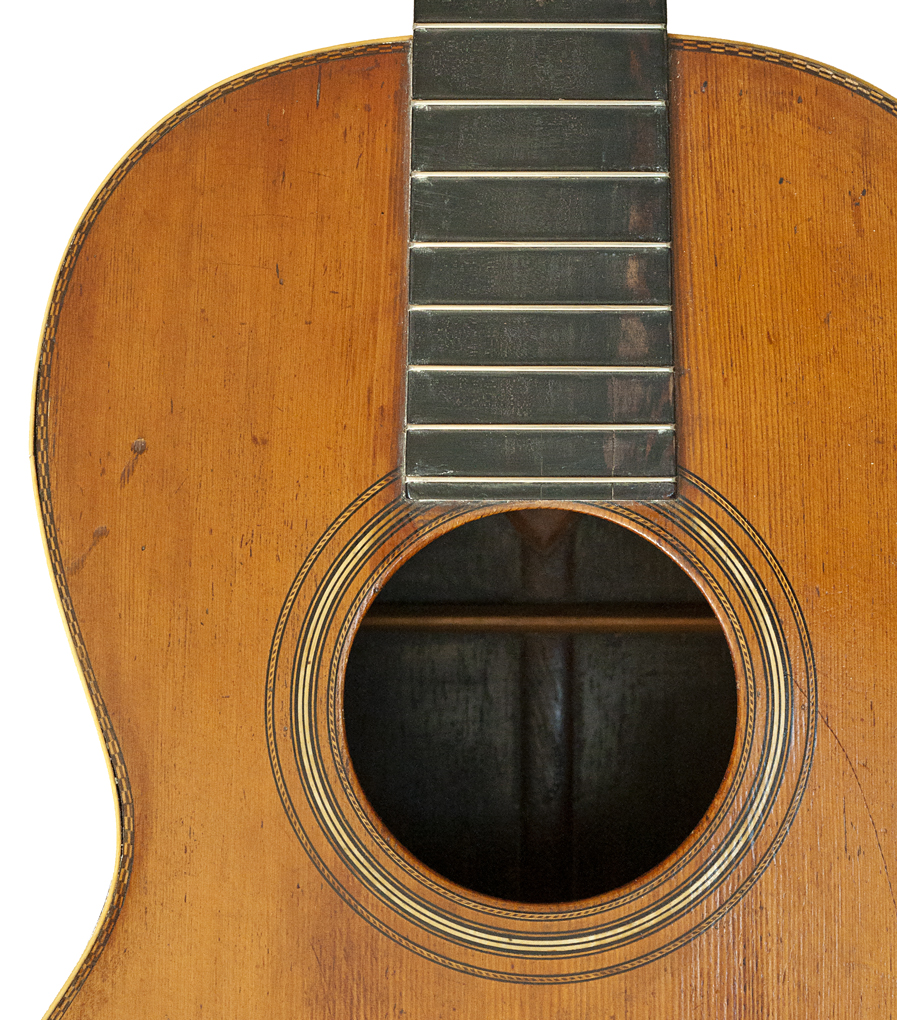
As the models became standardized, the Style 28 can be recognized by a top border with a herringbone pattern which has become one of Martin's most recognized and enduring features.
1870's Martin 1-28
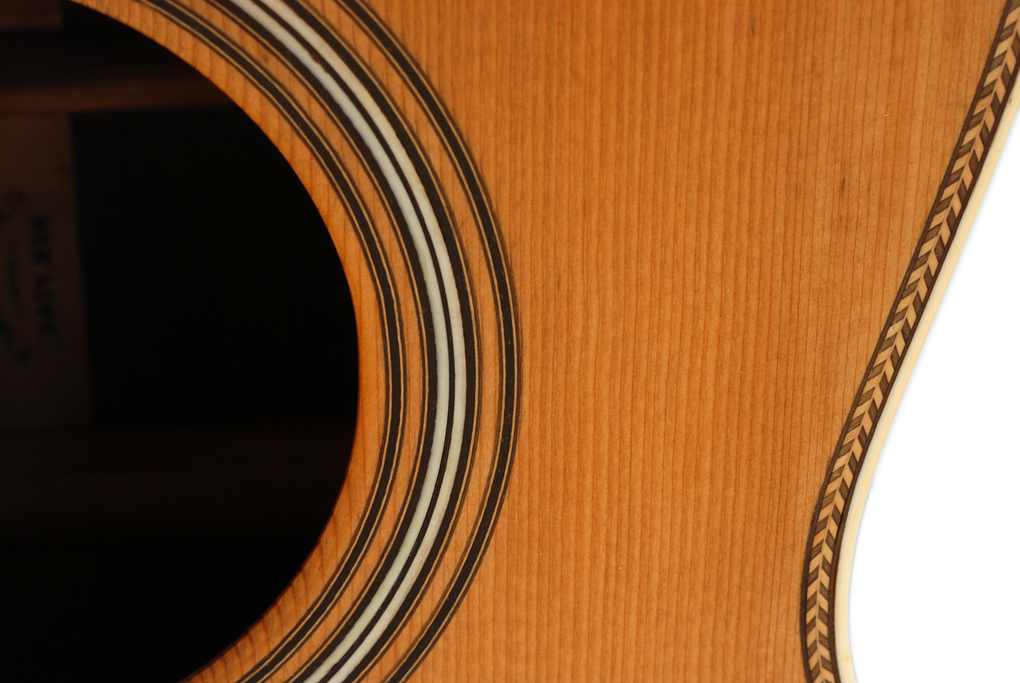
And sometimes Martin throws us a curve ball ...
This 1874 size 1 example is one of a number I've seen combining the rosette of a style 26 or 28 with a top border more typical of a style 30 or 34 in 1874.
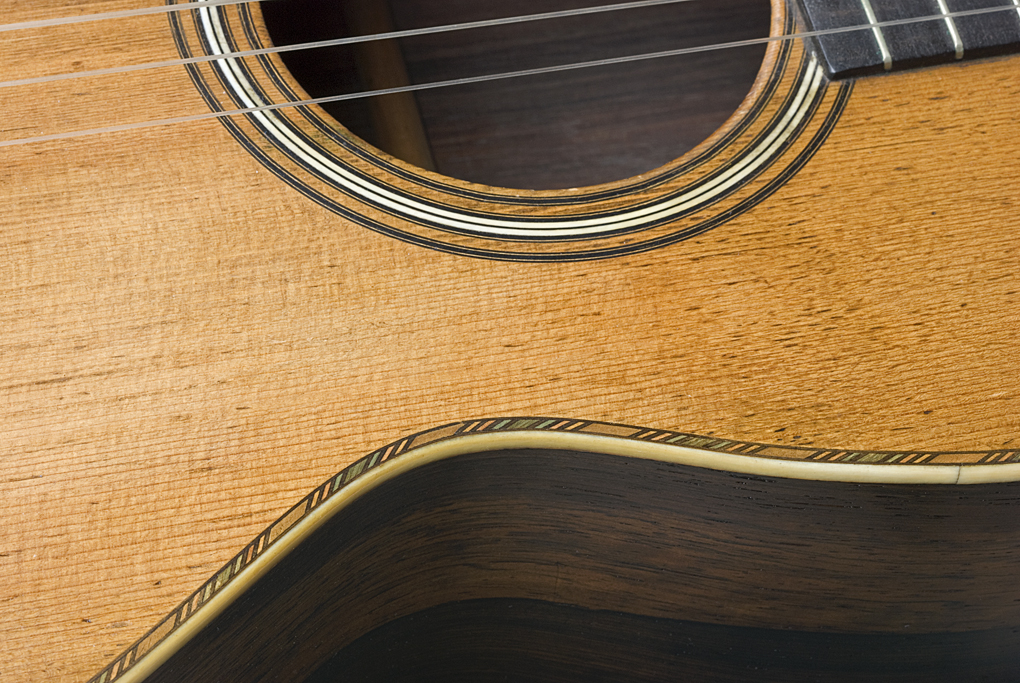
...and this Martin 1-28 was made in 1907:
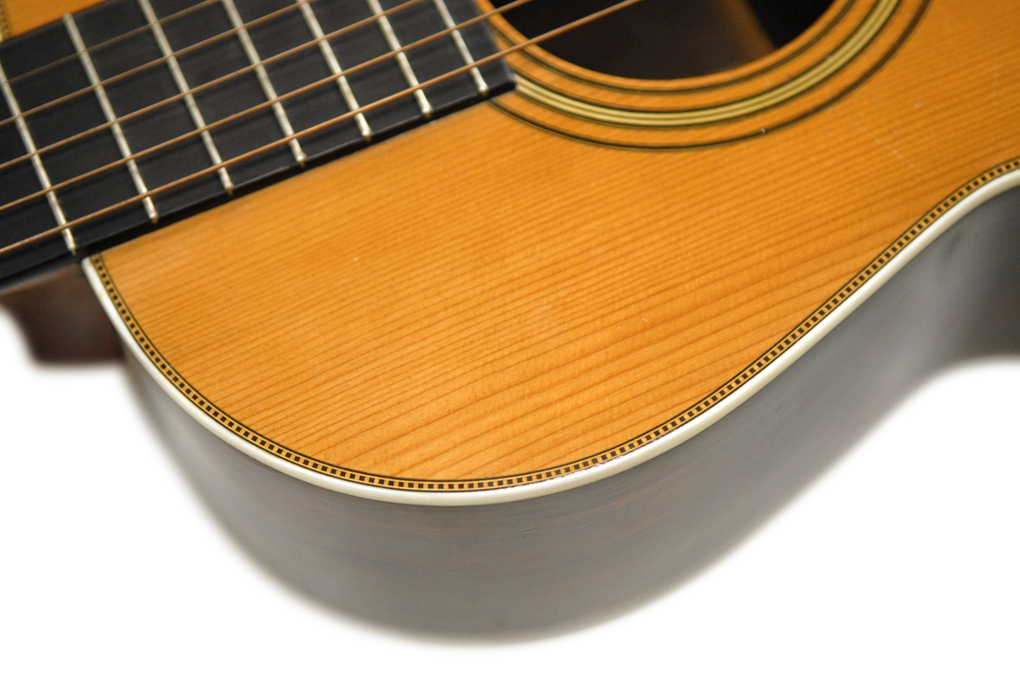
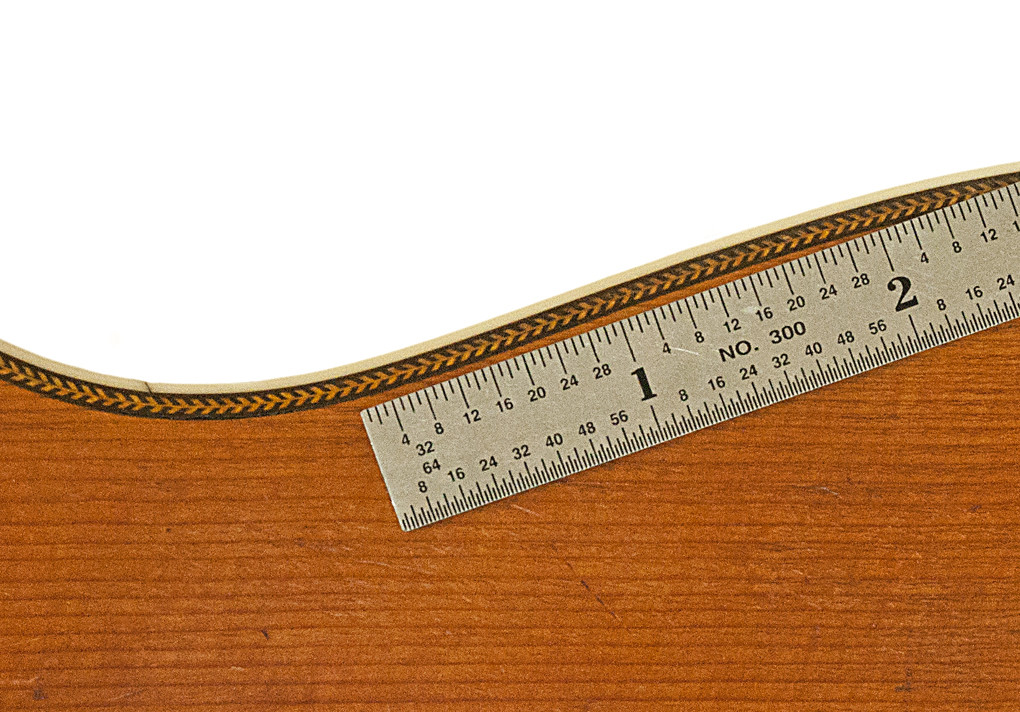
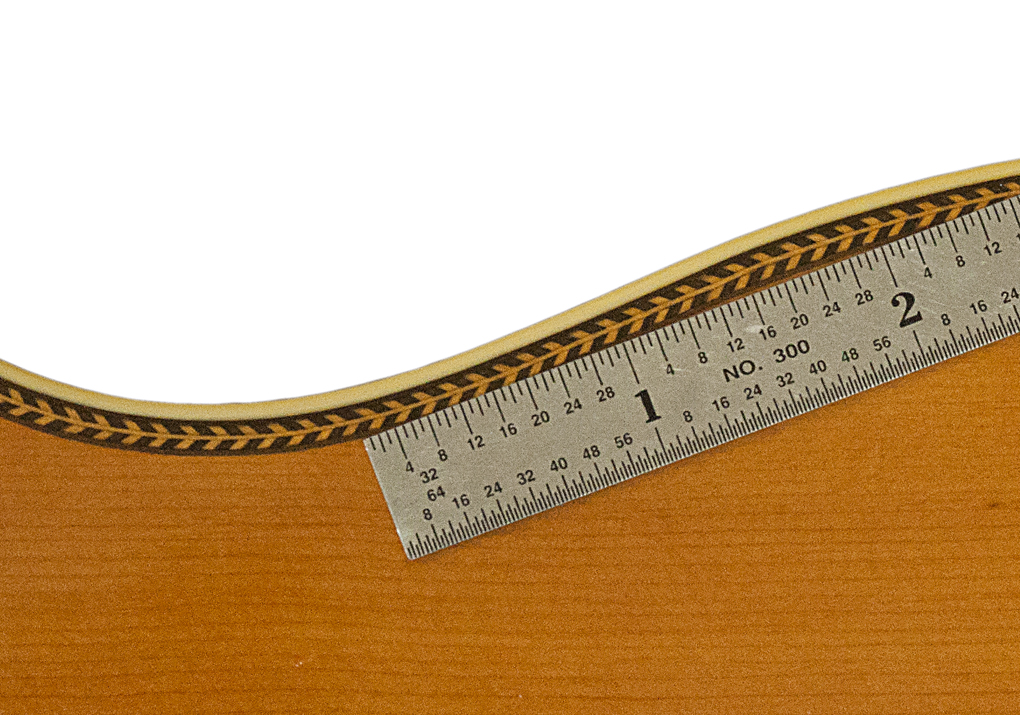
The size of the herringbone purfling could vary greatly from year to year.
The smallest herringbone appeared just before the turn of the century.
1898 Martin 0-28
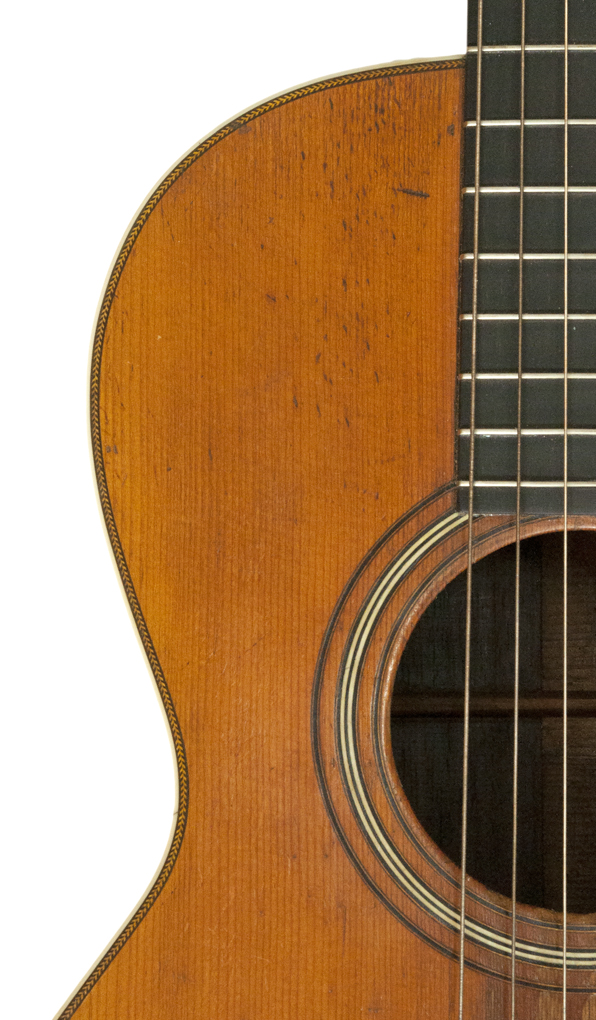
On the 1898 Martin 0-28, we see 18 herringbones per inch.
On this 1930 Martin OM-28, we see 10 herringbones per inch.
Martin Made for Other Firms
Martin made versions of the Style 28 for others, which often used different forms of marquetry.
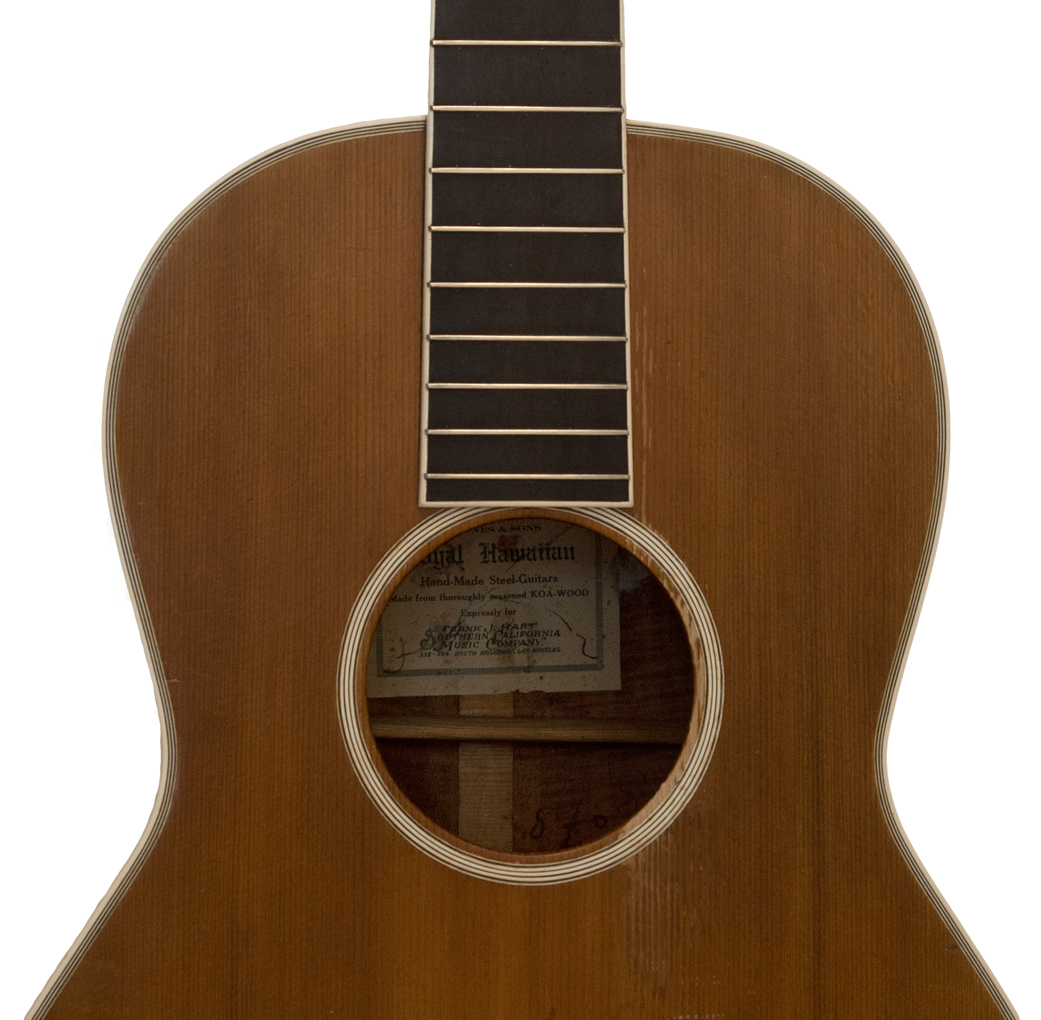
This first Martin built for Southern California Music Company "Rolando" 1500 version of a Style 28 built as a sample in 1916 is an early Style 28 to use straight lines in place of herringbone.
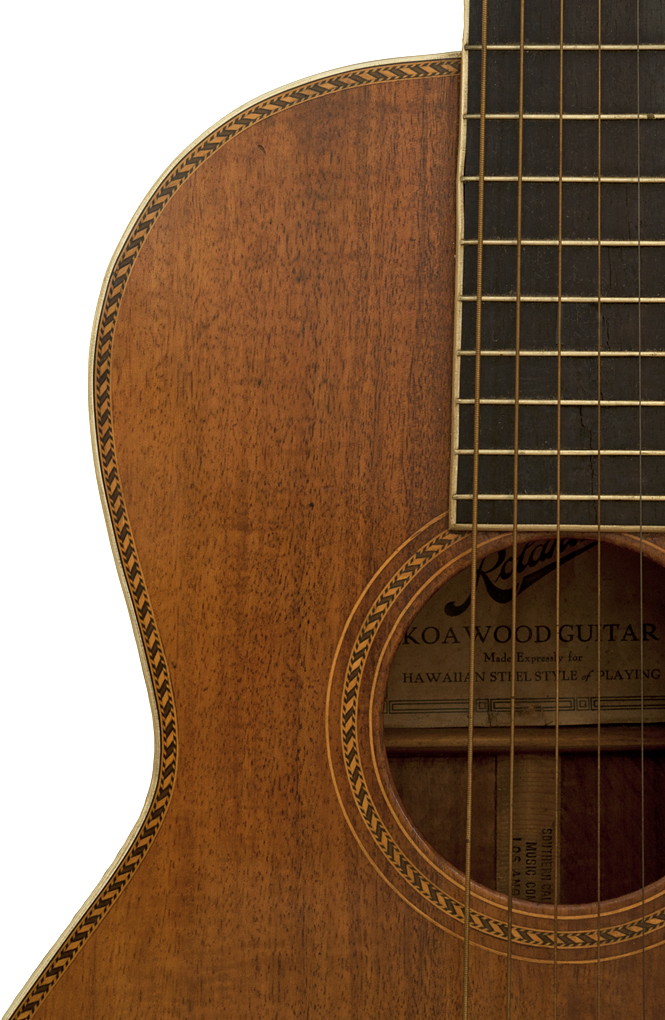
But the production version of the "Rolando" 1500 used a different patter requested by SoCal.
The Wurlitzer version of a Style 21 has a totally different pattern in the rosette.
Martin Wurlitzer 2088 / 0-21
vintagemartin.com
To See Robert Corwin's Classic Photography of Folk and Roots Musicians, visit:
For Information on Photography for
Exhibition, Publication, CD's, Promotion, Web Pages, Tour Books,
to Purchase Photographic Prints, or
If You Have Questions or Suggestions About This Web Site or Vintage Martin Guitars:
e-mail: Robert Corwinentire site copyright ©1998 through 2026 Robert Corwin/Photo-Arts. All rights reserved.