The Tenor of the Times
C. F. Martin Tenor and Plectrum Guitars
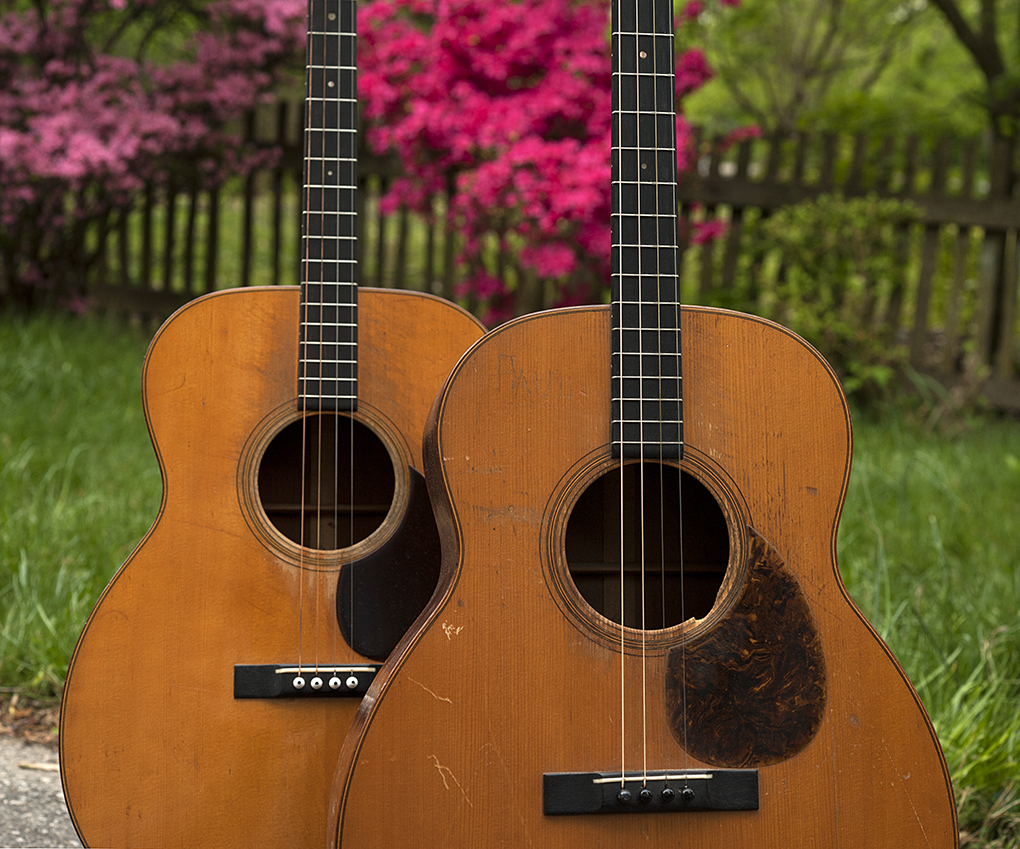
1930 Martin Carl Fisher Model, and 1930 Martin 0-18T
The Martin tenor guitar first appeared with a 12 fret shaped size 5 body in 1927.
In 1929 the size 0 tenor appeared in several trim levels. The Plectrum Guitar appeared in 1930, mostly as a 000-18.
As the hugely popular banjo was beginning to wane, players were looking for a substitute, so manufacturers were wanting to supply a guitar with the longer 4 string neck banjo players were accustomed to, which allowed easier access to the higher frets.
Martin's first attempt to build a guitar with 14 frets clear of the body, to provide greater access to the upper frets, was achieved by attaching the neck of the Martin tenor guitar at the 14th fret, and moving the bridge upwards to compensate. This bridge placement, however, proved less than ideal.
By late 1929, Al Esposito of the Carl Fischer stores suggested an alternative, special ordering a tenor guitar called the Carl Fischer Model, with a shortened upper bout with14 frets clear.
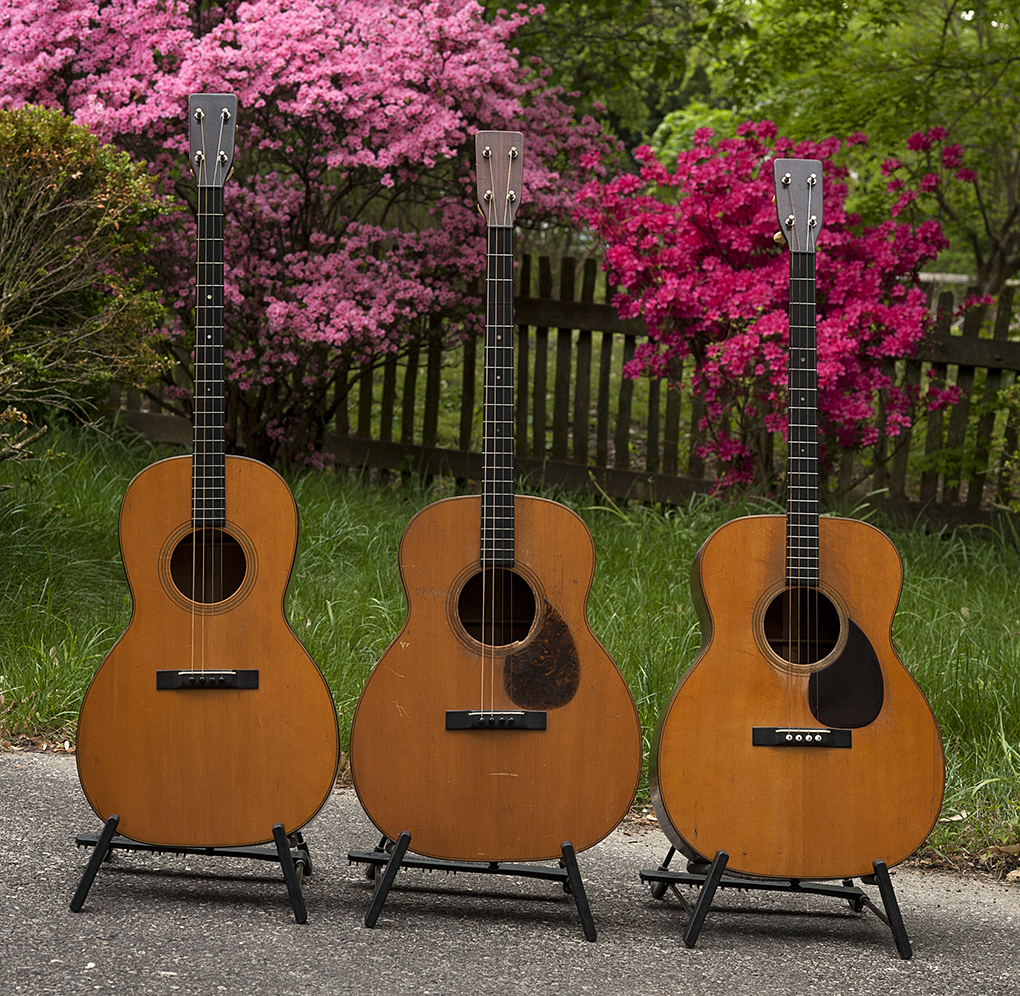
1928 Martin 2-18TL, 1930 Martin Carl Fisher Model, and 1930 Martin 0-18T
Three 14 fret Martin tenor guitars, the first with high bridge placement, the second with the new body shape requested by the Carl Fisher Store , and the third a production model 0-18T with wider upper bout.
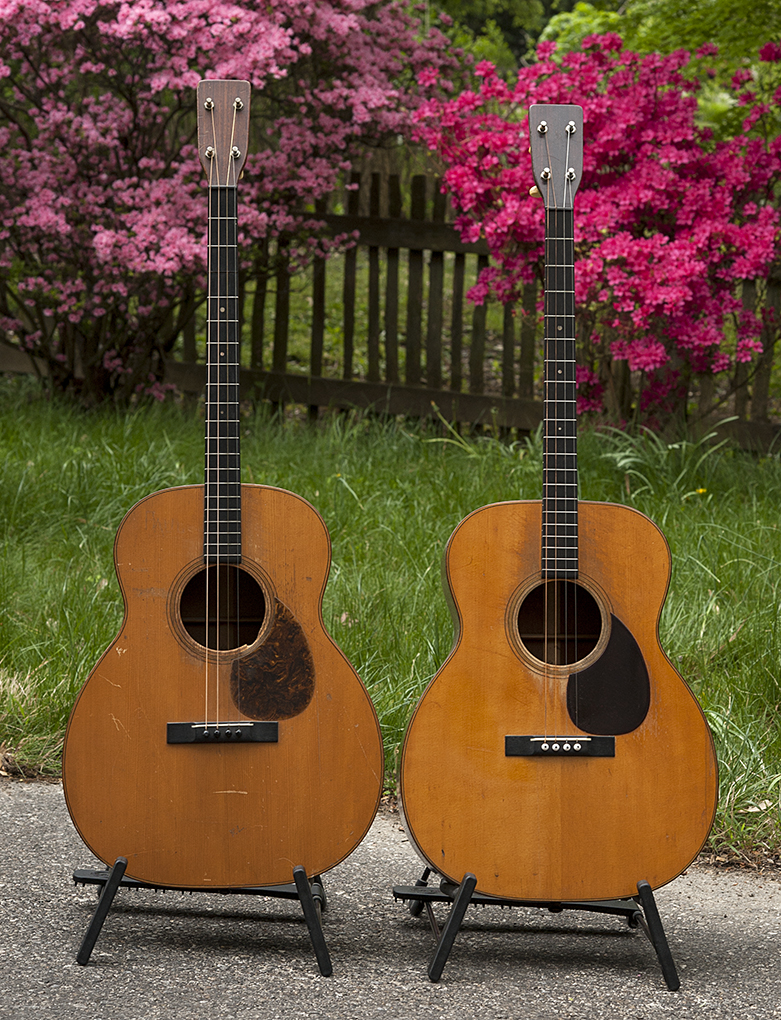
1930 Martin Carl Fisher Model with 1930 Martin O-18T
By early 1930, the Carl Fisher Model had been made available to Martins other customers, and the Fisher Model name was dropped. The 0-18 that followed had a flatter and wider upper bout. By 1931, the straight bridge of the 0-18T was replaced by a belly bridge.
The tenor guitar was introduced in January, 1927 as a size 5. In 1927 and 1928, nearly all tenors were made in the smaller sizes 5 or 2, with the majority made in size 5.
In 1929 Martin introduced the Carl Fischer and 0-18T, and the trend started moving to favor size 0 tenors.
5-17T
5-21T 2-17T
2-18T 2-28T
2-45T 1-18T
0-17T 0-18T
0-21T 0-28T
00-18T
00-21T
00-28T
000-18T
1927 938 262 15 1 3
1928 512 50 30 162 6 1
1929 364 133 29 34 3
1930 701 50 358 1 26 1
1931 250 201 45 1 1
1932 225 4 151 1
1933 0 140 1
1934 50 2 1
1935 51 1
1936 75 12 1
1937 51 30
1938 50 12 2
1939 25 24 1
1940 25 12 1 1
1941 50 12 1
+ +
1927 938 262 15 1 3
1928 512 50 30 162 6 1
1929 364 133 29 34 3
1930 701 50 358 1 26 1
1931 250 201 45 1 1
1932 225 4 151 1
1933 0 140 1
1934 50 2 1
1935 51 1
1936 75 12 1
1937 51 30
1938 50 12 2
1939 25 24 1
1940 25 12 1 1
1941 50 12 1
+ +
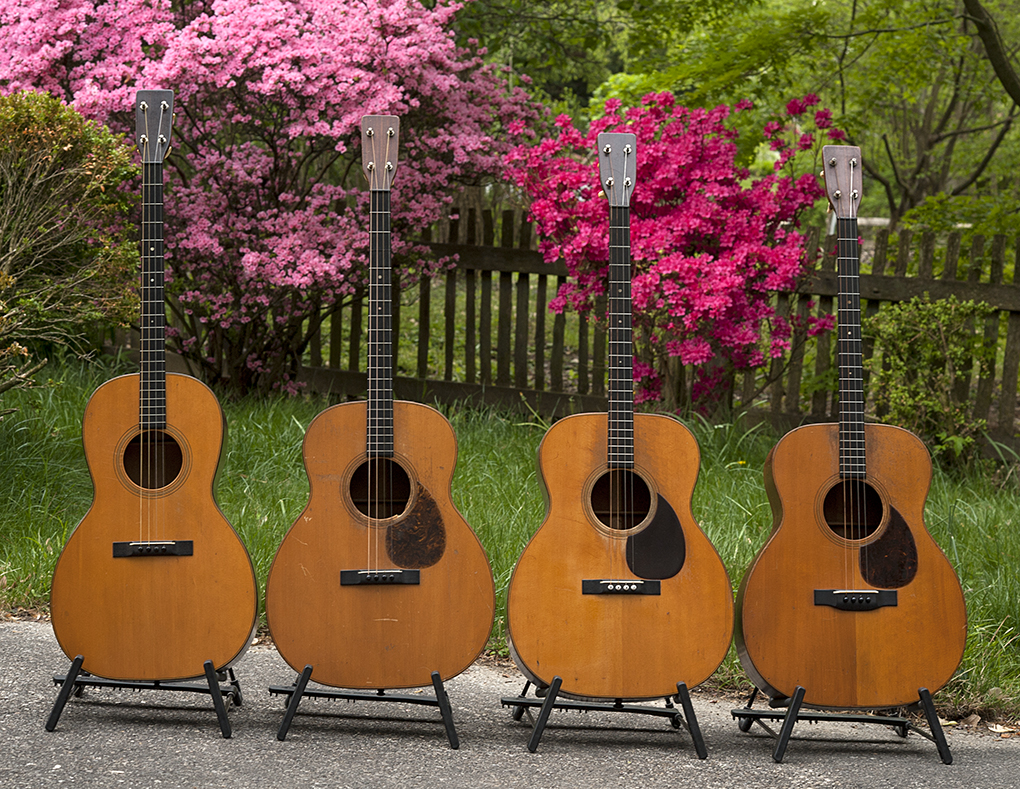
Long neck 14 fret Martin 1928 2-18TL, 1930 Martin Carl Fisher Model, 1930 0-18T with wider and less round upper bout, and 1931 Martin 0-18T with belly bridge.
Soon after the Carl Fisher Model was developed, Perry Bechtel of the Cable Piano Company, upon visiting the Martin factory and seeing the Carl Fisher Model, requested a fourteen fret clear six string guitar, and the Orchestra Model was born. The OM-28 was soon followed by the OM-18 and the OM-18P Plectrum Guitar appeared in 1930.
In 1931 Martin added a handful of plectrum guitars in the C-1 and C-2 roundhole archtop styles. By the end of 1931, Martin had built it's last Plectrum Guitar except for two in 1940 and one in 1941.
For the first two years, all Martin Plectrums were made in size 1. In 1930 and 1931, less than half were the inexpensive and small 1-17 model, and more than half were the larger 000-18P or new OM-18P
1-17P 1-18P
1-21P 1-28P
0-18P 0-18KP
00-17P 000-18P
000-28P OM-18P
1928 91 5
1929 81 1 8
1930 50 1 6 46 3 30
1931 50 65
1940 1 1
1941 1
1928 91 5
1929 81 1 8
1930 50 1 6 46 3 30
1931 50 65
1940 1 1
1941 1
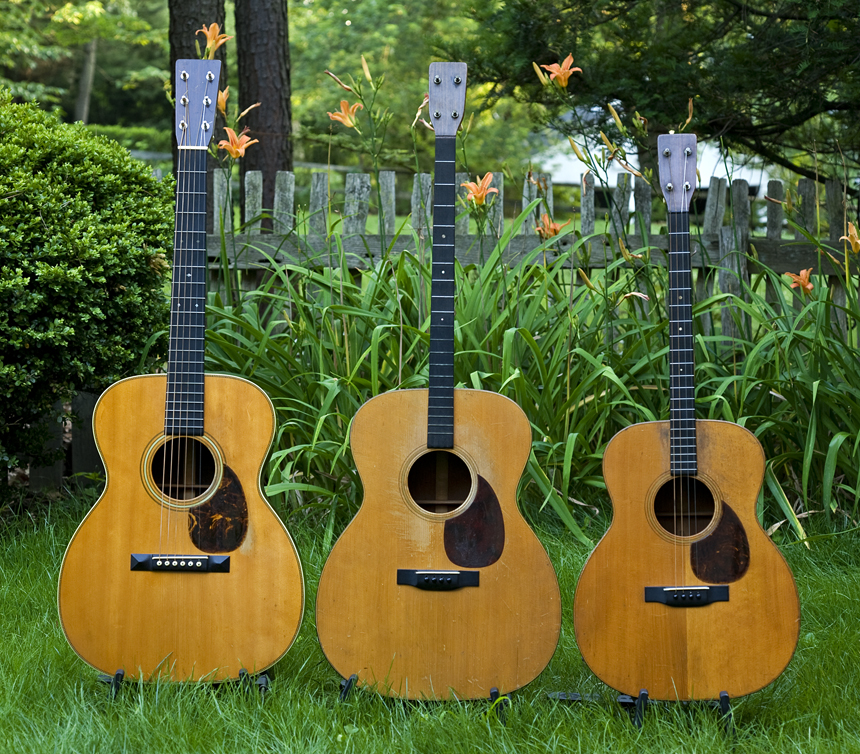
OM-28, OM-18P and 0-18T
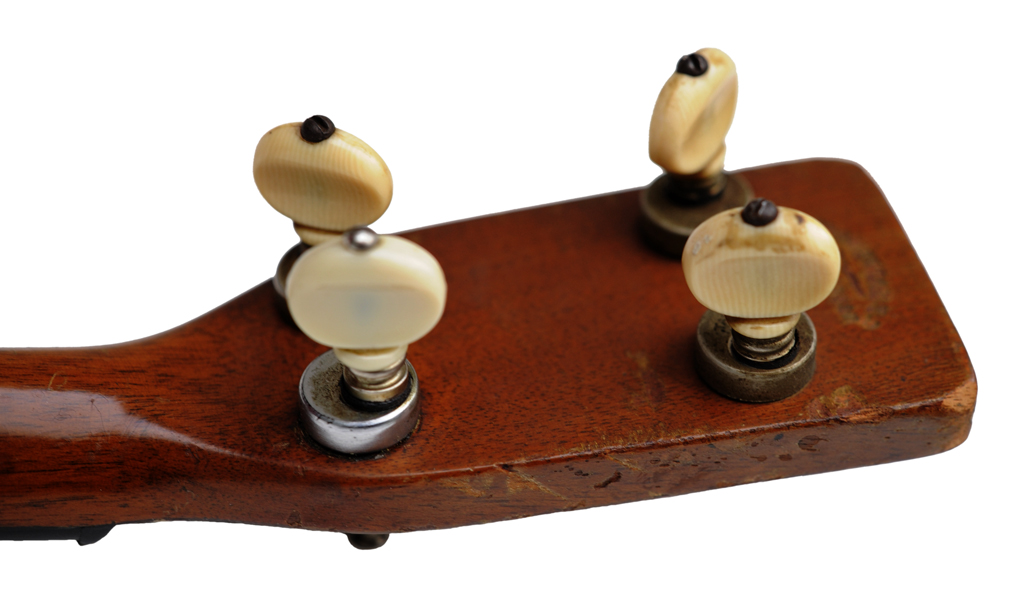
The 0-18T was the first Martin to receive a flat headstock with machines, which were in the style of banjo tuners:
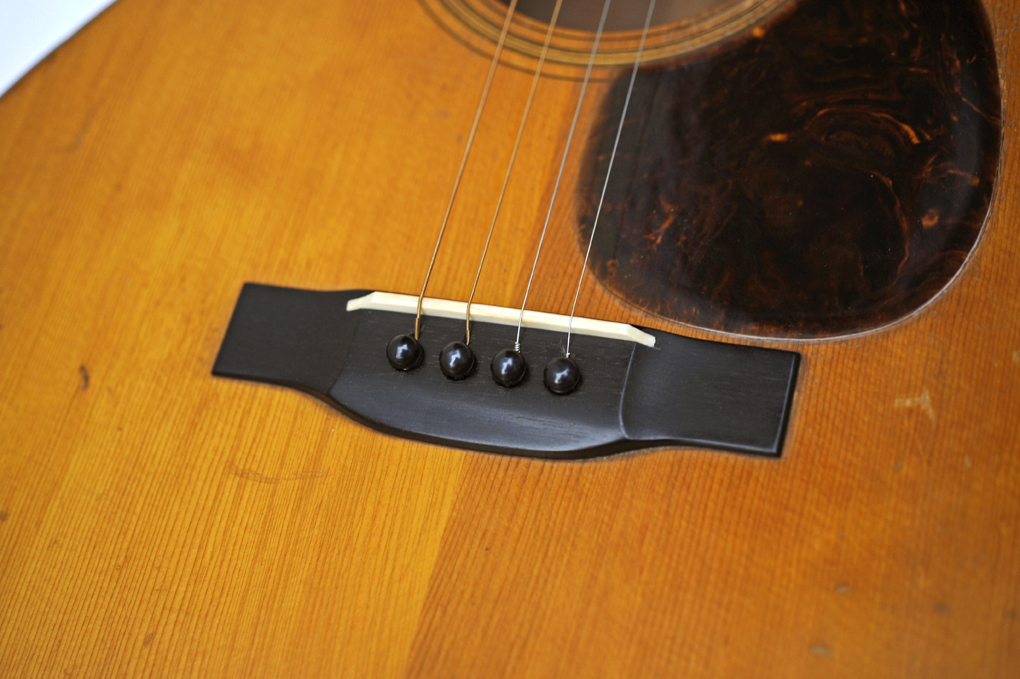
The 0-18T was also one of the first Martins to receive the new belly style bridge, which appeared shortly after the new Carl Fisher design was introduced as part of the regular Martin line.
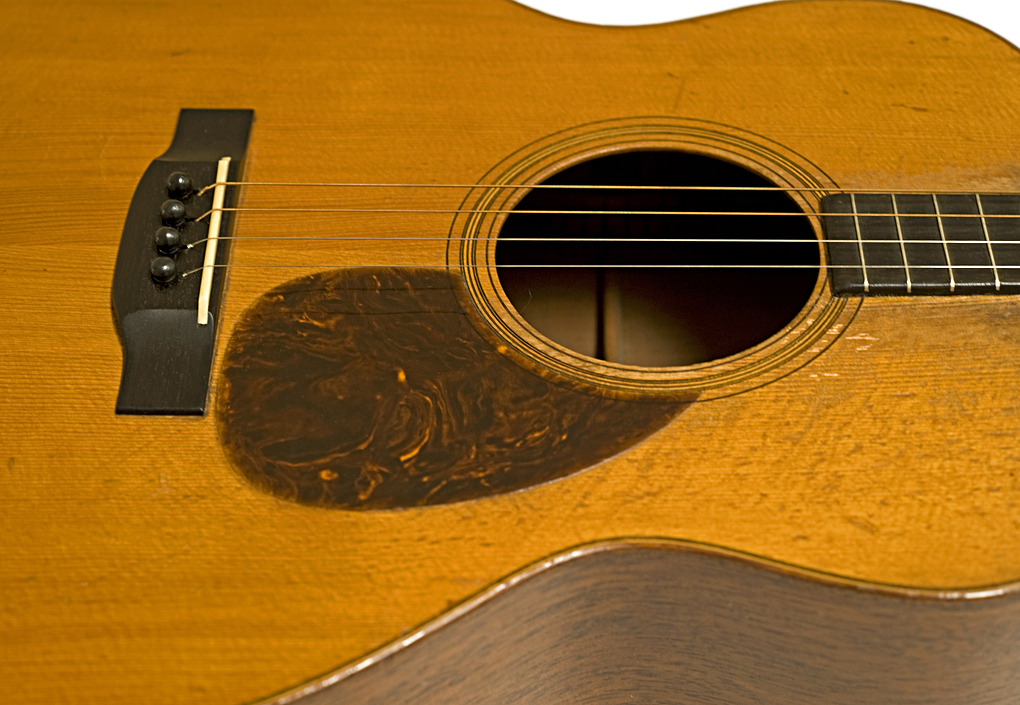
...and was also one of the first Martins to receive a standard pickguard, in the small teardrop shape:
Tenor guitars are typically tuned in fifths, usually CGDA, similar to the tenor banjo or the viola, and the same intervals as a mandolin or fiddle, but starting a fifth lower.
In terms of value, the tenor factor cuts both ways. Very few people play tenors today, and quite a few were made, so their values are low. The more unique tenor models are worth somewhat more, but it's still a matter of connecting a buyer with the guitar. There are a fair number of unique Gibson tenors of one sort or another, so the value is often dependent on being lucky enough to be in the right place at the tight time to hit the fancy of a prospective buyer.
I've seen very nice Nick Lucas and Les Paul tenors with high asking prices, but never heard of one selling.
To See Robert Corwin's Classic Photography of Folk and Roots Musicians, visit:
For Information on Photography for
Exhibition, Publication, CD's, Promotion, Web Pages, Tour Books,
to Purchase Photographic Prints, or
If You Have Questions About An Early Martin Guitar:
e-mail: Robert Corwinentire site copyright ©1998 through 2026
Robert Corwin/Photo-Arts. All rights reserved.