Knock on Wood
Wood on C. F. Martin Guitars
It appears that the first guitars made by C.F. Martin after coming to New York in the 1830's may have been made with tops of Alpine Spruce from Europe.
Early Martin Stauffer Style Guitar
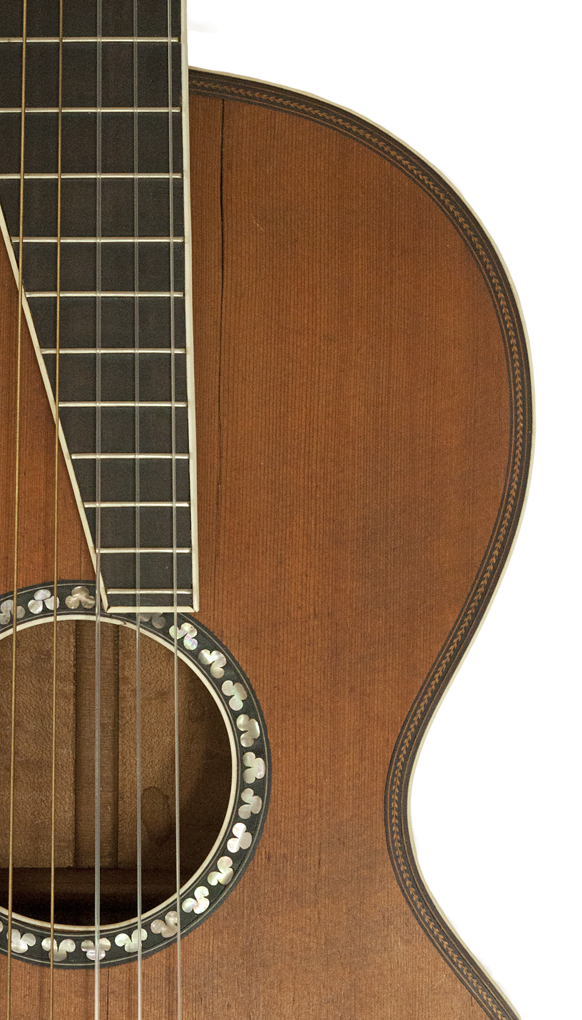
1837 Martin Hudson Street Guitar

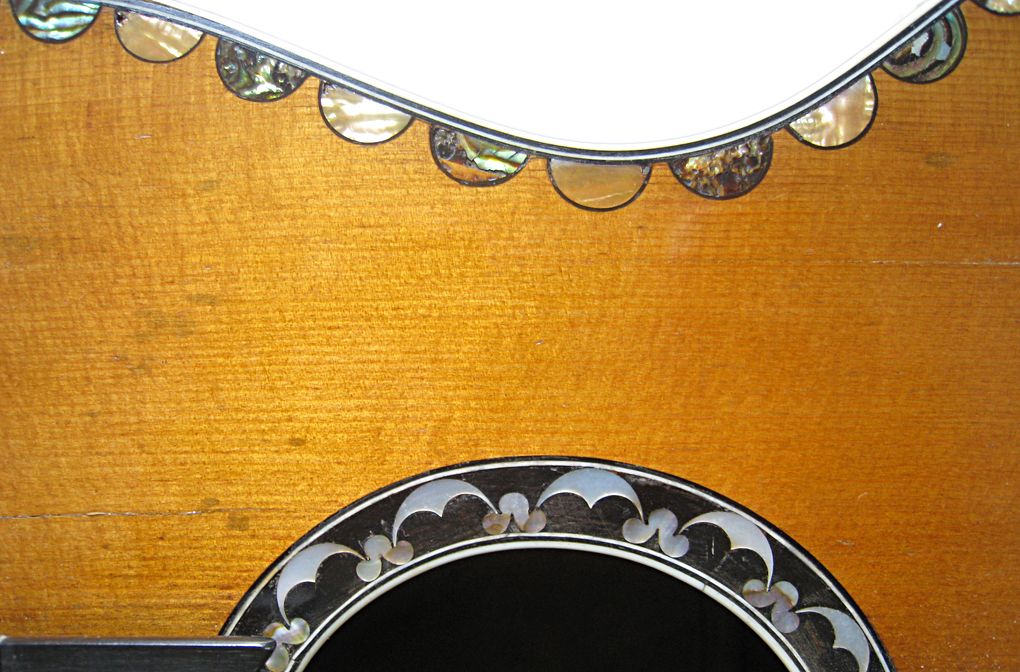
Most vintage Martin guitars are built with tops made with Spruce which is often referred to as "Adirondack" as it was generally sourced from the Adirondack region of the Eastern US, mostly from suppliers in Vermont, but more properly named "red spruce".
"Red spruce" is actually quite white, but the shellac used for finish until the late 1920's can give them a more or less orange appearance, depending on the color of the shellac, which can range from light to deep amber.
1840's Alternate X Brace Spanish Style Martin
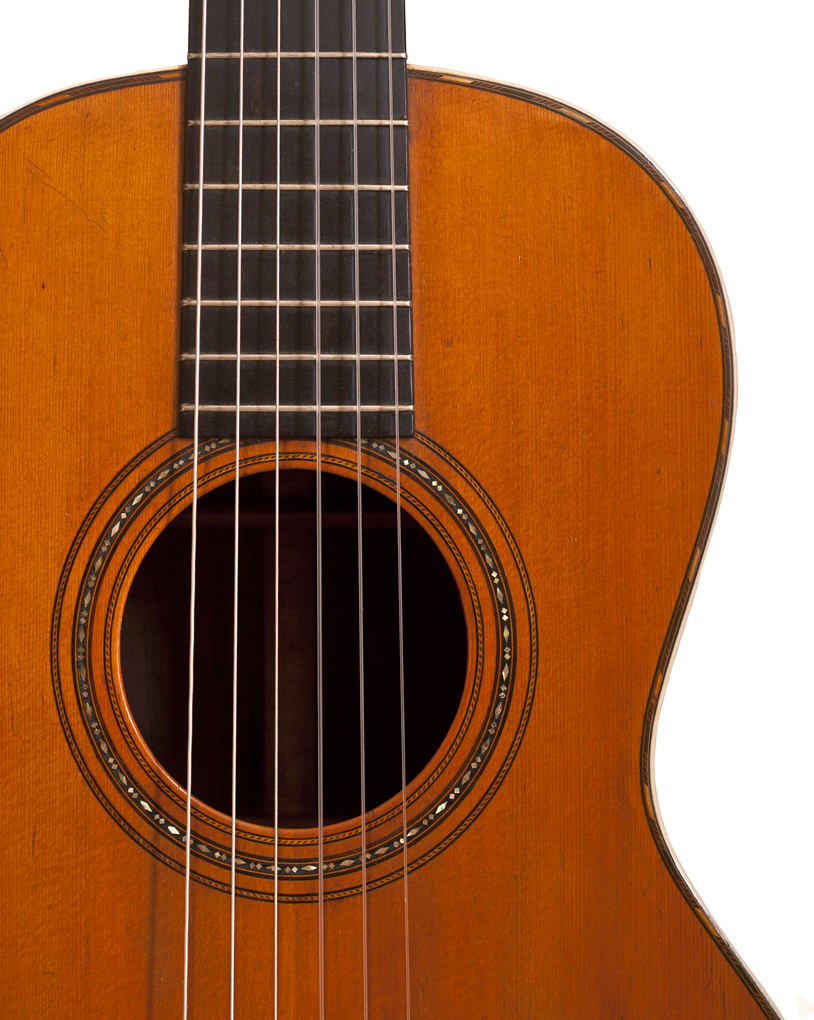
Without the orange tone often imparted by shellac, red spruce is generally pale and even in color, in addition to having a uniform, even, straight grain.
Martin 1840's Spanish Guitar
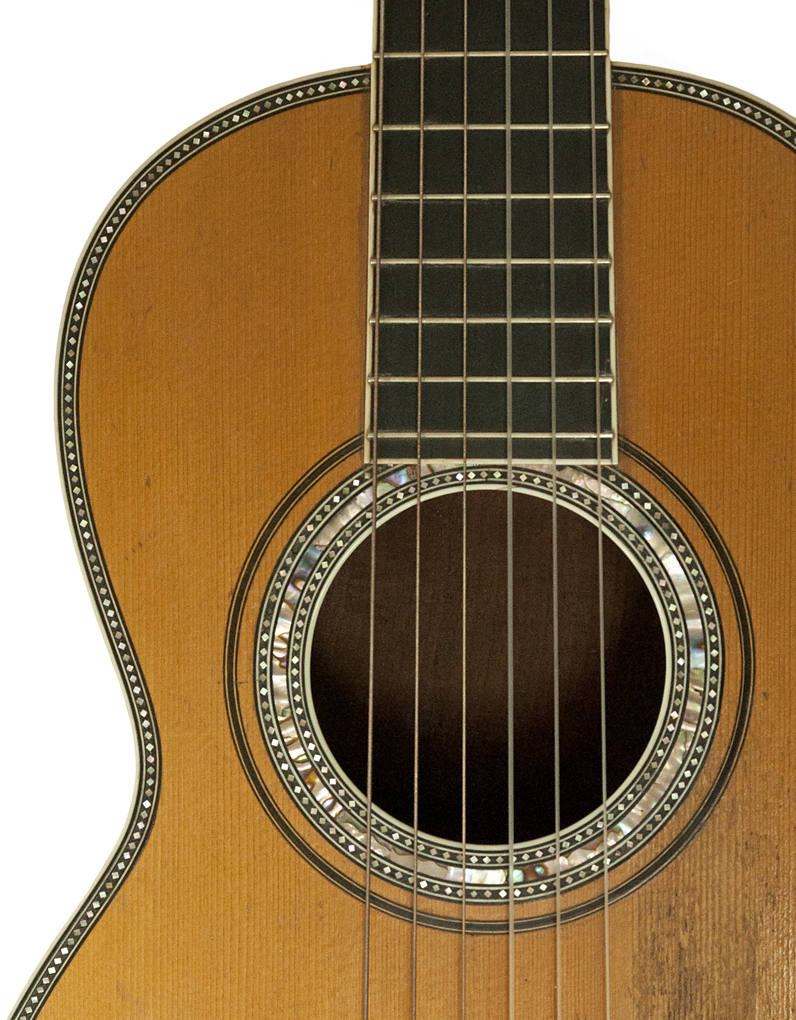
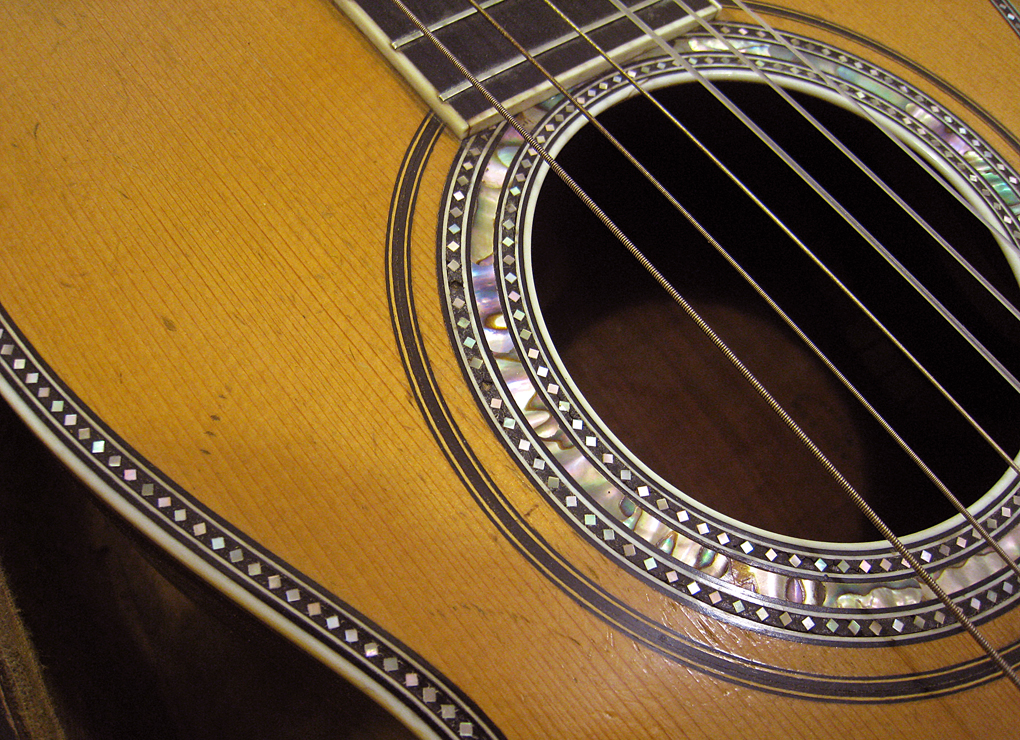
1850's Martin Ivory Fingerboard Stauffer Headstock Guitar
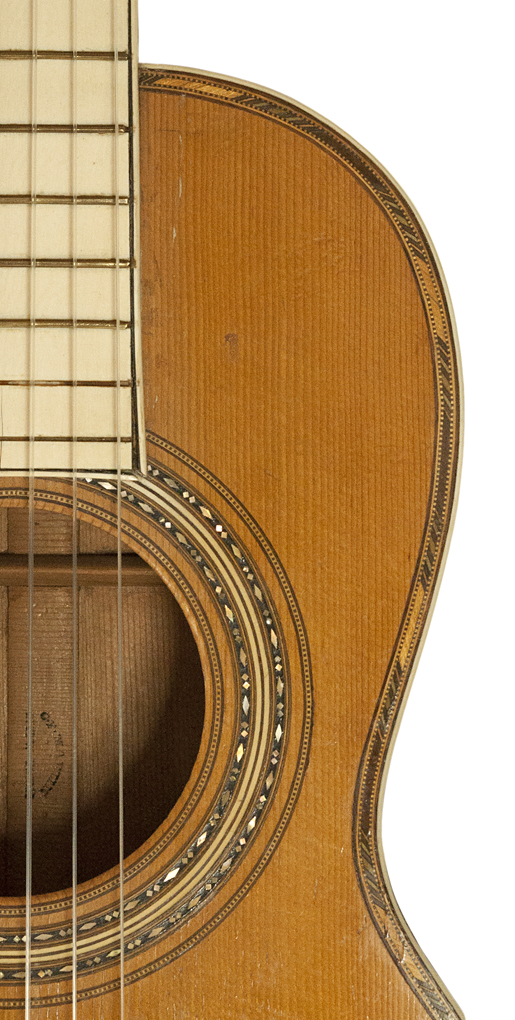
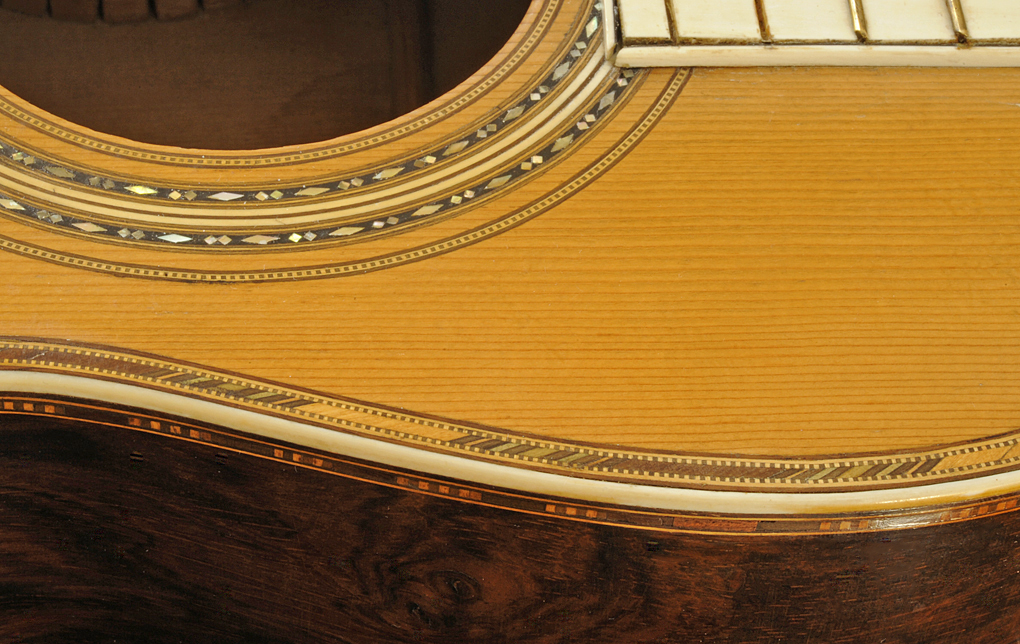
The top wood seen on the highest grade Martins can be extremely pale and even, leading us to think that Martin might have used the light toned European spruce for their better quality guitars.
This wood can be confused with German spruce which has a similar pace appearance, however "German Spruce" is in fact a variety of spruce grown in America.
It is generally believed that German spruce was used for the pearl inlaid Martins produced after their revival in the 1960's.
Martin Style 42
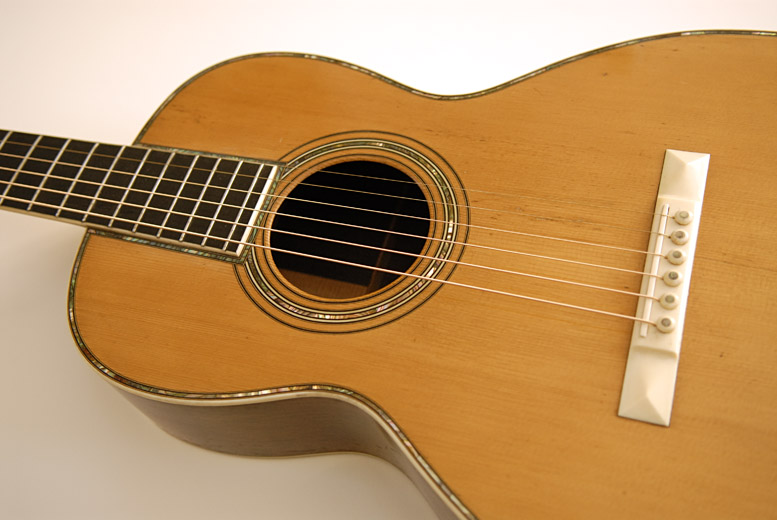
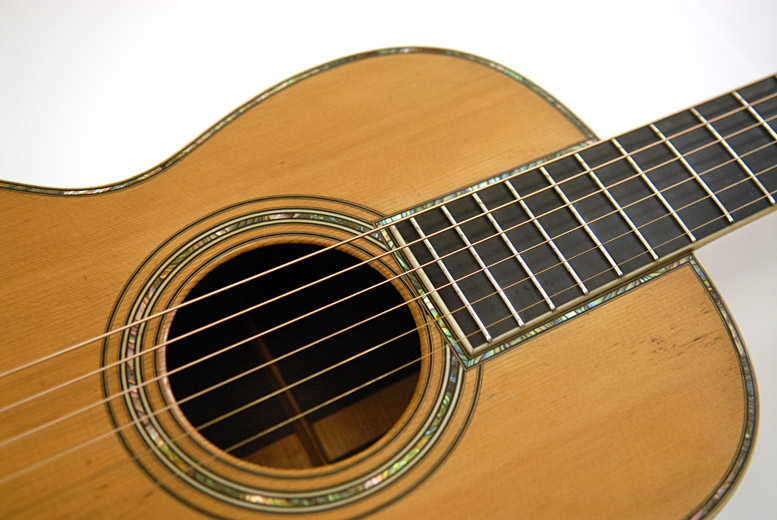
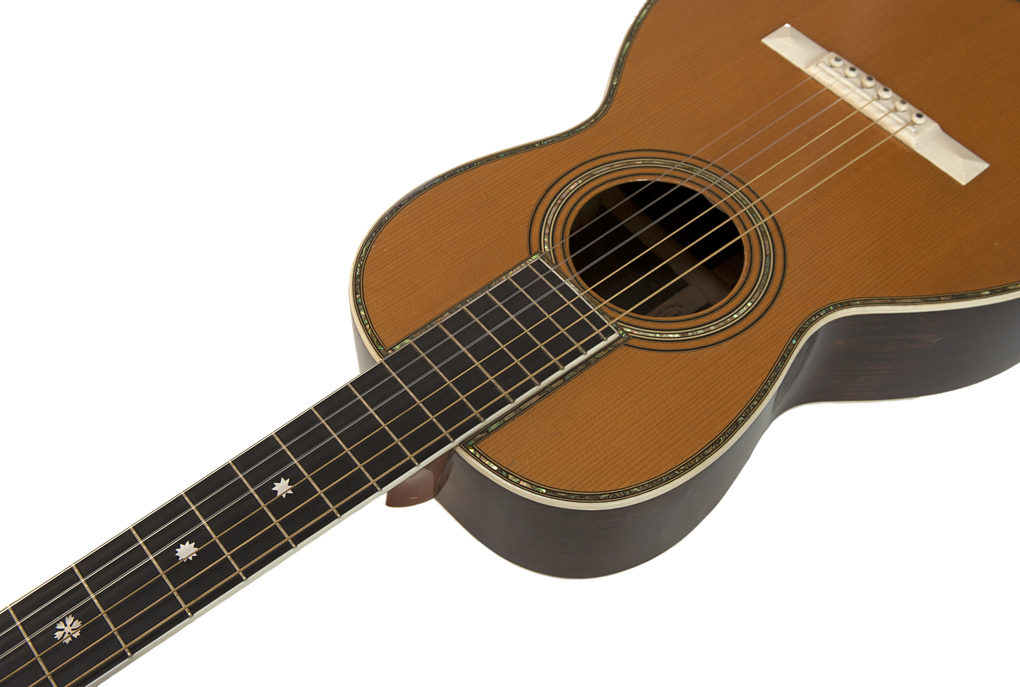
While Sitka Spruce is thought to have been used for Martin tops only after WWII, Martin broke briefly with tradition in experimenting with Sitka Spruce, known at the time
as "Airplane Spruce", for the tops of some guitars in 1919, when Western Spruce was being harvested for the construction of WWI airplanes.
Sitka can often be distinguished by darker, reddish grain lines, a less even appearance, and prominent resin canals which cross the grain of the spruce.
1919 Martin 0-45
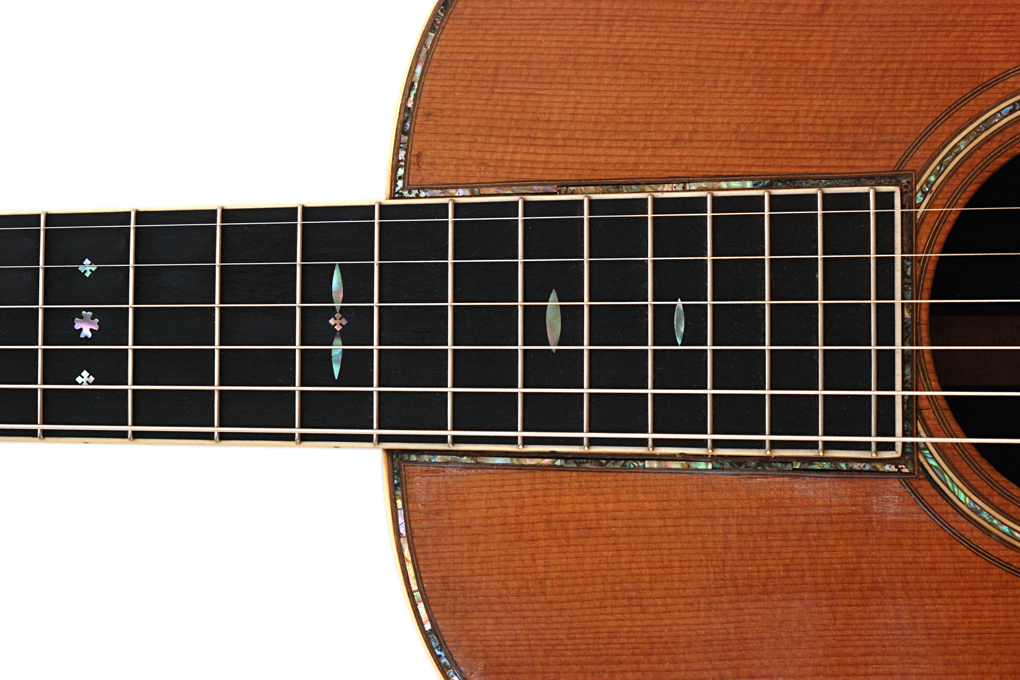
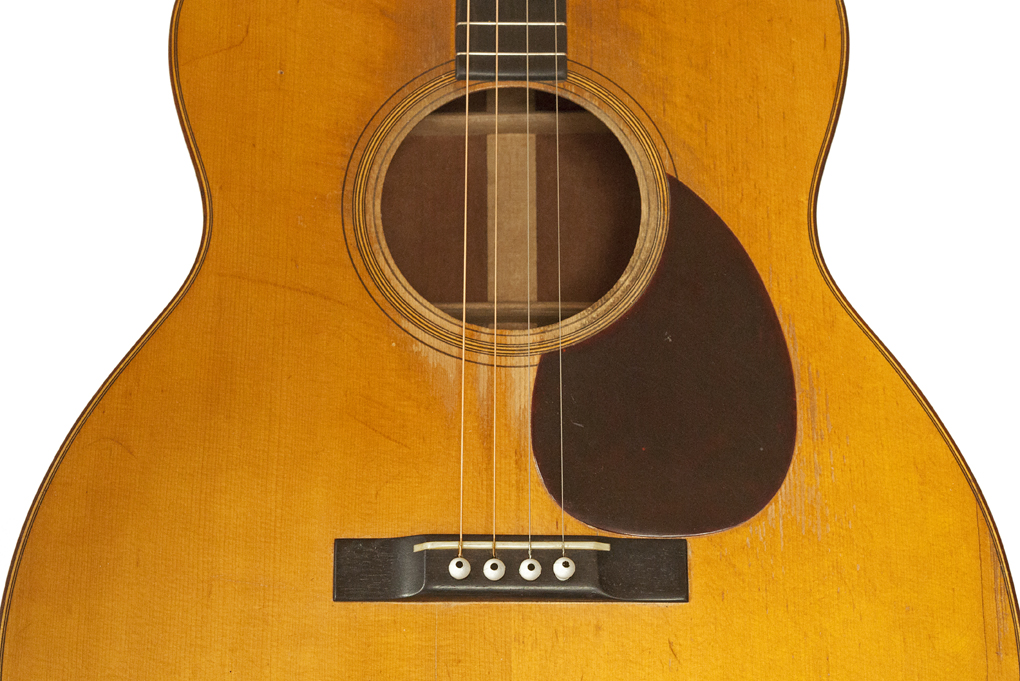
Red spruce 1930 OM-28
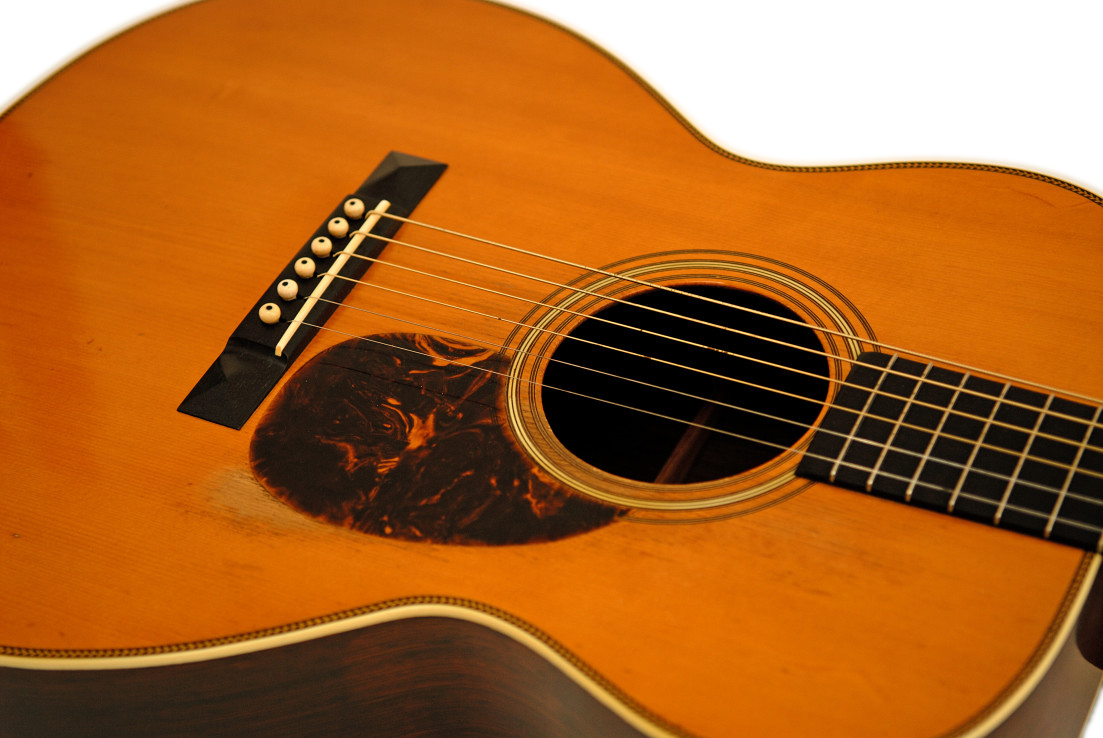
1930 Martin 0-18T
Note the even appearance.
The 1930 Martin OM-28 and OM-45 DeLuxe
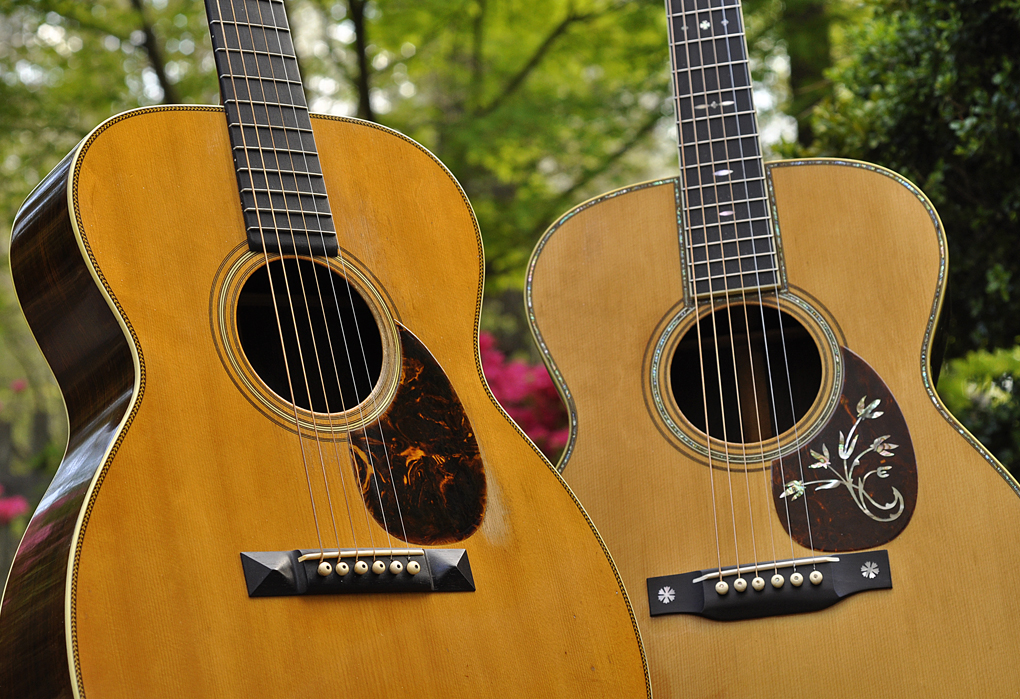
Martin Style 42 and 45 guitars are generally known for the appearance of their pearl, however the selection of a higher grade of spruce and all other materials is responsible for much
of the cost and attention paid in building the higher priced Martins.
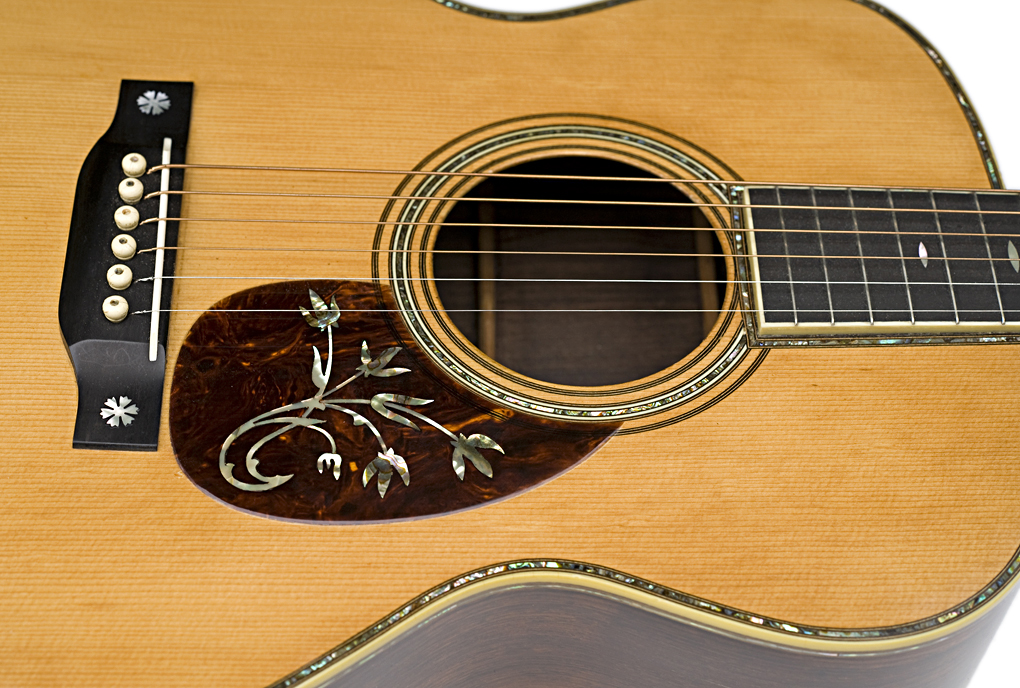
The finest materials of all were reserved for the 45 DeLuxe, which were only available for a number of months.
1930 Martin OM-45 DeLuxe
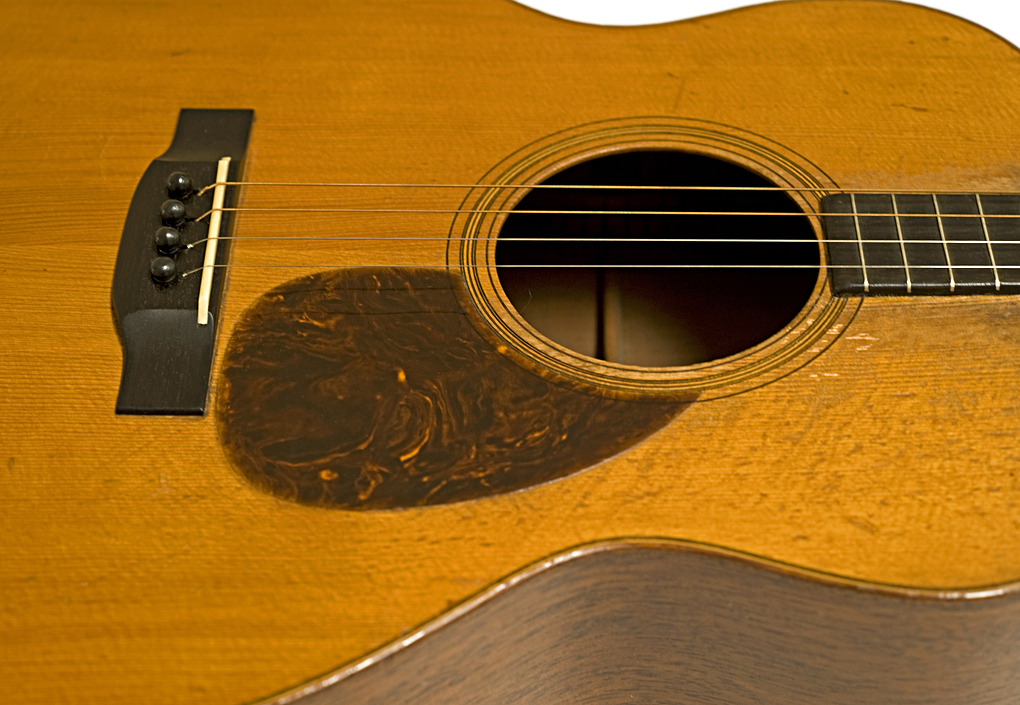
1931 0-18T
1939 Martin D-28
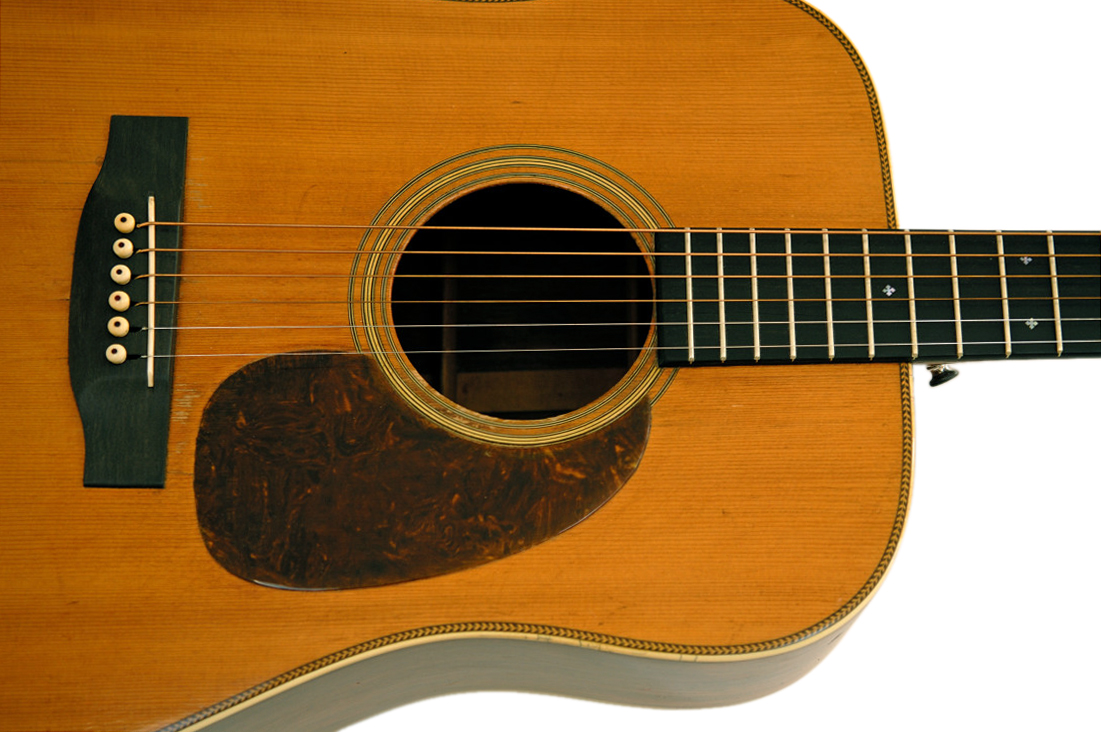
1940 Martin 00-18
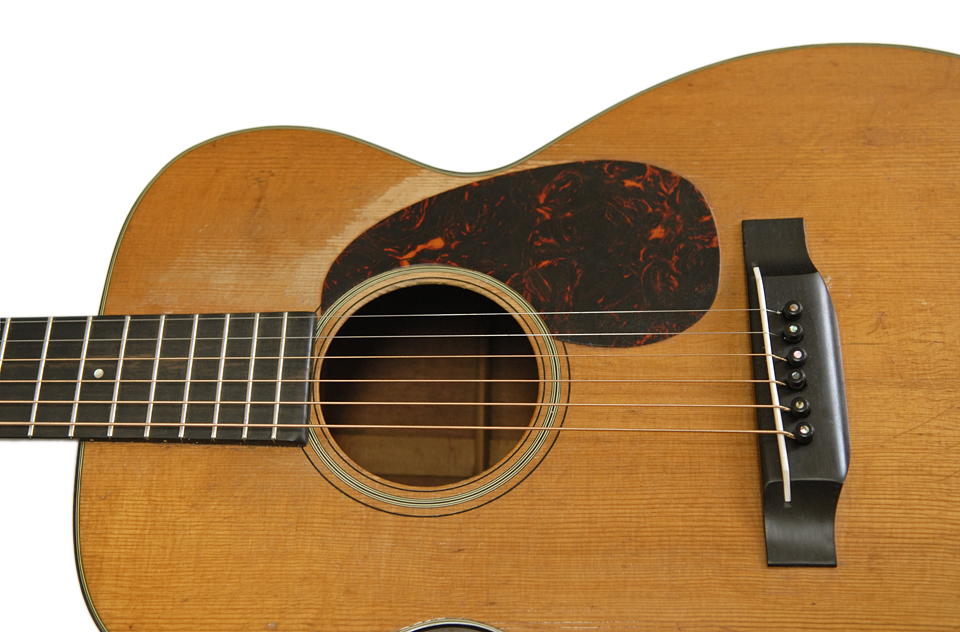
Red Spruce can sometimes be distinguished from Sitka by the appearance of sapwood, which has a lighter appearance. Sapwood could be placed at the sides of the tops,
but was generally placed at the middle, forming a light colored band in the center of the top. Sapwood appears on Engelmann and German Spruce as well, but never on Sitka.
Sapwood is seen most often on Martins from the 1940's, when a greater number of larger guitars were built. Red spruce trees are extremely small compared to the giant Sitka,
so it became difficult to find wide enough logs to accommodate 000 and Dreadnaught guitars without using the sapwood, especially as the supplies of appropriate red spruce dwindled.
1943 Martin 000-18
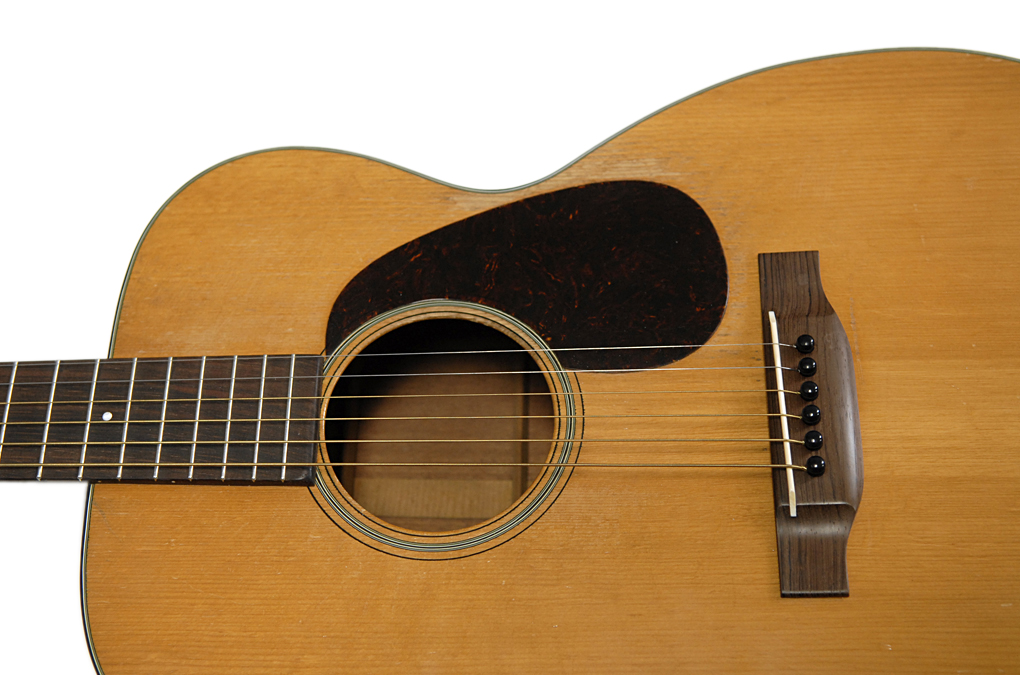
1944 Martin D-18
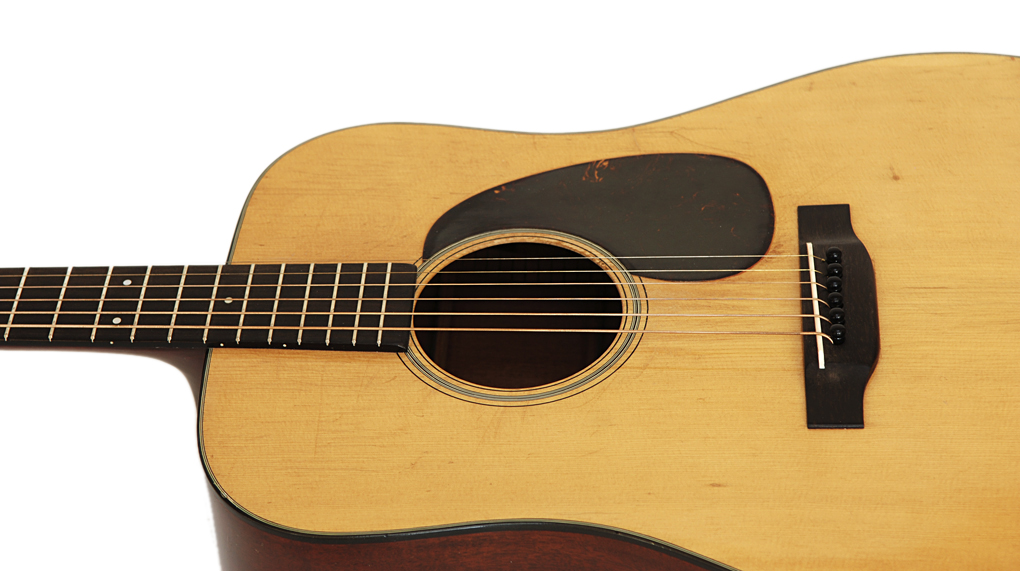
1945 Martin 000-18
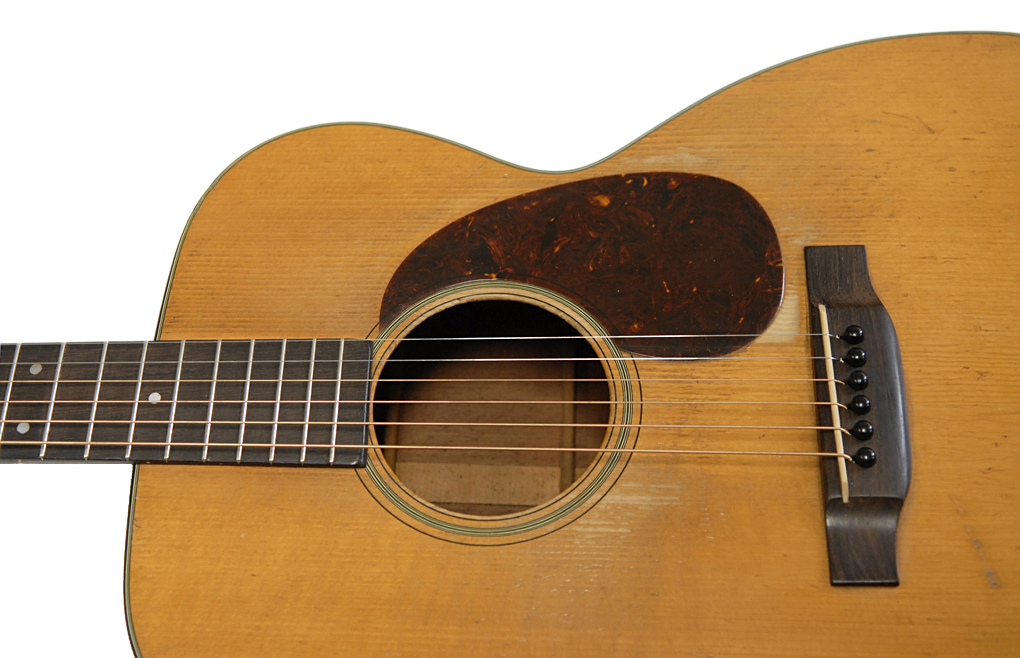
In 1946, as supplies of their preferred sources of spruce dried up, and Martin had used the last smaller pieces to create four piece tops, Martin began switching to Sitka spruce from the Northwest.
The Sitka used in this first year of 1946 has a distinctive dark brownish tone, and tends to have the distinctive light swirls in the wood known as "bear claw".
This figure is considered to be desirable as it can make the board stiffer as well as for it's appearance.
1946 Martin 000-18
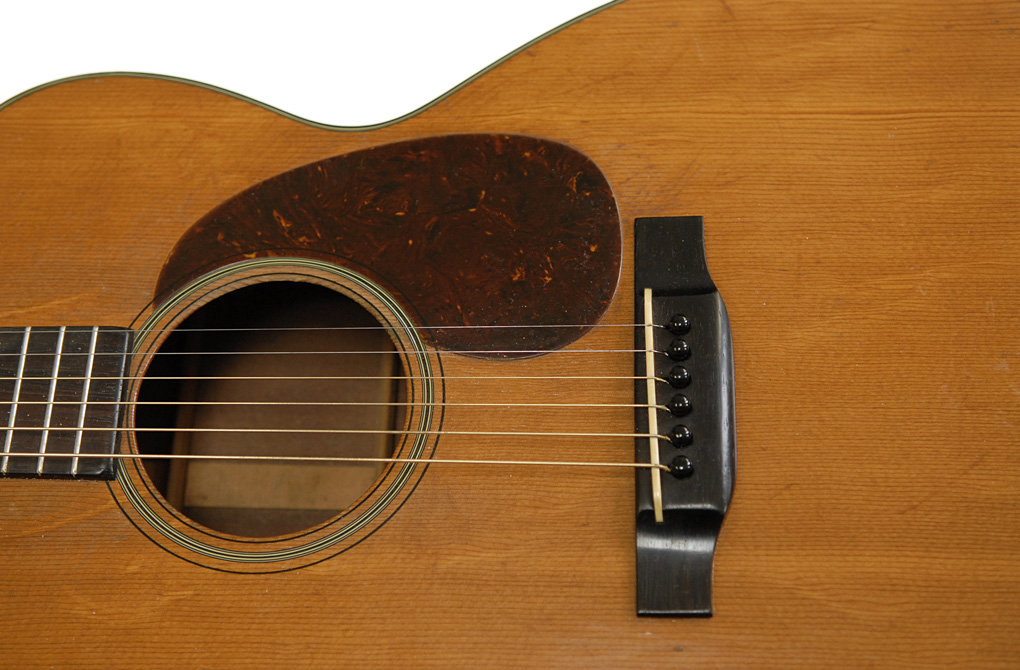
1952 Martin 000-18
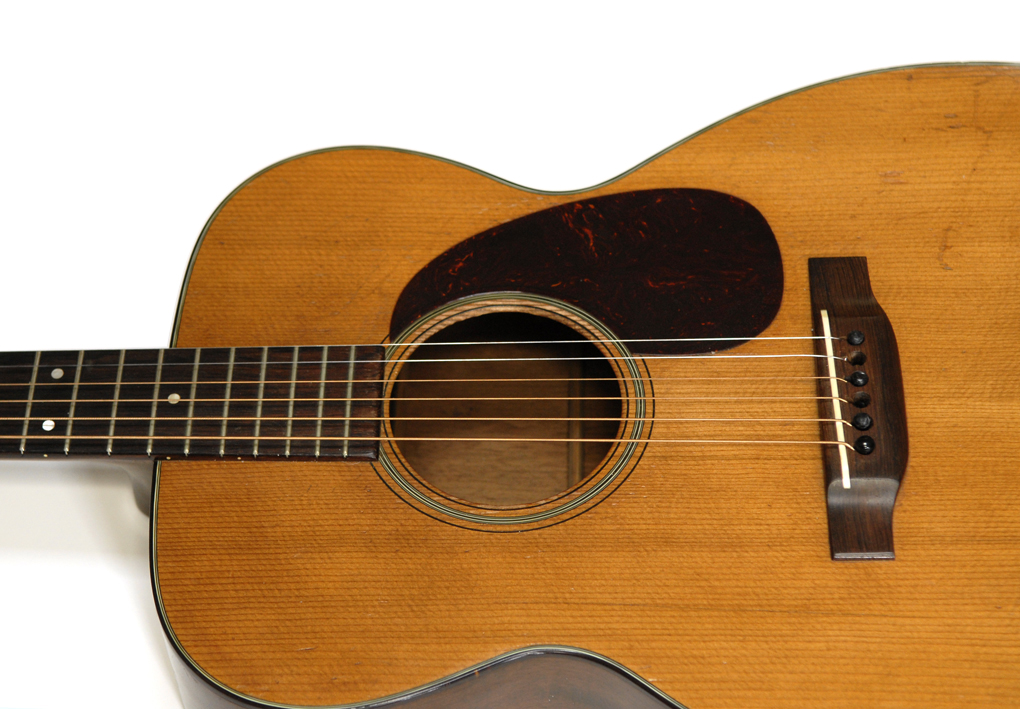
In 1953 Martin used a batch of Engelmann Spruce which was acquired as government surplus wood. It is possible that Martin also acquired a small supply of red spruce which was also used in 1953.
Martin also acquired a supply of red spruce which appears on some Martin guitars built in 1957.
1953 Martin 0-18
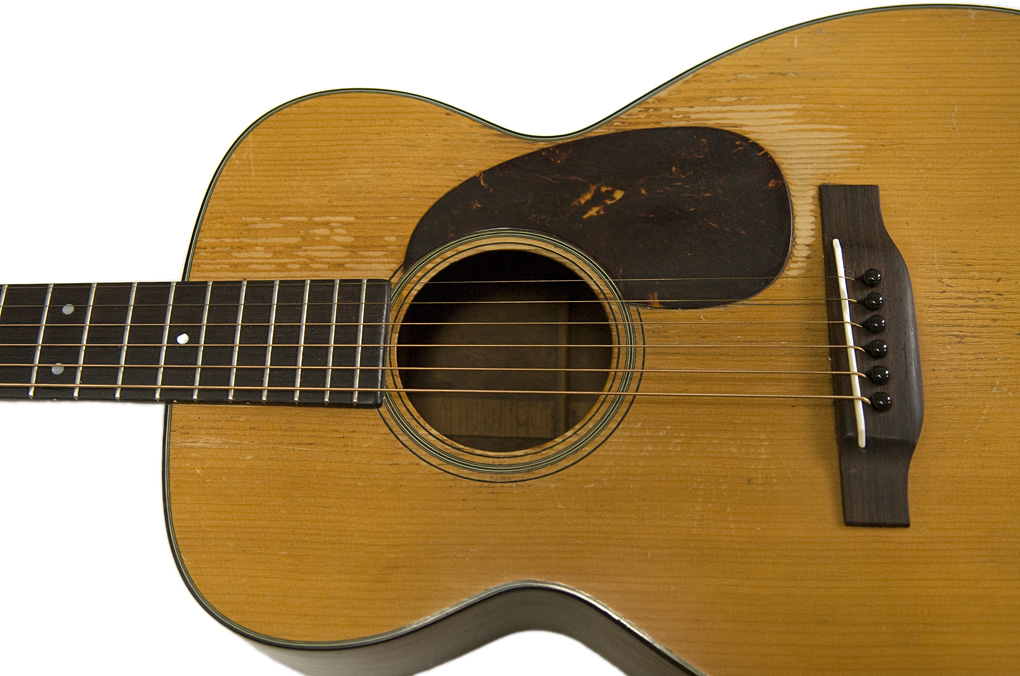
1957 Martin 00-18
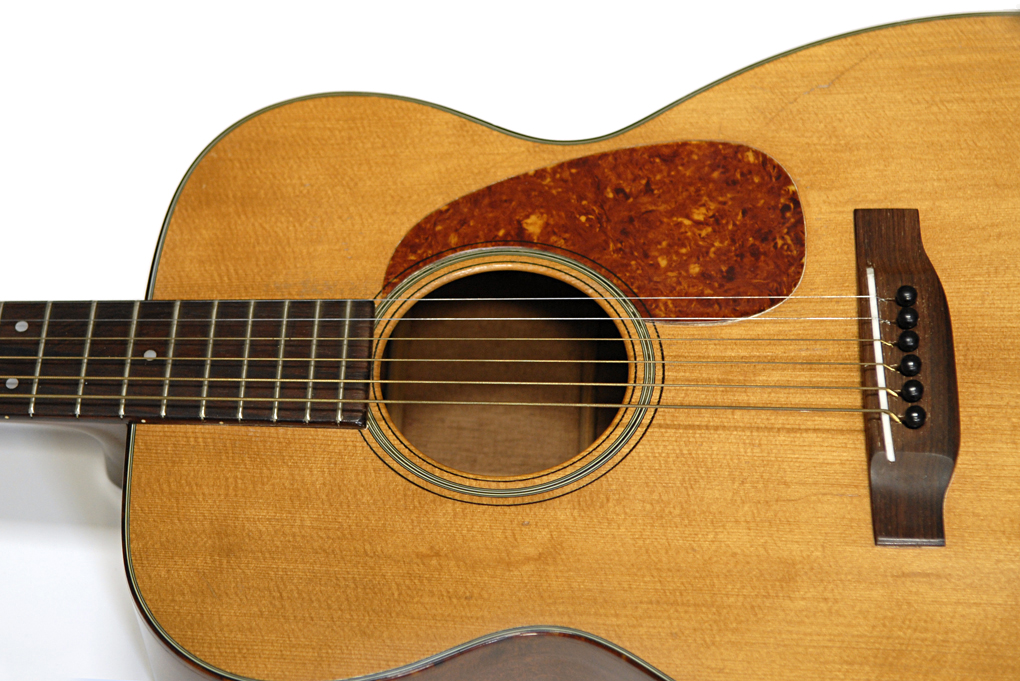
1964 Martin 0-18
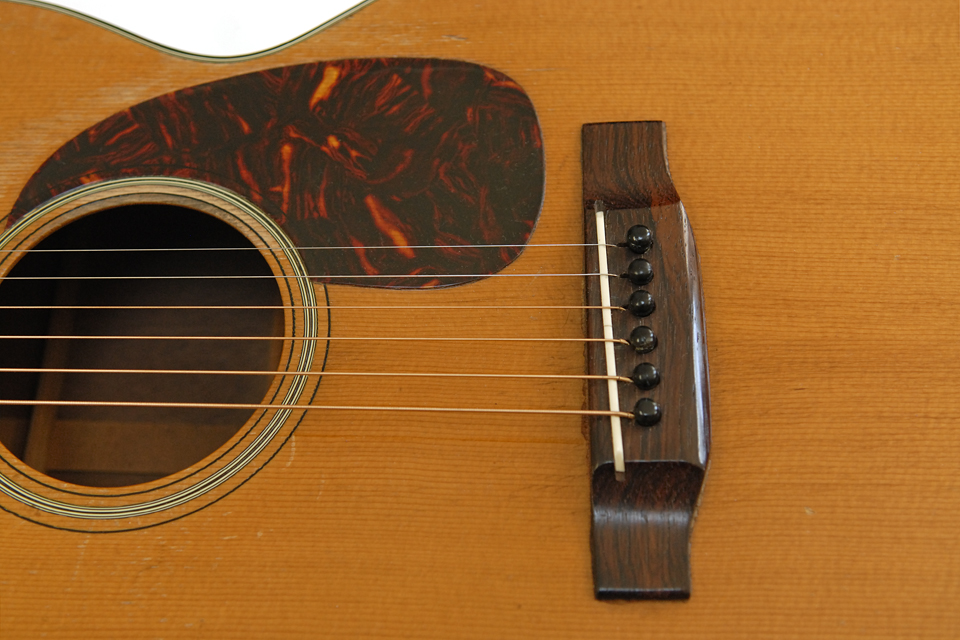
1966 Martin D-35
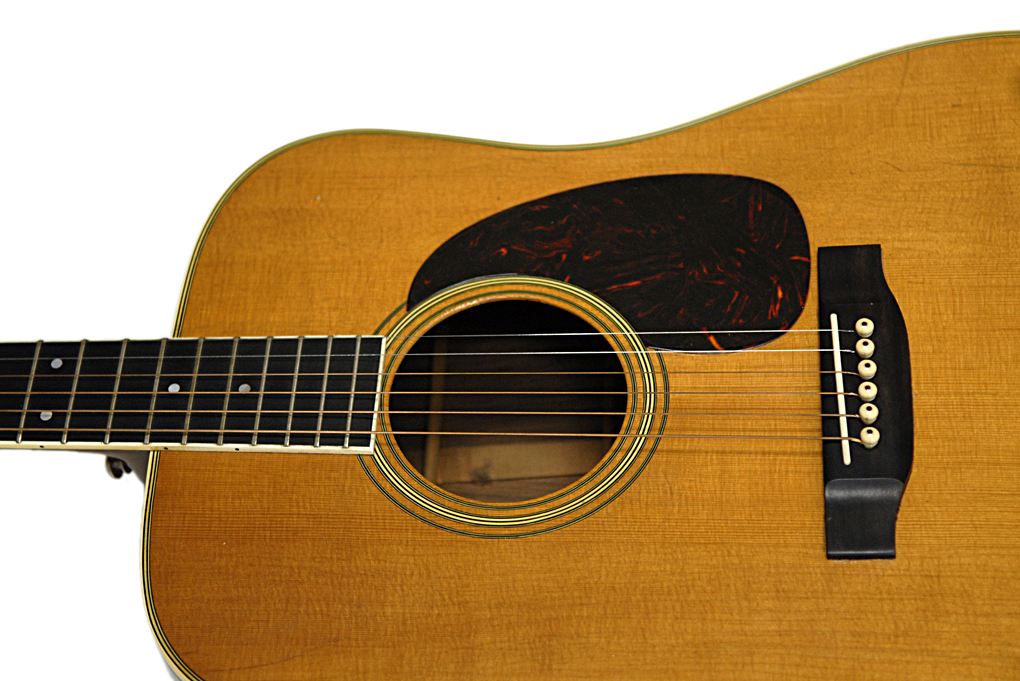
In 1922 Martin introduced the 2-17 with a mahogany top as well as back and sides. The Style 17 line was soon expanded to include single 0 and 00 guitars.
1936 Martin 0-17
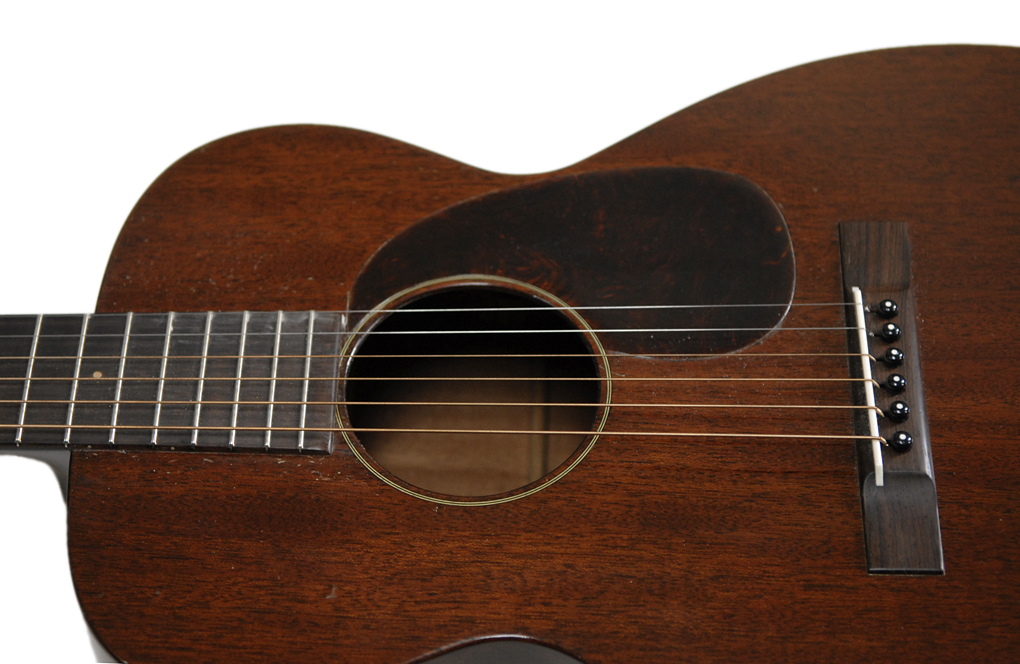
An all mahogany Style 15 was added to the Martin line in 1940.
A variety of woods were used for the backs and sides of early Martin guitars, including Brazilian rosewood, birds's eye and flame maple, and Goncoa Alves.
Most of the higher quality early Martin guitar backs were constructed with a hardwood veneer over either mahogany or spruce.
Martin Stauffer Style guitar with maple back and sides.
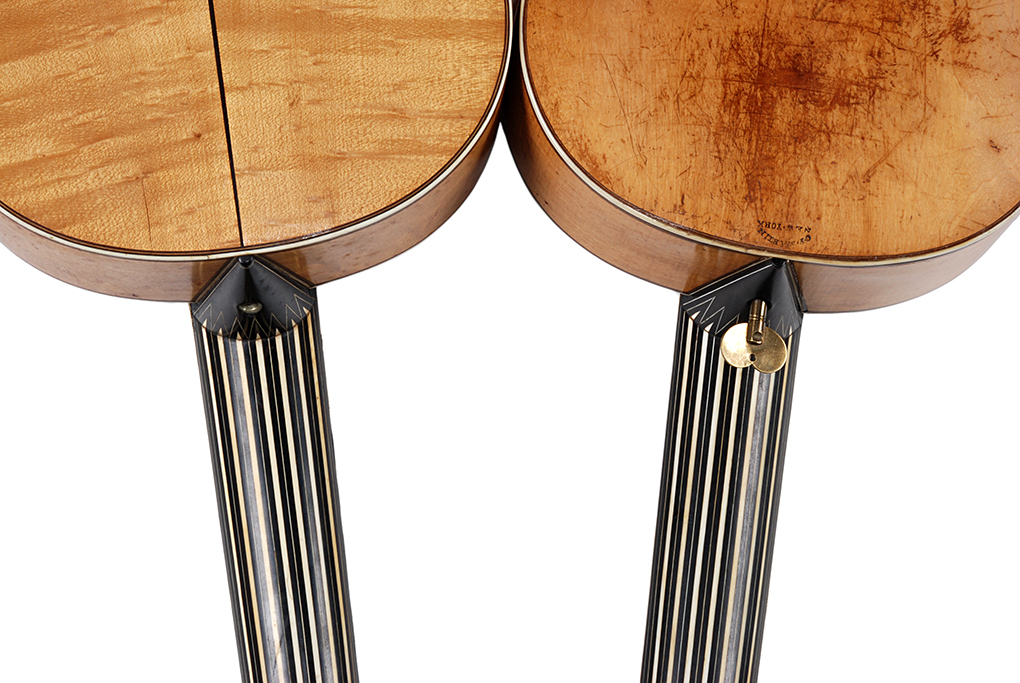
This Martin & Coupa guitar is one of two generally thought to be unusual early examples made with koa wood.
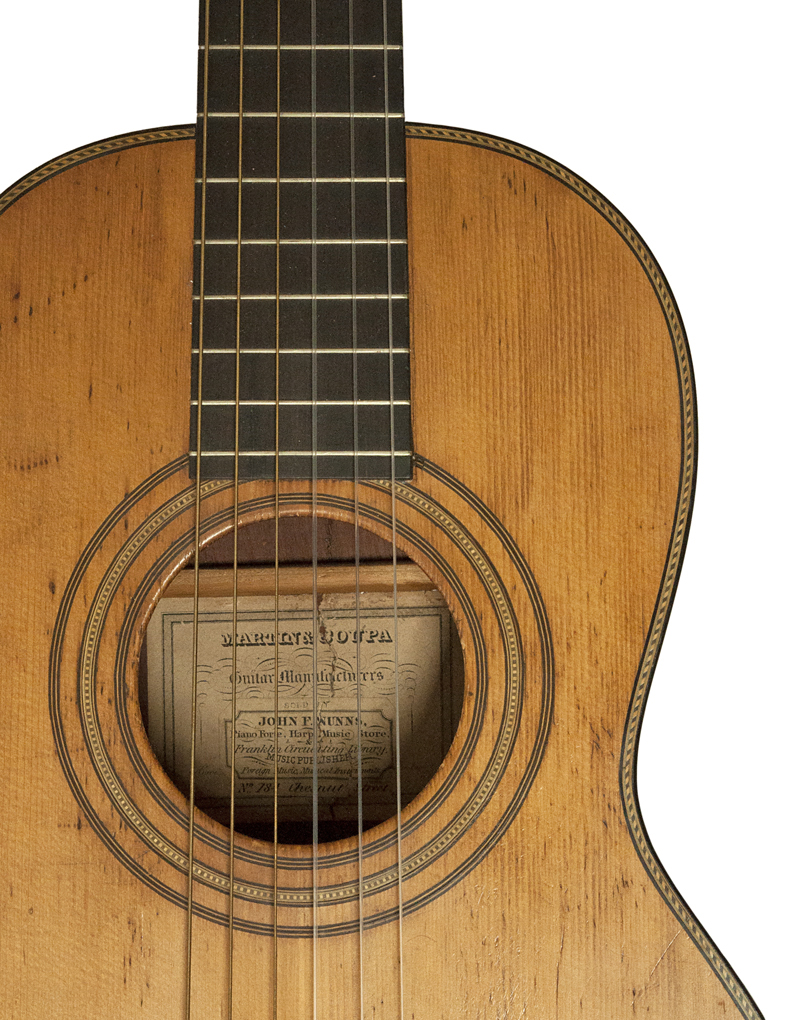
It is actually made from Goncoa Alves, sometimes referred to as "tigerwood".
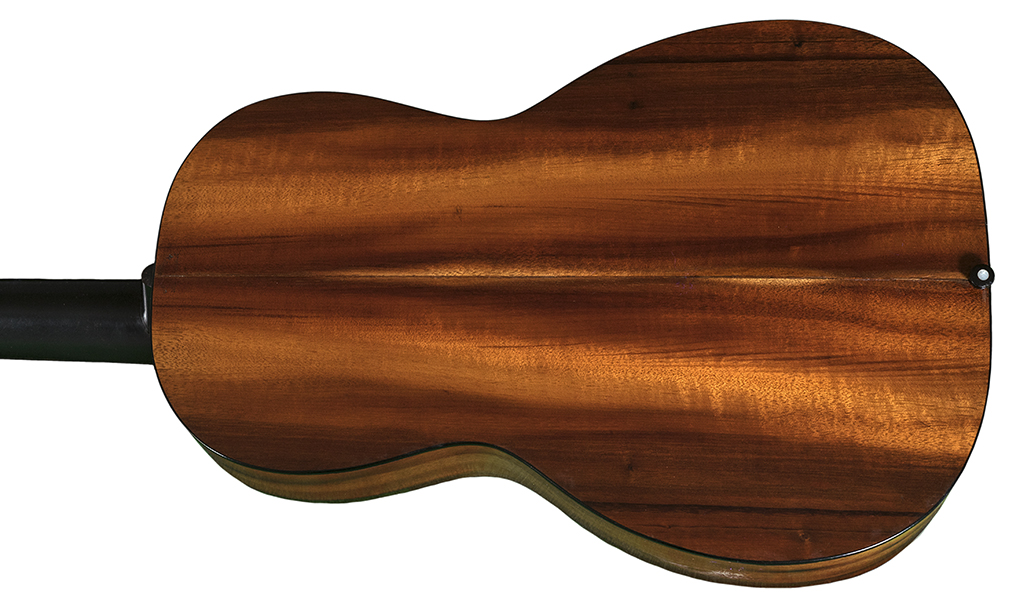
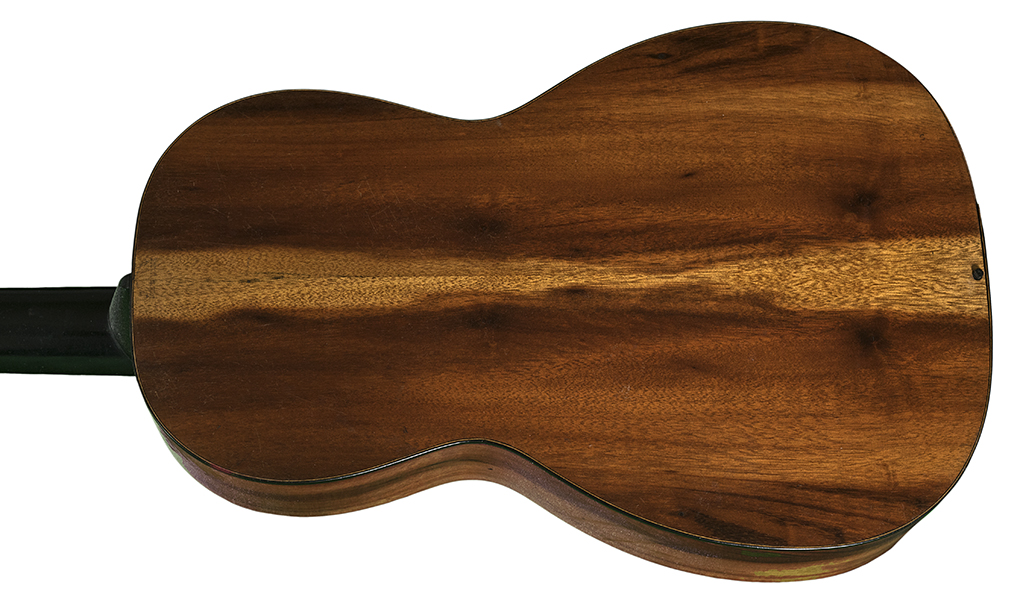
The back of this guitar is made in two pieces, joined without either interior or exterior center strip.
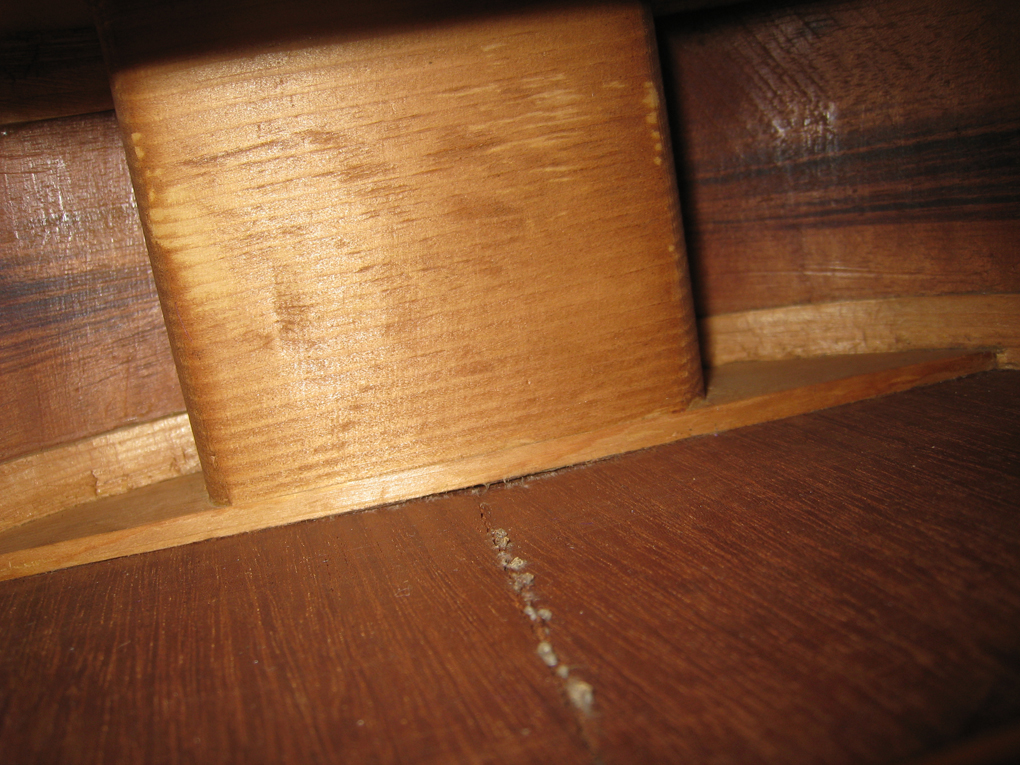
By the 1840's, most all Martins were made with solid or veneered rosewood backs and sides.
By 1900, rather than buying 1/10" or 1/12" rosewood veneers for backs and sides, Martin was buying whole logs of Brazilian rosewood which they had sawn into veneers. Martin purchased Brazilian rosewood in logs as large as 5340 lbs.
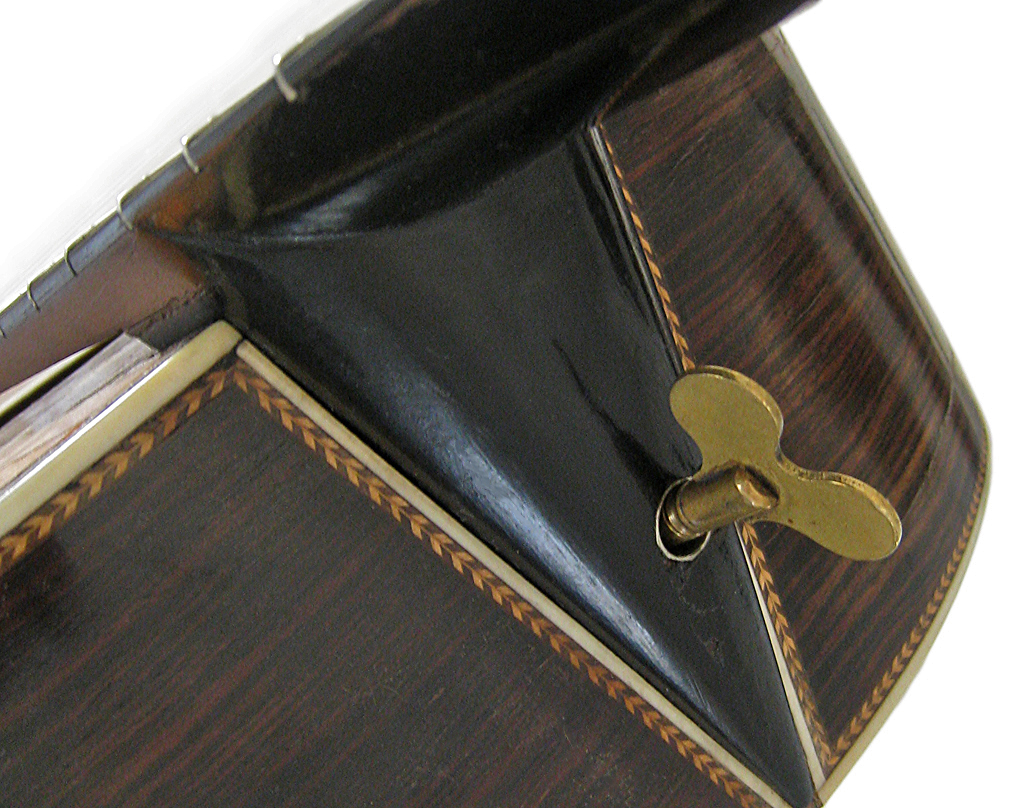
1837 Martin Hudson Street Presentation Guitar
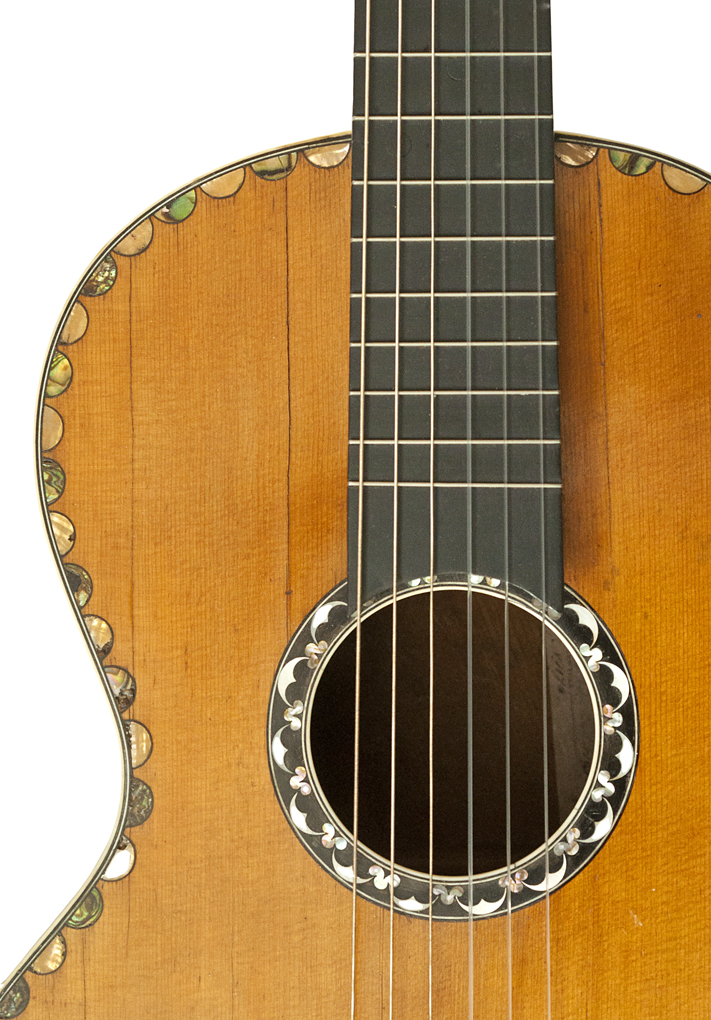
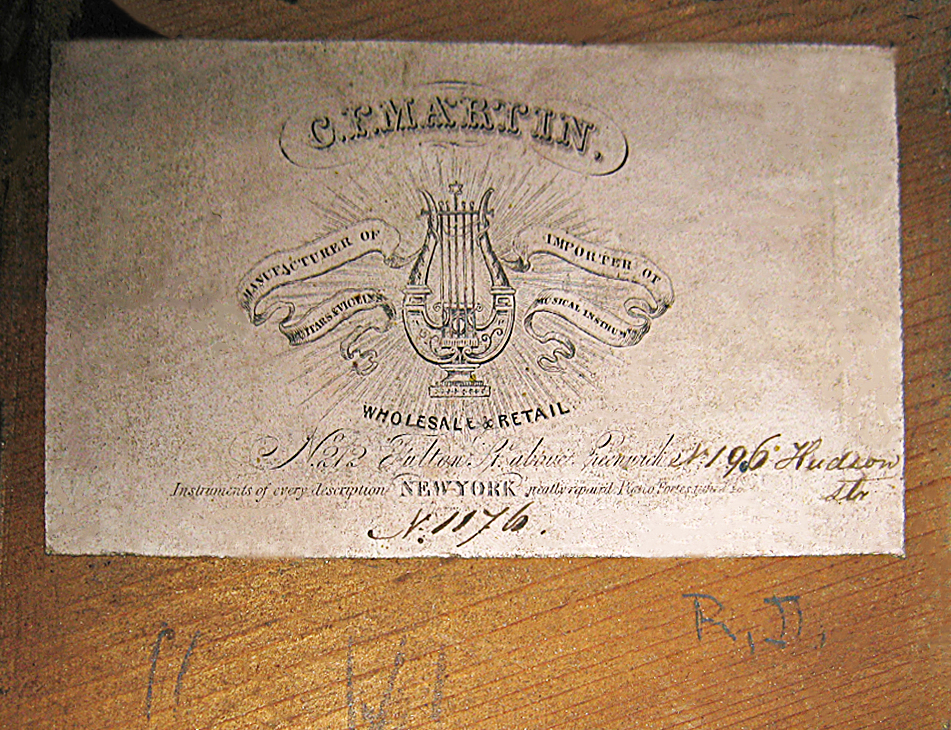
The two sides of this guitar are made from one continuous strip of rosewood.
Martin & Schatz
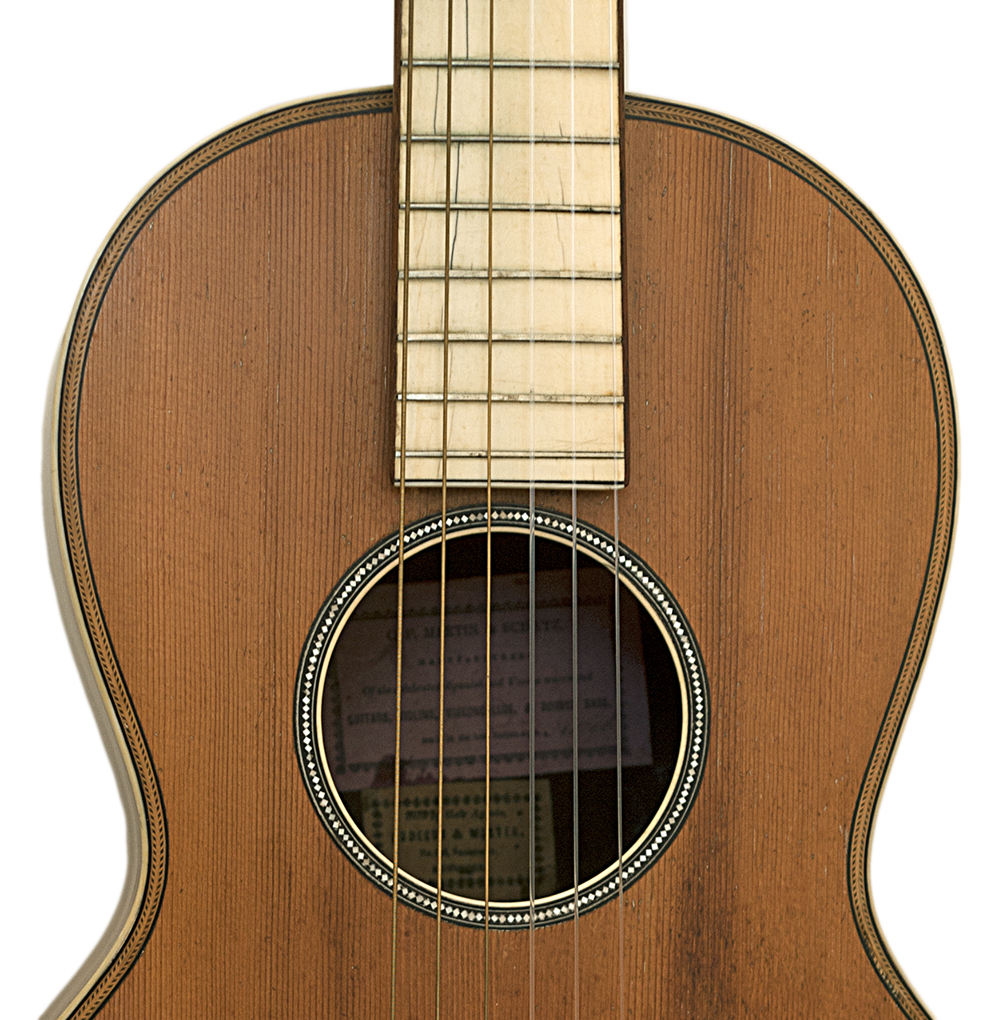
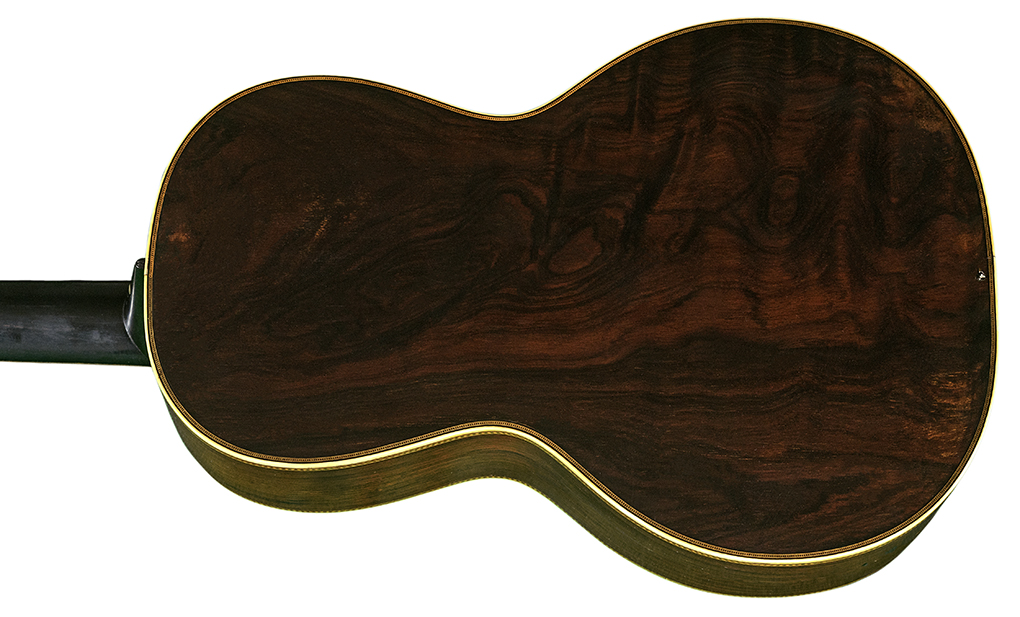
1840's Martin
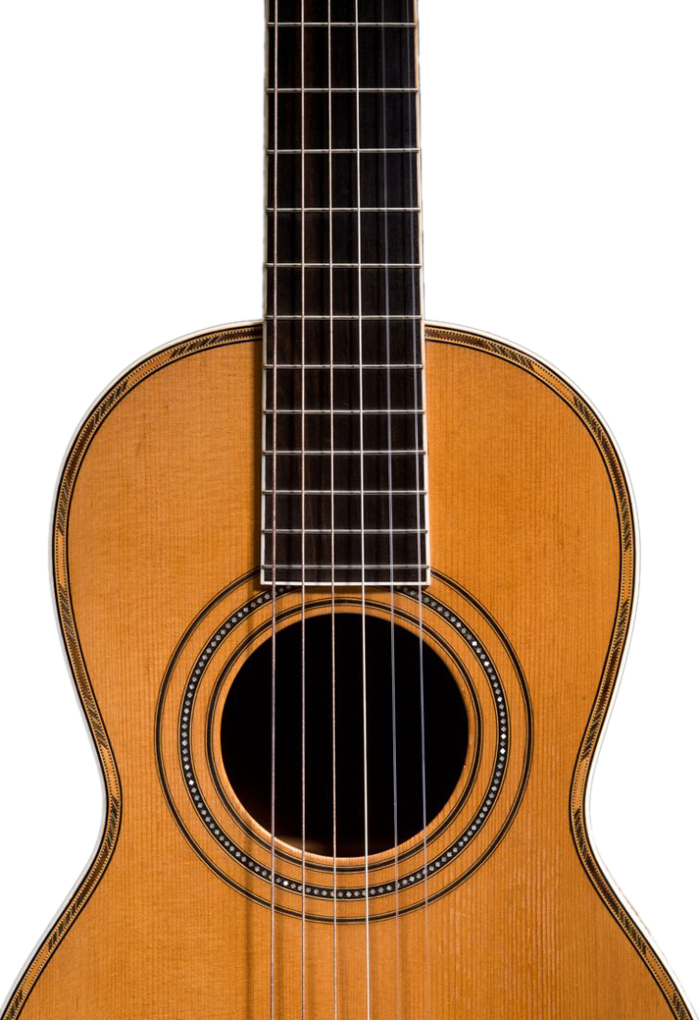
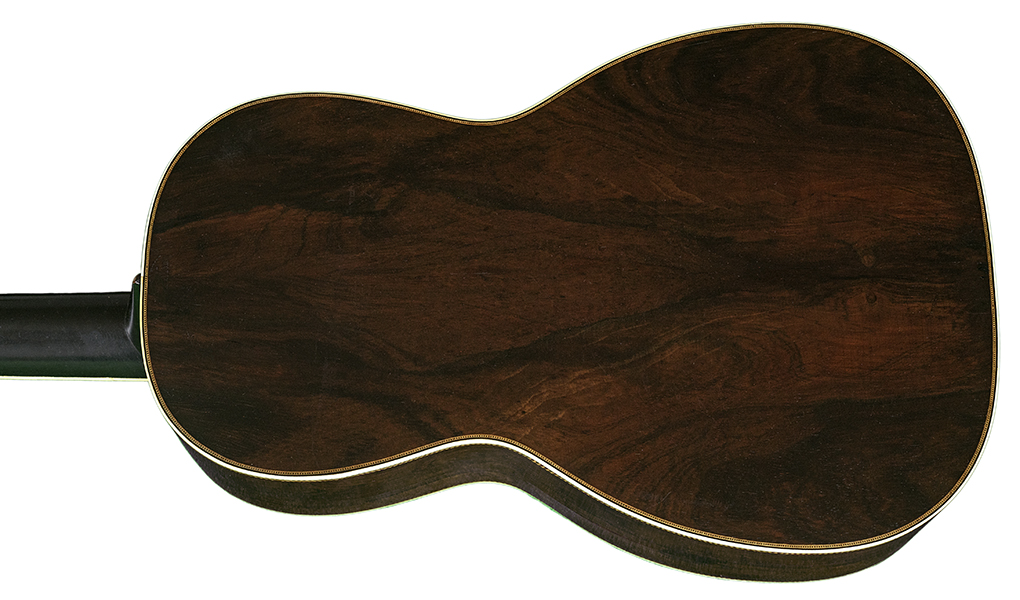
1850's Martin Ivory Fingerboard Presentation Guitar
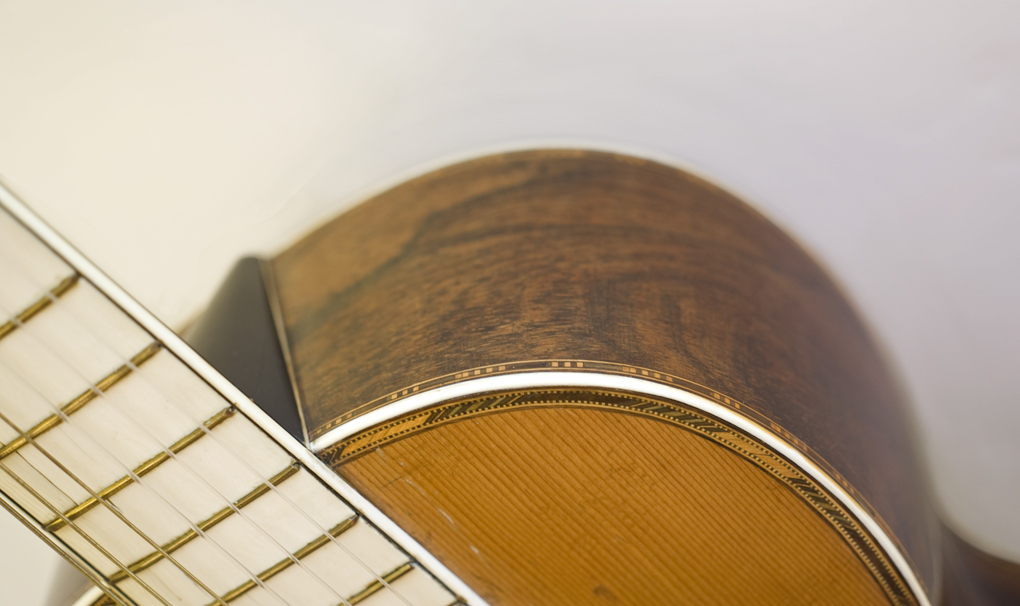
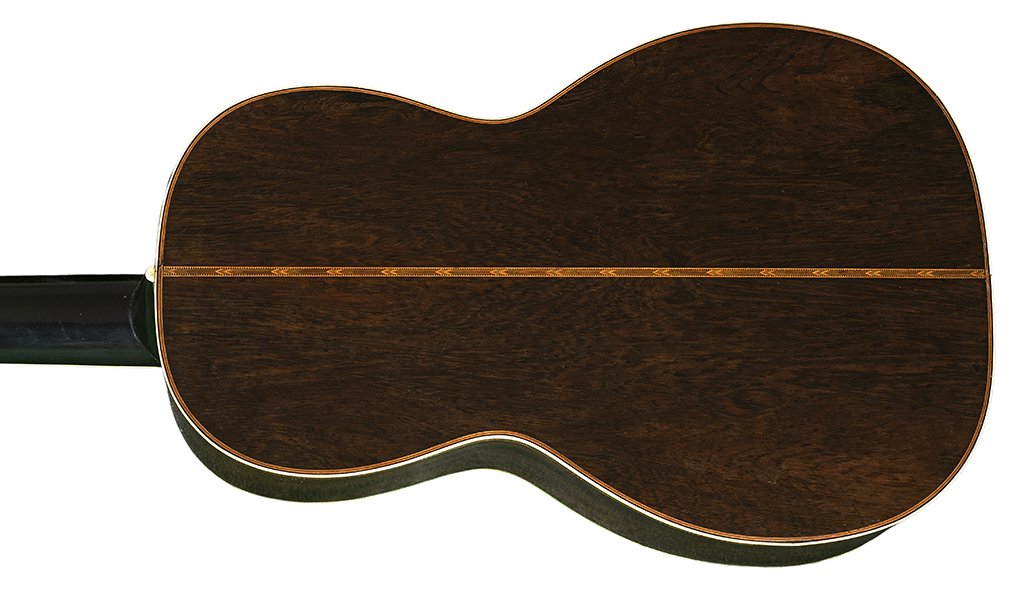
1840's or '50's Martin 2-24
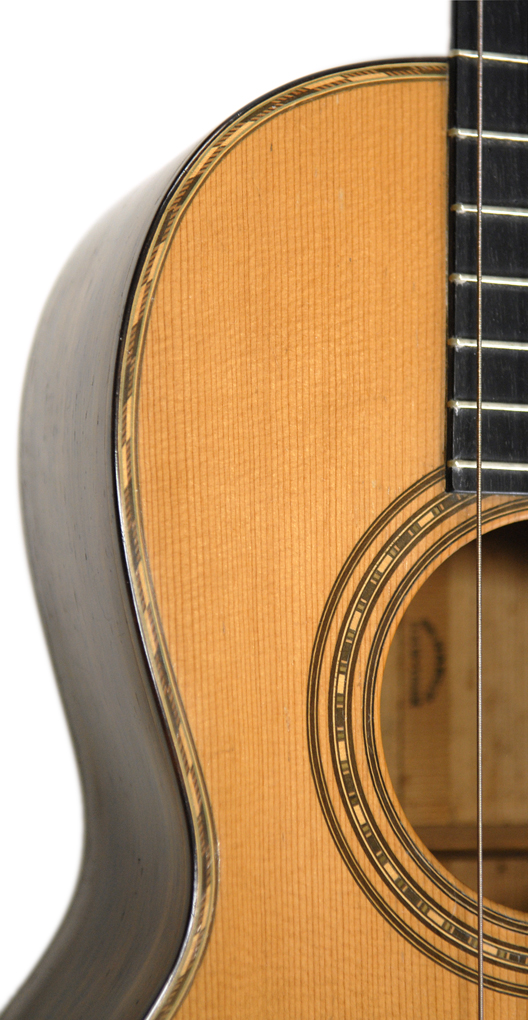
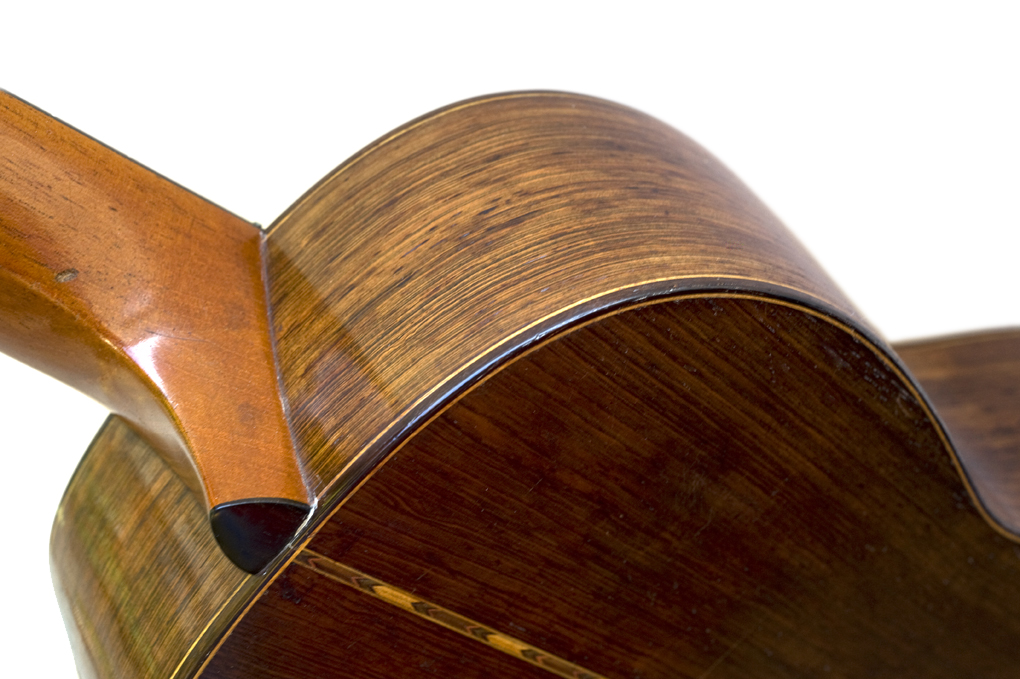
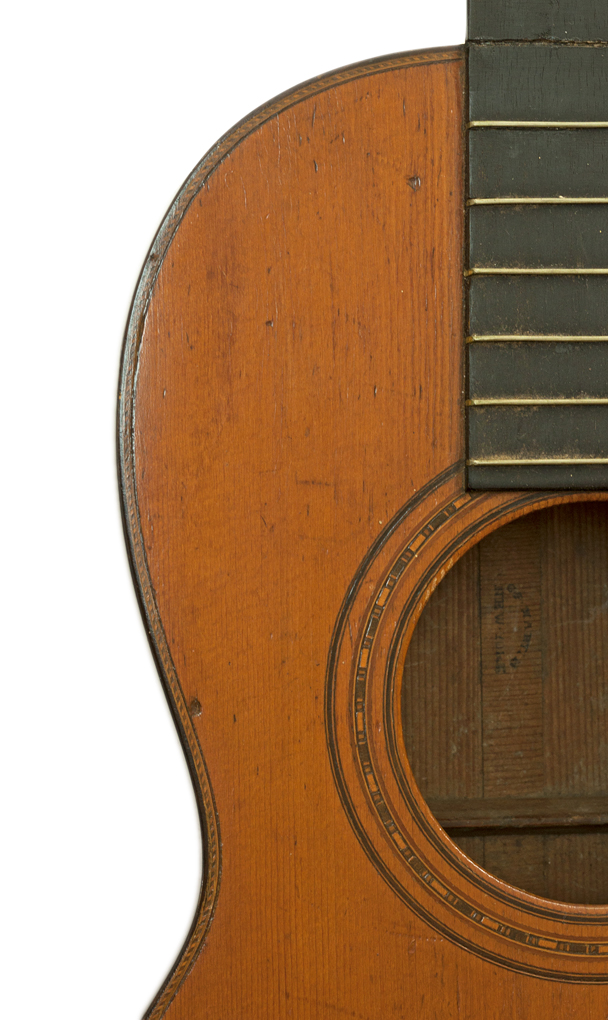
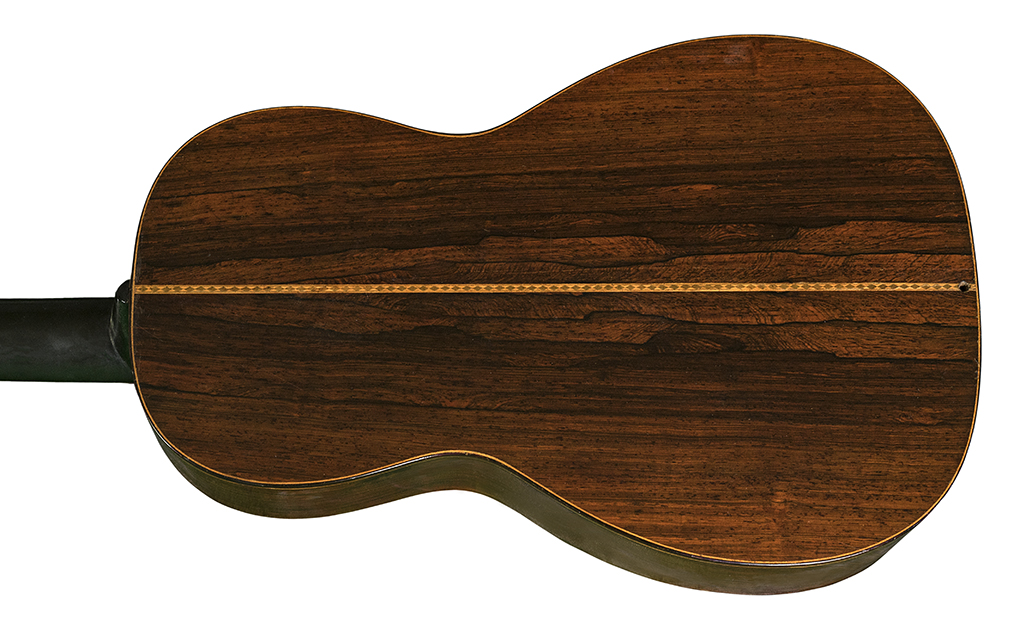
1840's or '50's Martin 3-24
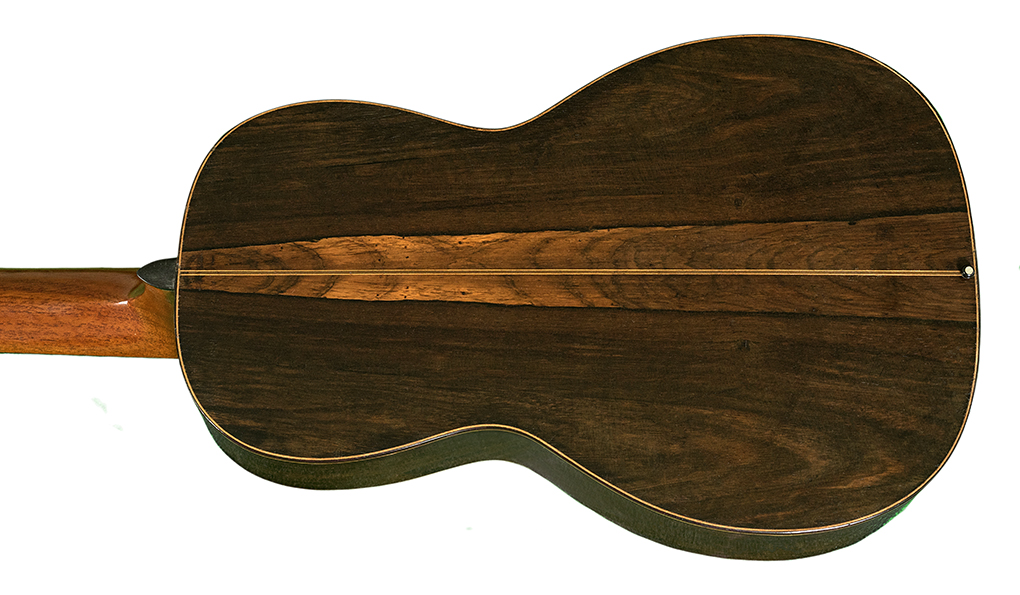
1860's Martin 2-27
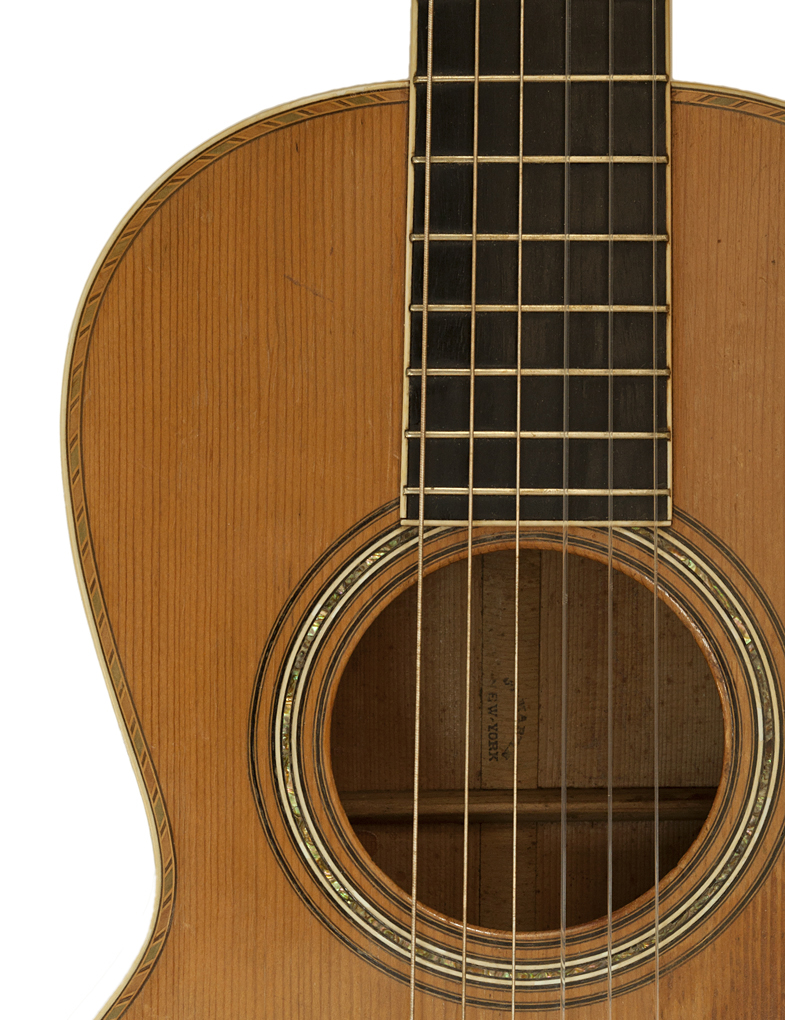
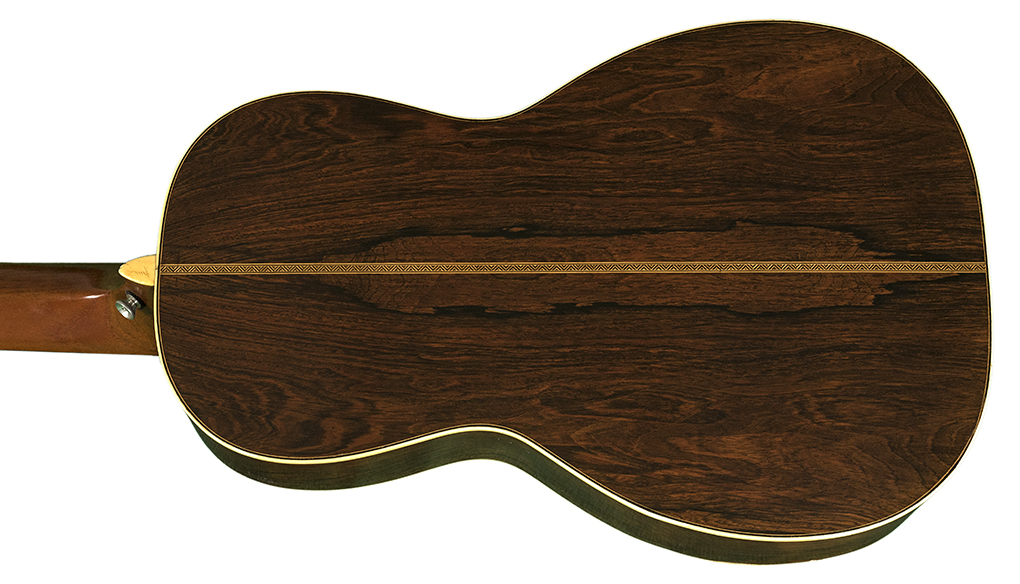
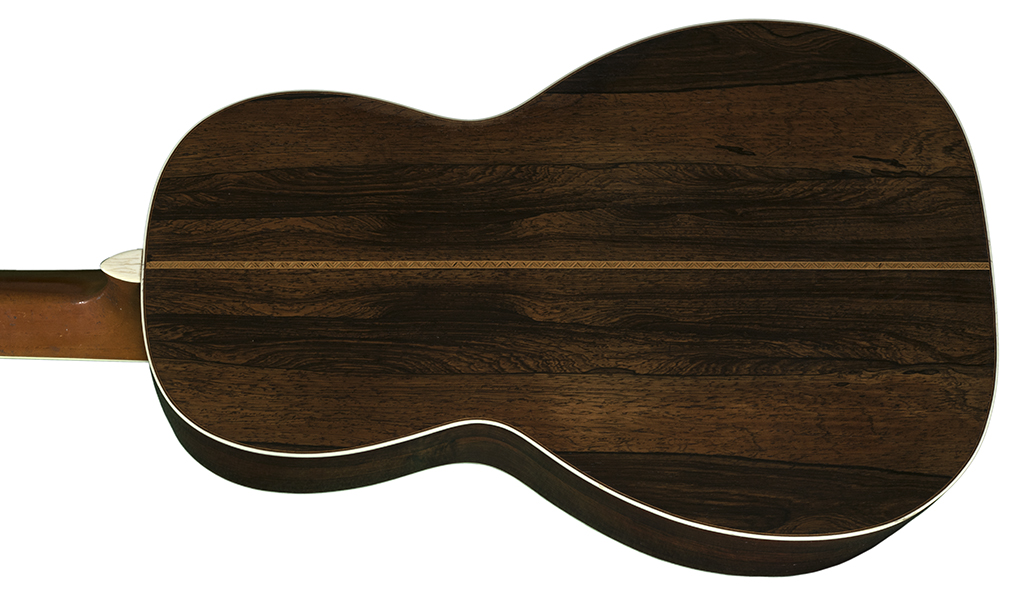
1840's Martin Presentation Guitar
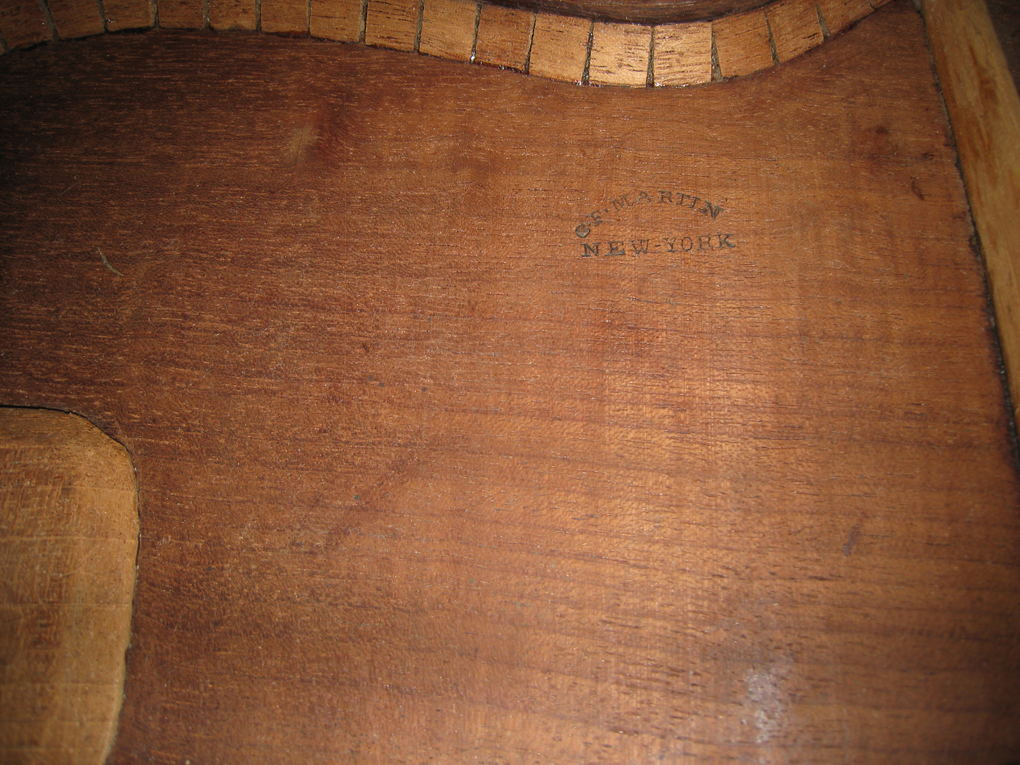
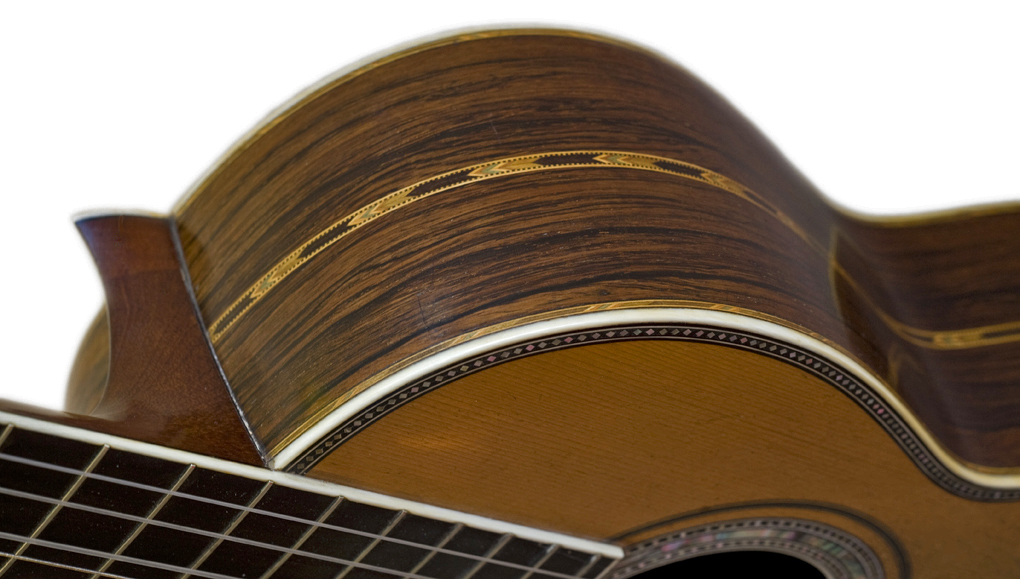
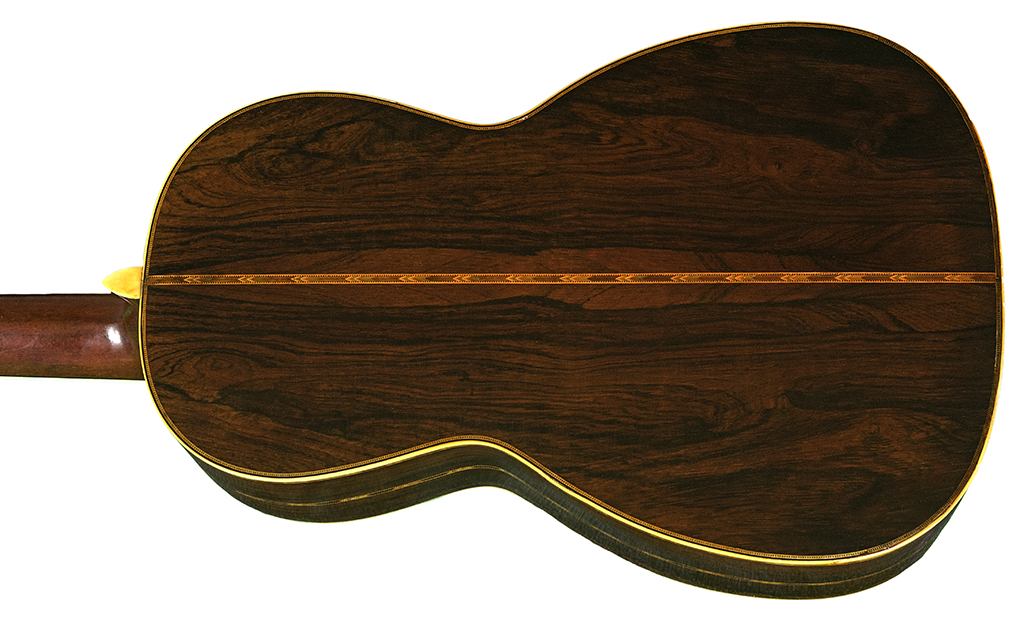
Martin 2-33
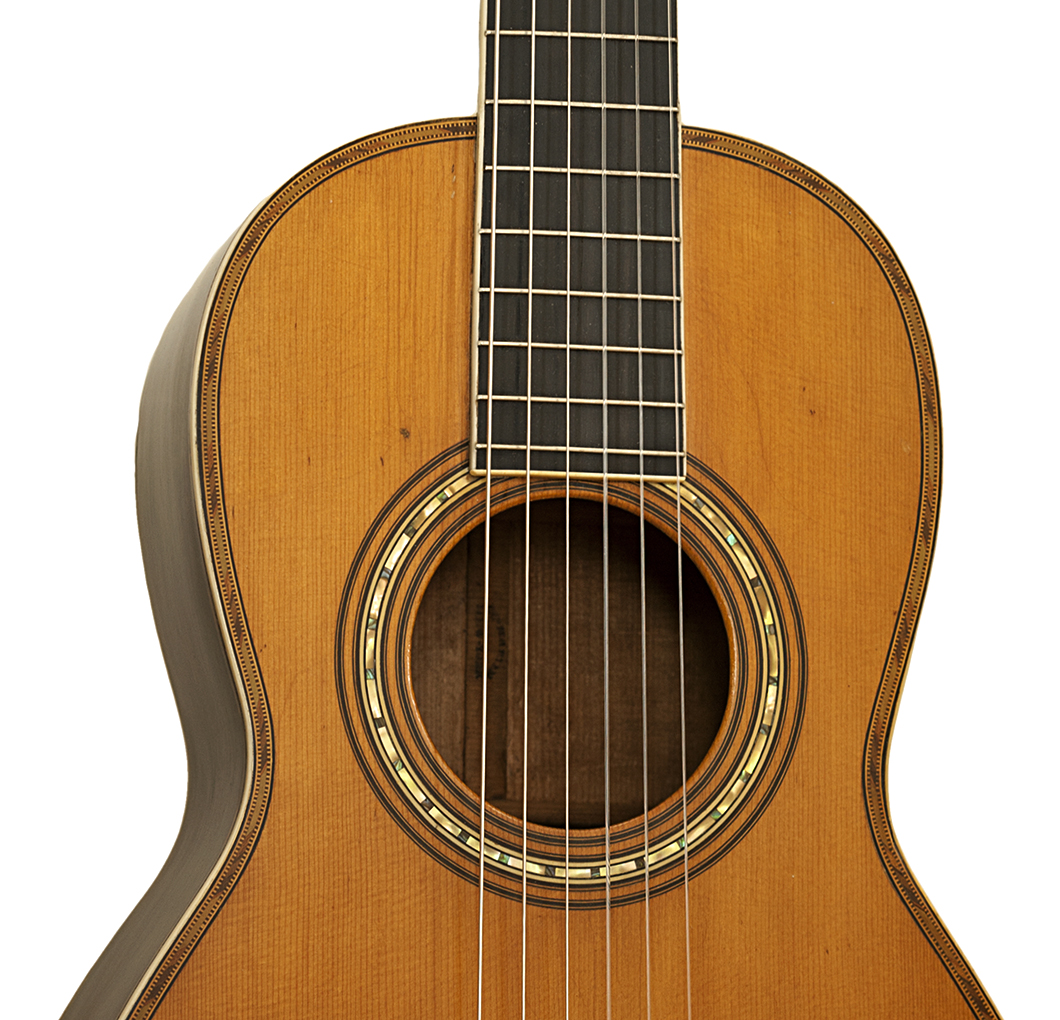
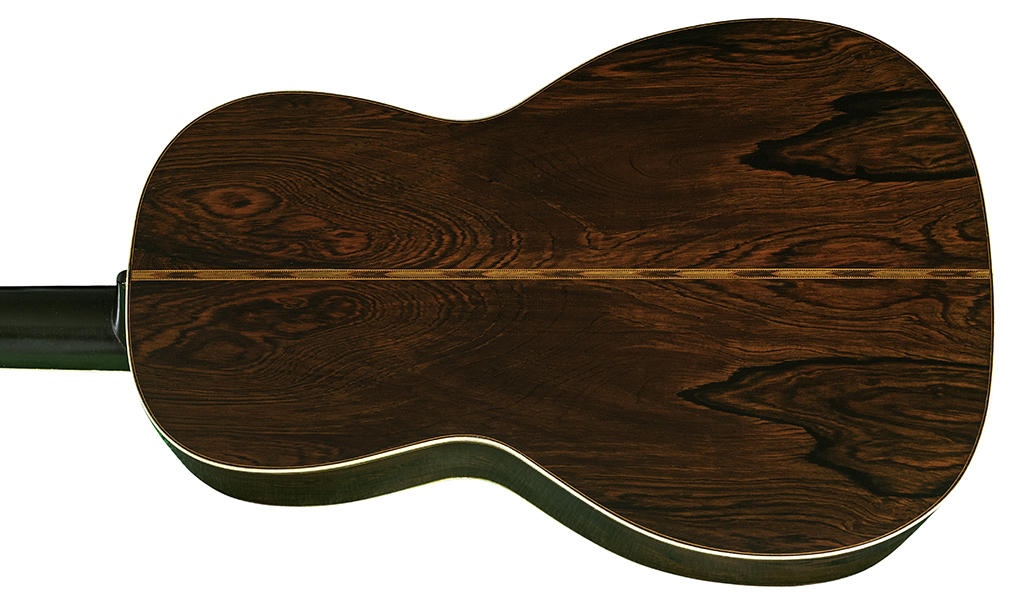
Martin 1840's 3-16
Mahogany was extremely rare on 19th Century Martin Guitars, appearing primarily on a small number of Style 3-16.
This early example has beautiful striped mahogany.
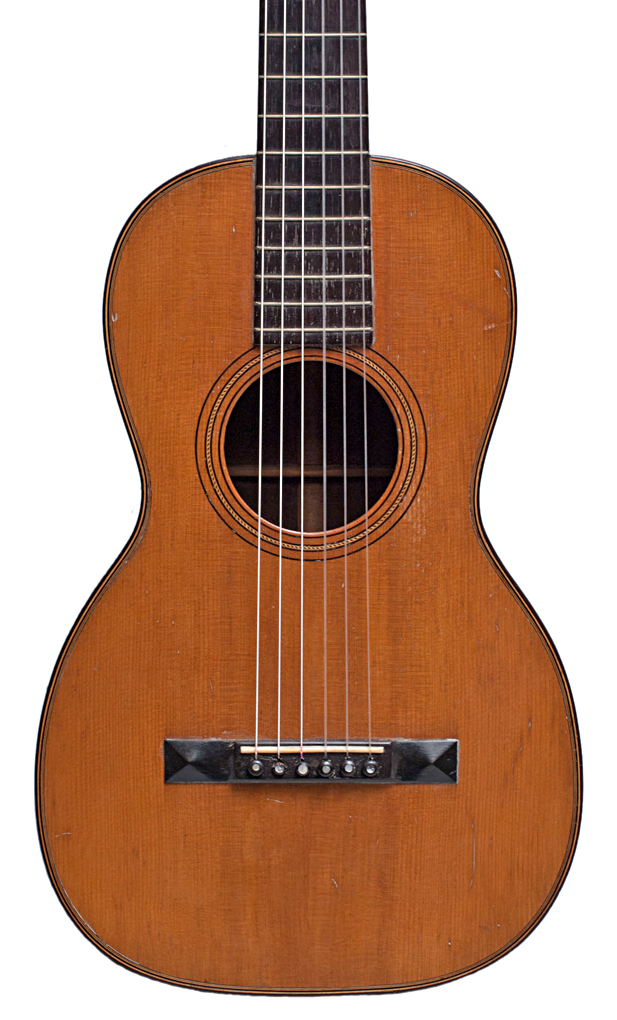
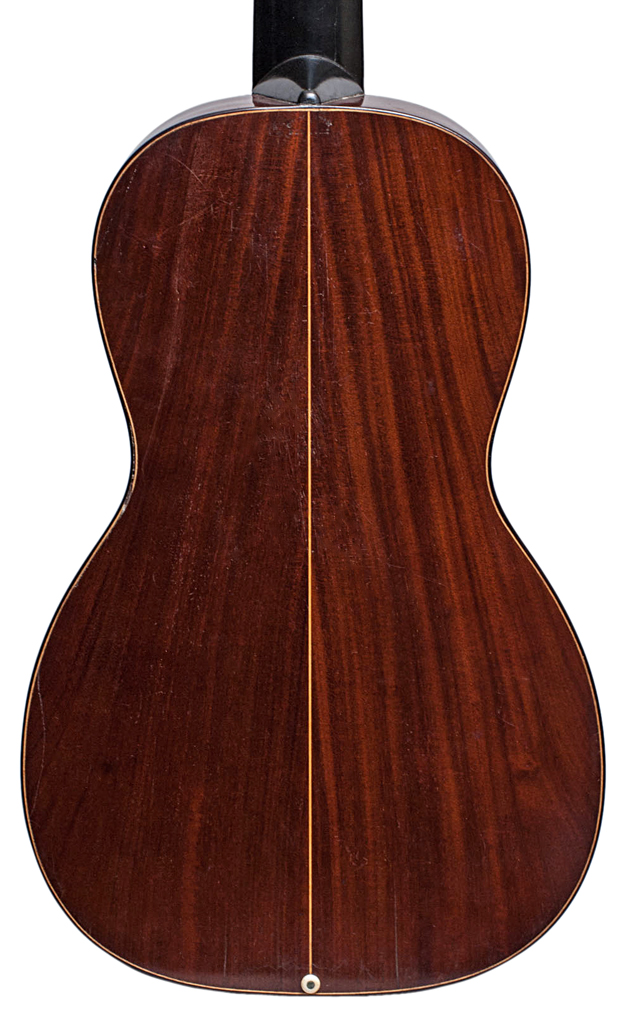
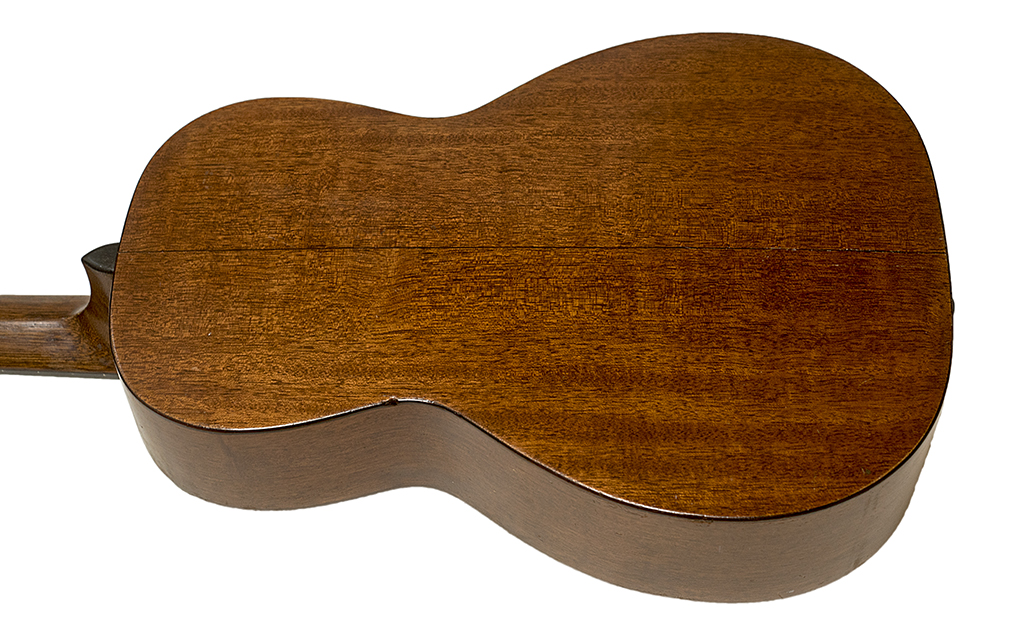
Once Frank Henry Martin began tinkering with the product lineup after the turn of the Century, the Style 17 reappeared as a "budget model" with mahogany backs and sides in 1906.
Martin's use of wood changed dramatically in 1916 when the Southern California Music Company provided Koa wood from Hawaii for a new line of Hawaiian guitars, and this blossomed into a huge number of best selling Hawaiian Koa wood Martins.
While the Style 18 Martins are generally recognized today by their mahogany backs and sides, the mahogany backs and sides did not appear on a Style 18 until Frank Henry expanded the use of mahogany to the Style 18 in 1917, helping Martin to succeed at achieving their goal of increasing sales, and the less expensive mahogany Martins became the company's larges sellers by far.
Martin 1920 0-18
Martin Style 28 and higher models have always had ebony fingerboards and bridges, while lower models began with ebony bridges.
The Style 18 Dreadnaughts kept their ebony fingerboards and bridges until switching to rosewood in 1947.
On the smaller models, most Style 18 Martins switched to rosewood fingerboards and bridges in 1935, but for that year only. After 1935, fingerboards and bridges on Styles 21 and below made a slow transition from ebony to rosewood lasting into the 1940's.
1931 0-18T with ebony fingerboard and bridge.
1943 000-18 with Brazilian rosewood fingerboard and bridge.
Martin Hawaiians
In July of 1916, with Hawaiian music all the rage, the C. F. Martin Co. shipped six samples each, of Hawaiian koa wood guitars with appointments generally similar to Martin's styles 0-18, 0-21, and 00-28, to the Southern California Music Company of Los Angeles, a chain of SouthernCalifornia music stores, and one of Martin's largest accounts. SoCal provided Martin with the koa wood from Hawaii, and asked that the trim on these guitars, designed for playing in the Hawaiian style, be as close as possible to those of SoCal's popular ukuleles. These early samples had koa wood back and sides and tinted spruce tops, but after seeing the samples, SoCal decided to offer all koa guitars, and to market the three models as the 1350, 1400, and 1500.
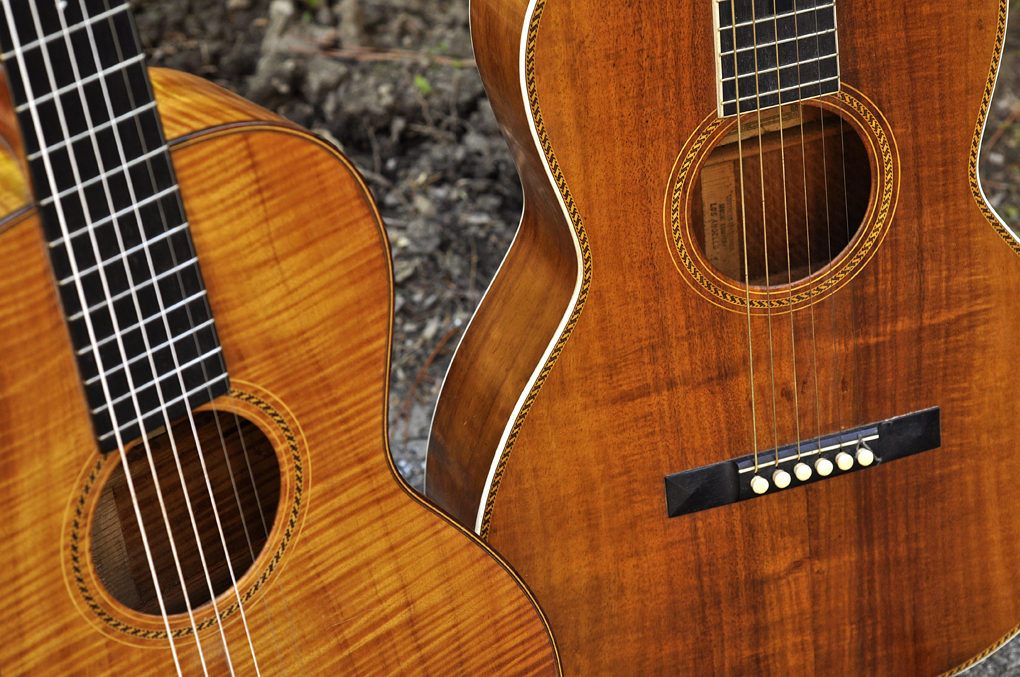
The koa on the SoCal Martins varied tremendously, some highly flamed and some rather plain.
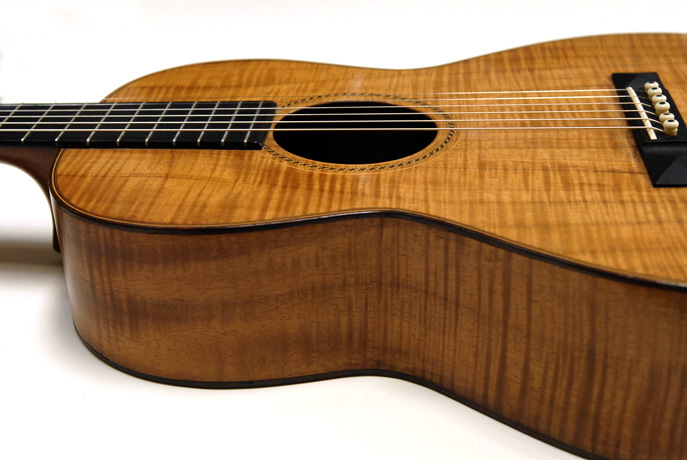
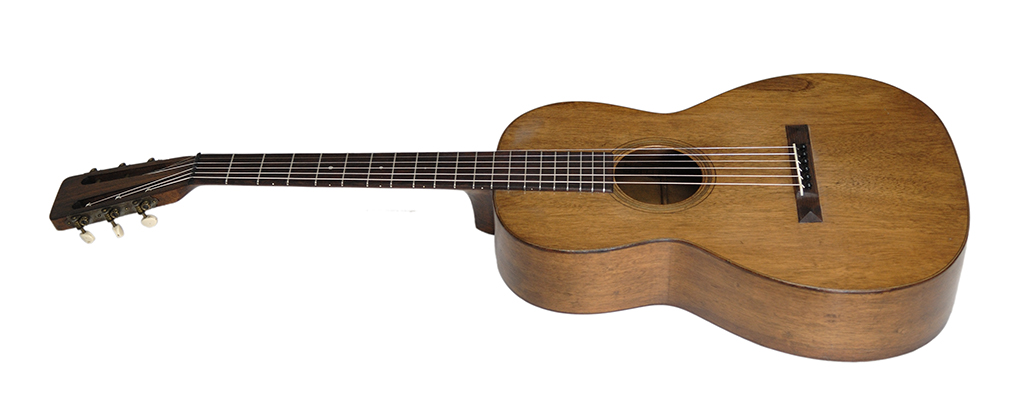
The fancier koa was sometimes but not always used on the higher grade models, however, since it was not always available. The guitar on the right in the photo of two examples above is the higher grade Model 1500.
The Change from Brazilian Rosewood to East Indian Rosewood.
In 1965 when the supply of Brazilian rosewood large enough for Dreadnaught size backs was dwindling, Martin began to produce the D-35 with a three piece back which used smaller pieces of rosewood which had been cut for sides.
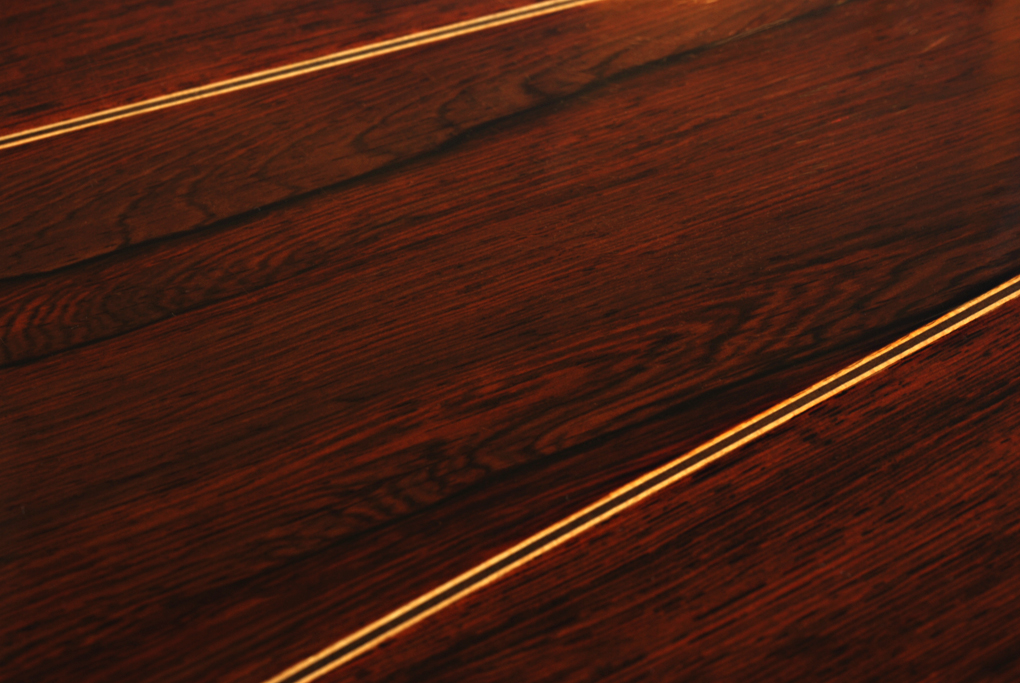
In 1967, Brazil placed an embargo on Brazilian Rosewood Logs, so only Brazilian Rosewood products made in Brazil could be exported. Martin had been buying whole logs and had built their own facility to cut the wood into veneers for use on their guitar. From this point on, Martin had to rely on whatever supply of Brazilian Rosewood they had left.
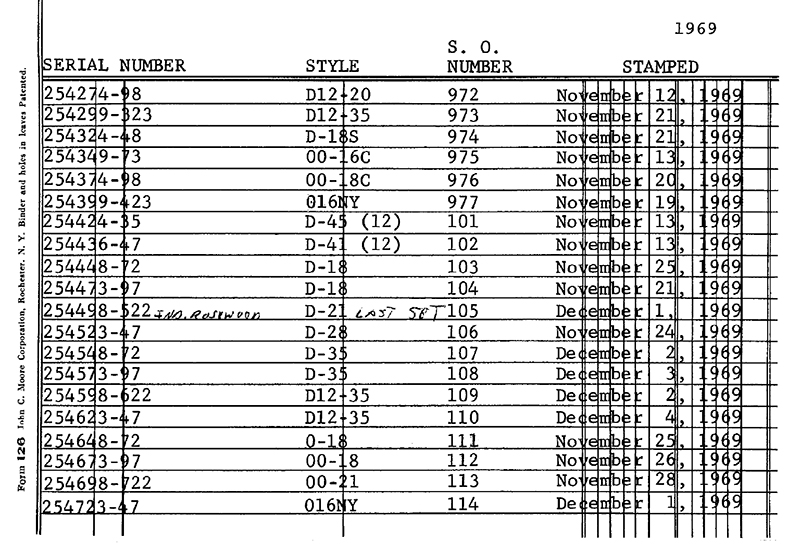
On December 1, 1969, Martin switched to East Indian Rosewood with a D-21 in Shop Order #105, with serial #254498. For the early D-35, Martin used what Brazilian Rosewood they had left for the center portion of the three piece back, with East Indian Rosewood for the outer two portions.
The Serial and Shop Order Numbers were not always stamped in the same order, so the D-28 with the later Serial number 254748-72 and Shop Order #115 were built with Brazilian Rosewood despite the higher numbers since they were stamped earlier on November 28.

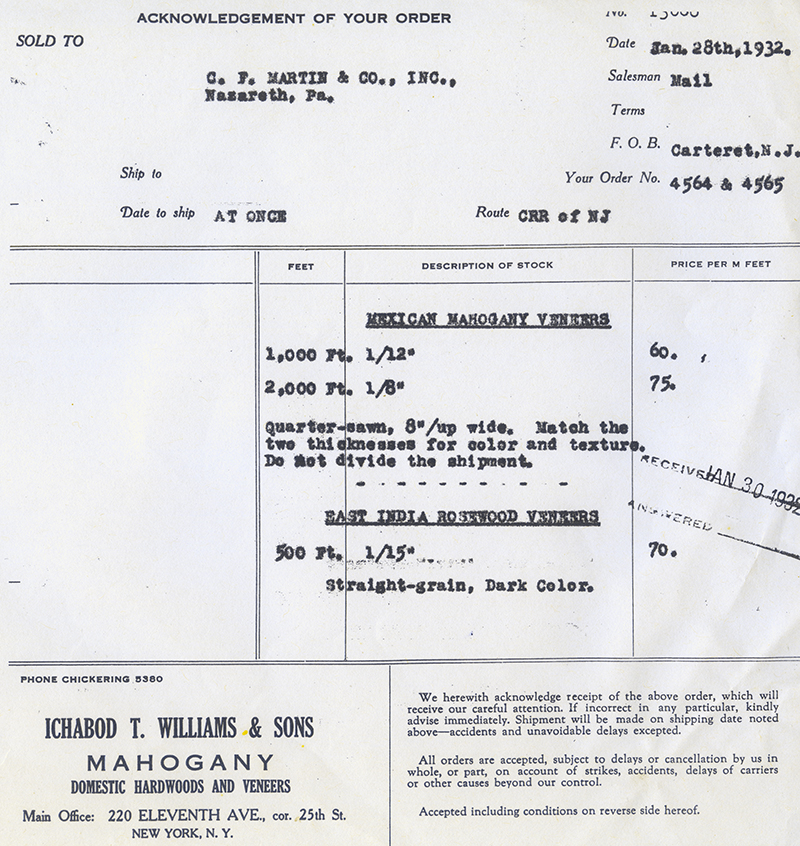
While most Martin fans love Brazilian rosewood and believe it to be superior, Frank Henry Martin was also a fan of East Indian Rosewood. When Martin hardwood supplier Ichabod T Wiliams sent a sample of ER in 1924, Martin was "immensely pleased". "it is not only unusually fine wood, but it is also remarkably well sawn, and we wish to compliment you on the shipment. ...whenever you get such a flitch you my manufacture it for us without further instructions." Martin bought EIR from Williams in 1924, 1926, and again in 1932.
vintagemartin.com
To See Robert Corwin's Classic Photography of Folk and Roots Musicians, visit:
For Information on Photography for
Exhibition, Publication, CD's, Promotion, Web Pages, Tour Books,
to Purchase Photographic Prints, or
If You Have Questions or Suggestions About This Web Site or Vintage Martin Guitars:
e-mail: Robert Corwinentire site copyright ©1998 through 2026 Robert Corwin/Photo-Arts. All rights reserved.